
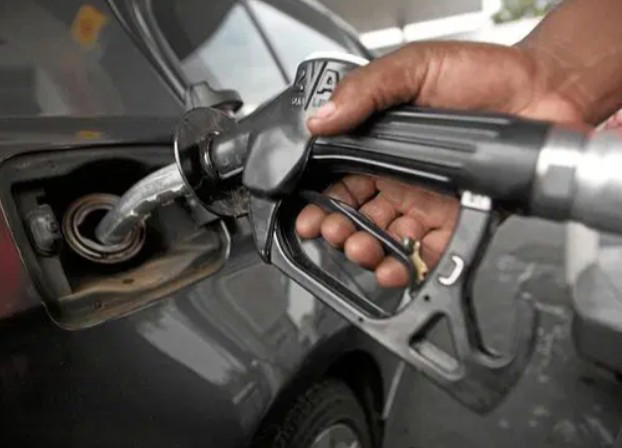
Nigeria’s Federal Competition and Consumer Protection Commission has issued a stern warning to oil marketers over consumer exploitation, demanding that the sharp fall in global crude oil prices — from $120 to $73 per barrel — be meaningfully reflected in petrol pump prices that remain stubbornly high at around ₦1,200 per litre.
Oil marketers raise prices fast when crude goes up. When crude comes down? Crickets. Nigeria’s consumer watchdog has officially had enough.
The Federal Competition and Consumer Protection Commission issued a blunt warning Sunday, putting the downstream petroleum sector on notice that its ongoing surveillance had uncovered clear signs of consumer exploitation — and it wasn’t staying quiet about it.
According to the FCCPC statement, as reported by Vanguard, global crude oil prices have tumbled to approximately $73 per barrel following the US-Iran ceasefire and the reopening of the Strait of Hormuz — a dramatic reversal from the $120 per barrel peak recorded during the height of Middle East tensions between April and May.
The numbers tell a damning story. Back in February, Nigerians paid between ₦800 and ₦900 per litre. When crude spiked, pump prices shot up to between ₦1,350 and ₦1,500 per litre almost overnight. Now, with crude back to February levels, petrol still costs an average of ₦1,200 per litre — while some local refiners have fixed ex-depot prices between ₦1,025 and ₦1,075 per litre.
FCCPC Executive Vice Chairman Tunji Bello acknowledged the commission doesn’t set prices in Nigeria’s deregulated market — but made clear that deregulation is no licence to fleece consumers.
“To be clear, the Commission does not regulate or approve petroleum prices in a deregulated downstream market. Our responsibility under the Federal Competition and Consumer Protection Act, 2018, is to promote competitive markets, prevent anti-competitive conduct and protect consumers from unfair, deceptive and exploitative business practices,” Bello said.
Then he zeroed in on the pattern that has Nigerians fuming.
“We are concerned that while dealers often respond swiftly by hiking pump prices whenever crude prices rise, it is curious that it is taking forever for consumers to benefit significantly when crude prices fall. Competitive markets must work fairly in both directions,” he added pointedly.
The FCCPC acknowledged that refining costs, forex, logistics and distribution all factor into pricing.
But Nigerians aren’t hearing nuance at the pump. They’re hearing ₦1,200 — and the watchdog is now hearing them.
NEWS NOW:
- Inside last-minute intrigues that handed Amaechi VP slot after Atiku almost picked Okonjo Iweala
- Nigerian households pay about N3,000 per litre to buy kerosene in May: NBS
- Peace meeting to death trap: How Benue’s Miyetti Allah Chairman was lured, assassinated
- ACAMB Visits NIBSS, Advocates Wider QR Code Adoption, Stronger Payment Systems