
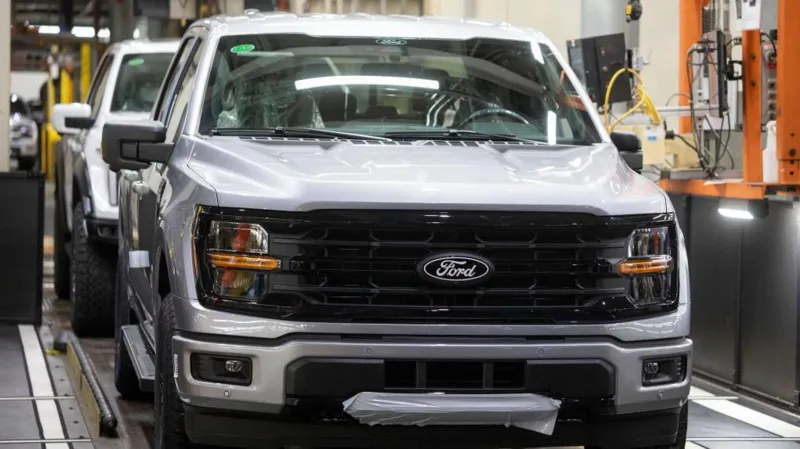
Ford has rehired more than 300 veteran quality inspectors after admitting its AI-powered quality control systems failed to match the skills and institutional knowledge of experienced human engineers — a rare and candid corporate acknowledgement of artificial intelligence’s real-world limitation
Turns out, you can’t just replace decades of engineering wisdom with an algorithm.
Ford — one of America’s most iconic automakers and an enthusiastic early adopter of artificial intelligence across its operations — has quietly begun walking back its AI ambitions in one critical area, rehiring more than 300 veteran quality inspectors after its automated systems fell significantly short of expectations, according to BBC
The admission, delivered by Charles Poon, Ford’s vice president of vehicle hardware engineering, was a rare moment of corporate candour in an era when AI cheerleading from the C-suite has become almost obligatory.
“Artificial intelligence is a fantastic tool, but it’s only as good as the information you use to train it,” Poon told reporters.
The problem, he explained, was that Ford had let many of its most knowledgeable engineers walk out the door before their expertise could be captured and fed into its systems. The institutional knowledge simply evaporated — and the AI, trained on incomplete information, couldn’t compensate.
“Mistakenly, we thought that by just introducing artificial intelligence and ingesting the design requirements that we had, that would produce a high-quality product,” Poon said candidly.
The irony runs deep. Just last June, Ford boss Jim Farley had declared bluntly that “AI will leave a lot of white collar people behind.” By October, chief operating officer Kumar Galhotra was telling investors the firm was deploying AI “across the entire industrial system,” including 900 AI-powered cameras in its plants to catch quality issues at source.
Now, those same veteran engineers are back — not just to inspect vehicles, but to train the AI systems that were supposed to replace them and mentor younger workers coming up through the ranks.
“We recognised that for us to enhance some of our automation and machine learning and artificial intelligence tools we needed to ensure that they were trained by the most experienced individuals,” Poon said.
Ford has since reclaimed the top spot on a major industry vehicle quality index. The lesson couldn’t be clearer: sometimes the most sophisticated technology in the room still needs a human being to show it how things actually work.
NEWS NOW: