
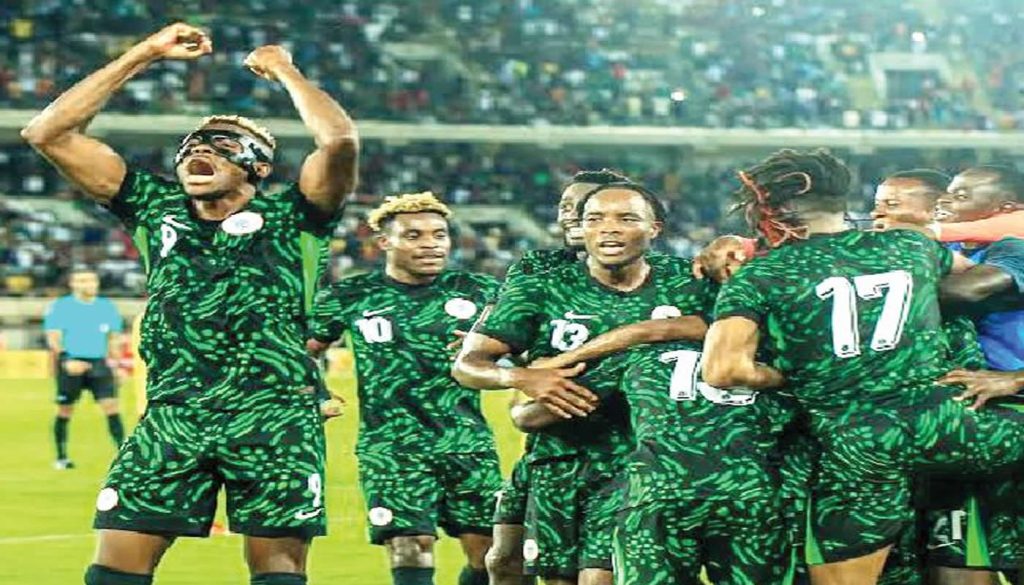
Nigeria’s meticulous documentation of nationality irregularities and FIFA’s historical precedent of enforcing strict eligibility rules suggest the governing body will likely overturn DR Congo’s World Cup qualification on Monday.
by Nij Martin
As FIFA prepares to deliver its verdict on February 16, 2026, the Nigeria Football Federation’s confidence appears far from misplaced. While DR Congo argues that results should be decided on the field, the precedent and regulatory framework governing international football suggest Nigeria may have built an ironclad case that FIFA cannot ignore.
FIFA has consistently demonstrated zero tolerance for eligibility infractions, regardless of the sporting consequences. The governing body stripped Bolivia of World Cup qualification points in 2018 after fielding an ineligible player, and Cape Verde suffered a similar fate in 2014. These decisions, though controversial, established a clear principle: administrative compliance is non-negotiable in international football. Nigeria’s case appears to follow this established pattern, where documented violations supersede on-field results.
The NFF’s allegation that FIFA was “deceived” into clearing players is particularly significant. If proven, this strikes at the heart of FIFA’s regulatory authority and credibility. The organization cannot afford to appear complicit in fraudulent documentation or lax verification processes, especially with the expanded 2026 World Cup drawing unprecedented global attention.
The NFF’s confidence, as expressed by General Secretary Dr. Mohammed Sanusi, suggests they possess compelling evidence rather than engaging in speculative litigation. Football federations rarely pursue FIFA appeals without substantial documentation—the financial and reputational costs of failure are too high. The fact that Nigeria identified six to nine potentially ineligible players indicates systematic research rather than opportunistic protest.
Central to Nigeria’s argument is the violation of Congolese domestic law regarding dual citizenship. FIFA regulations explicitly require players to hold valid legal nationality in the country they represent. If DR Congo’s players obtained documentation that contradicts their own national laws, FIFA faces a clear-cut regulatory violation. The alleged involvement of Aaron Wan-Bissaka, a high-profile player, adds weight to claims of incomplete nationality switches that may not have followed proper legal procedures.
Nigeria’s petition focuses on recent allegiance switches, a particularly sensitive area of FIFA regulations. The timing of these switches—occurring shortly before crucial World Cup qualifiers—raises legitimate questions about procedural compliance. FIFA’s eligibility rules contain specific windows and requirements for nationality changes, designed to prevent competitive manipulation. If DR Congo expedited these processes or bypassed mandatory waiting periods, the technical violations become undeniable regardless of the players’ genuine connection to the country.
The NFF’s December 15, 2025 filing date demonstrates procedural diligence, lodging the complaint within FIFA’s required timeframes. This attention to administrative detail suggests legal expertise backing the case, further indicating that Nigeria has identified concrete violations rather than pursuing a desperate gamble.
FIFA finds itself in a delicate position. Ruling against Nigeria risks appearing to condone documentation irregularities and undermines the integrity of its eligibility system. However, ruling for Nigeria prevents a nation with massive football infrastructure and fan base from missing the World Cup, while maintaining regulatory credibility. The expanded 2026 World Cup format, featuring 48 teams, provides FIFA with practical flexibility. Reinstating Nigeria doesn’t eliminate DR Congo from all participation possibilities, and the March intercontinental playoffs offer an additional pathway that softens the competitive impact of the decision.
While DR Congo’s “decide it on the pitch” argument holds emotional appeal, international football operates within a legal framework that cannot be selectively applied. Nigeria’s systematic approach, FIFA’s historical precedent, and the apparent strength of the eligibility violations suggest Monday’s ruling will favor the Super Eagles. For the millions of Nigerian fans holding their breath, the combination of legal merit and FIFA’s institutional imperatives points toward a decision that could indeed rewrite their World Cup story—not through backdoor politics, but through legitimate enforcement of the rules that govern the beautiful game.
The countdown to Monday’s verdict continues, but Nigeria’s confidence may prove well-founded.
NEWS NOW: