
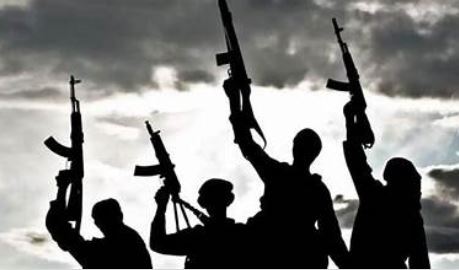
The U.S. Commission on International Religious Freedom (USCIRF) has accused some Nigerian police and army officers of colluding with Fulani militias in attacks and mass abductions, while U.S. Secretary of War Pete Hegseth revealed that a presidential directive to protect targeted Christians led to the killing of ISIS’s global second-in-command in Nigeria.
The United States Commission on International Religious Freedom (USCIRF) has released an explosive report accusing certain elements within Nigeria’s police and army of actively colluding with armed Fulani militias in devastating rural attacks and mass kidnappings. In its May 2026 brief titled “Non-state Violators of Religious Freedom in Nigeria: Fulani Militants,” the independent bipartisan commission stated that the continuous lack of resolution regarding high-profile kidnapping victims stems from complicity by security officials and institutional opacity during ransom negotiations. The report further alleged that the Nigerian government has utilized media censorship and conflicting state narratives to obscure the identities, logistics, and true religious or territorial motivations of these non-state actors, who are currently estimated to have over 30,000 active fighters operating in fluid cells across the Middle Belt and Southern regions.
Simultaneously, U.S. Secretary of War Pete Hegseth revealed that the Pentagon has executed localized counter-terrorism operations within Nigeria following an explicit directive from President Donald Trump to prioritize the protection of targeted Christian communities. Hegseth disclosed that this shifted rules-of-engagement directive quietly culminated in a high-yield military strike that eliminated ISIS’s second-in-command in Nigeria, a move the U.S. administration considers a significant blow to the Islamic State West Africa Province (ISWAP). Defending the unilateral or closely guarded nature of these deep-theatre operations, Hegseth maintained that President Trump deserves considerable credit for empowering the military to bypass standard diplomatic stagnation to address severe humanitarian and religious persecution threats directly.
The cascading allegations from Washington have placed the Nigerian security architecture under intense international scrutiny, threatening to impact foreign military aid and defense procurement channels. Alongside these operational revelations, USCIRF has petitioned the United States Congress to pass a legislative ban barring any public relations or lobbying groups working on behalf of blacklisted, severe religious-freedom-violating foreign entities from receiving financial compensation within the U.S. text. Back home, efforts by regional correspondents to secure reactions from both the Force Headquarters and the Defence Headquarters in Abuja proved entirely abortive, as military and police spokespersons refused to answer phone calls or reply to textual inquiries. Highlighting the ongoing information blockade, the USCIRF report noted: “The fates of all these kidnapping victims, like so many others, remain unknown to the public due to the sensitivity of ransom negotiations and, in some cases, possible collusion between perpetrators and some officials from the police and/or army. Further complicating matters is the fact that both conflicting media narratives and reported government censorship have hindered accurate analysis of the identities and motivations of the alarming number of armed nonstate actors that violate religious freedom in Nigeria.
READ THE FULL STORY IN VANGUARD
NEWS NOW: