
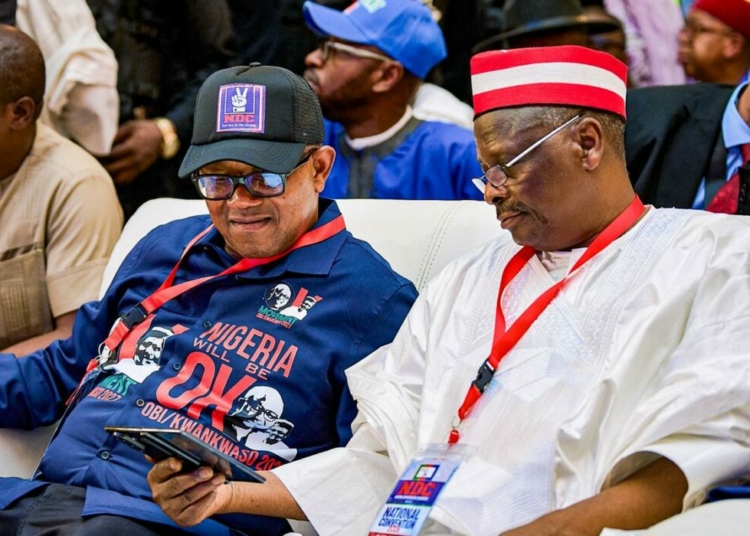
A northern youth group has rejected the reported political alliance between Peter Obi and Rabiu Kwankwaso, arguing that it does not align with northern political interests ahead of the 2027 elections.
The emerging political partnership between Peter Obi and Rabiu Musa Kwankwaso has hit another hurdle, this time from a northern youth group that says the alliance does not represent the interests of the region.
According to Leadership, the Northern Youths Assembly has openly rejected the reported Obi-Kwankwaso political alignment ahead of the 2027 general election. The group described the partnership as a betrayal of northern political values and questioned the rationale behind the alliance.
As the source reports, the youth group expressed concerns over Kwankwaso’s decision to align with Obi and the Obidient Movement, arguing that the move raises questions about his commitment to the ideals of the Kwankwasiyya Movement, the political structure that has long served as his support base. The group maintained that many northern youths feel disconnected from the political direction being proposed by the alliance.
The development comes amid increasing political realignments as major opposition figures position themselves for the next presidential election. In recent months, speculation around a possible Obi-Kwankwaso partnership has intensified, with both politicians emerging as key figures in efforts to build a formidable opposition platform capable of challenging the ruling APC. Analysts have repeatedly pointed to the combined influence of both men as a potentially significant factor in the 2027 race.
However, not everyone is convinced. The Northern Youths Assembly insisted that political alliances should reflect the aspirations and interests of the people they seek to represent. According to the group, any arrangement that fails to adequately address northern concerns may struggle to gain widespread acceptance across the region.
The criticism highlights the challenge facing opposition politicians attempting to build broad-based coalitions in Nigeria’s highly diverse political environment. Regional loyalties, ideological differences, and competing ambitions have historically complicated efforts to create unified opposition movements. Recent developments within opposition circles have also underscored how difficult it can be to maintain cohesion among influential political actors.
Despite the backlash, supporters of the Obi-Kwankwaso partnership argue that the alliance could provide a stronger platform for addressing national challenges and offer voters an alternative political direction. Discussions about the coalition continue to generate debate across the country, particularly among young voters and opposition supporters.
For now, the rejection by the Northern Youths Assembly adds another voice to the growing conversation around opposition unity and electoral strategy. With the 2027 election cycle gradually taking shape, reactions from influential groups such as this are likely to play a role in shaping public perception of any proposed political alliance.
NEWS NOW: