
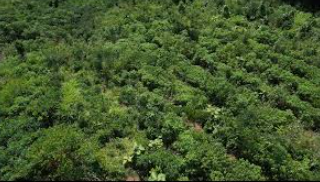
Following the unprecedented abduction of 39 students and seven teachers in Oyo State, heightened security concerns have gripped the South West as authorities identify dense forest corridors across the region as potential safe havens for terrorists and kidnappers.
For about two decades, the northern part of Nigeria has been the primary theater of terrorism, characterized by mass killings and school abductions, but this terrifying trend has recently infiltrated the South West. The region was thrown into unprecedented turmoil last month when terrorists abducted 39 students, pupils, and seven teachers from schools in Oriire Local Government Area of Oyo State, shattering the illusion of safety in Yorubaland. The incident has sparked protests and strikes by teachers, prompting intense pressure on the government for a swift rescue and shifting public attention to the dense forests across the region where these assailants harbor and launch their attacks.
OYO
In Oyo State, the Ibadan–Ijebu-Ode corridor, particularly around the Cocoa Research Institute of Nigeria (CRIN), has emerged as a vulnerable flashpoint where dense forest cover and difficult terrain have facilitated recurring kidnappings and armed attacks. Reacting to the development, the President of the Yoruba Council Worldwide and Sooko Agoriesin of Ile-Ife, Sooko Oladotun Hassan, said: “The security of lives and property across Yorubaland remains a matter of utmost concern to all responsible leaders, traditional institutions, security agencies and community stakeholders. Reports of criminal elements operating within some forested corridors and along certain highways in the South-West should not be treated lightly, but neither should they be exaggerated in a manner that creates unnecessary panic among citizens. There have been recurring security concerns along some routes traversing dense forest belts, including sections of the Ijebu-Ode–Ibadan Road, Ilesa–Ado Ekiti Road, Akure–Owo Road, and parts of the Lagos–Ibadan corridor, where incidents of kidnapping and armed attacks have been reported at various times. Likewise, forests stretching across parts of Ogun, Oyo, Ondo, Ekiti and Osun States have occasionally featured in security reports concerning the activities of criminal gangs and kidnappers. These incidents have understandably heightened public anxiety and affected confidence among commuters. However, it is important to distinguish between criminality and terrorism in the legal and operational sense. Security agencies are best positioned to make such classifications based on intelligence and evidence. What is undeniable is that criminal groups have exploited difficult terrains, particularly remote forests, to carry out kidnappings and other violent crimes. The Yoruba Council Worldwide strongly advocates a comprehensive security architecture that combines federal security agencies, state-backed security outfits, local intelligence networks, traditional rulers, hunters, vigilante groups and community leaders. Security challenges of this nature require coordination, professionalism and lawful engagement rather than rhetoric.”
OGUN
Similarly, Ogun State faces mounting security challenges with several strategic routes and forest corridors identified as potential entry points and hideouts for criminal elements. Notable vulnerabilities include the Abeokuta–Imeko axis through the Iwoye forest, which provides expansive cover that complicates effective monitoring, as well as the widely connected Badagry–Atan–Abeokuta–Sokoto road corridor. Furthermore, the Abeokuta–Olodo–Ibadan road has been flagged as a critical area of concern, demanding enhanced surveillance and intelligence gathering to secure its accessible pathways from the movement of these undesirable groups.
READ THE FULL STORY IN VANGUARD
NEWS NOW: