
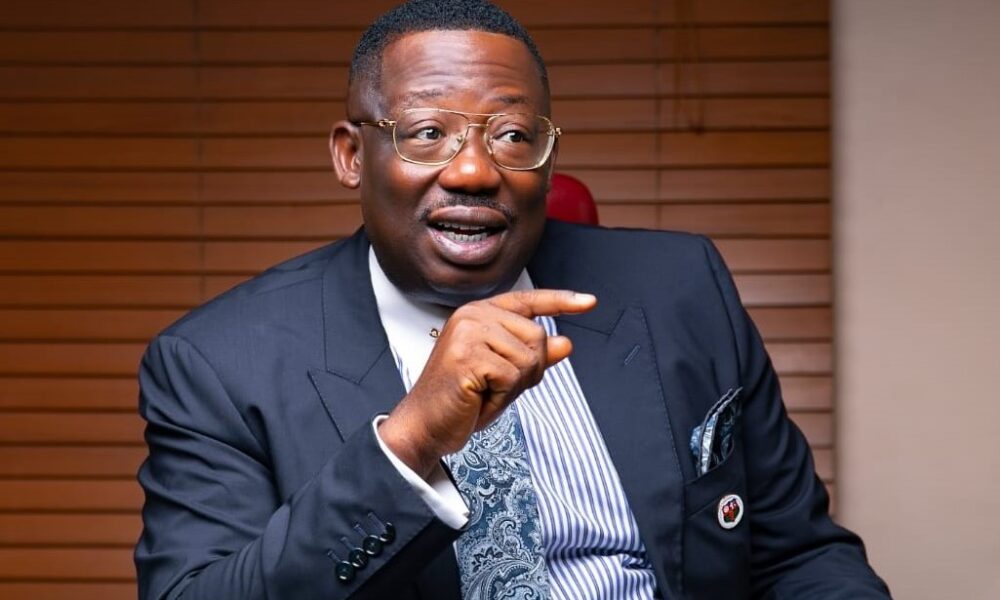
Dele Oye, Chairman of the Alliance for Economic Research and Ethics, has condemned the IMF’s call for new fuel and telecom taxes in Nigeria, arguing the country can boost revenue without burdening the over 140 million Nigerians already living in poverty.
Nigeria’s tax revenue has jumped nearly threefold in three years — so why is the IMF still pushing for more, asks Dele Oye.
The Chairman of the Alliance for Economic Research and Ethics LTD/GTE (AERE) has come out swinging against the International Monetary Fund’s recommendation that Nigeria slap new taxes on petroleum products and telecom services, calling the move insensitive and warning it would deepen hardship for over 140 million poor Nigerians.
Oye’s case rests on the numbers: tax collections rose by more than 180 per cent in three years, climbing from N10.1 trillion in 2022 to N28.3 trillion in 2025. To him, that’s proof Nigeria doesn’t need fresh levies — it needs better collection. Speaking on ARISE News, he put it bluntly: “I agree with them that the diagnosis is correct, but the prescription is wrong.”
According to The Sun, he didn’t spare businesses from the conversation either, pointing to what he called “hidden taxes” already crushing them — punishing borrowing costs, unreliable power supply, multiple levies from different government tiers, forex volatility and security expenses. With commercial lending rates above 35 per cent and energy costs soaring, Oye warned new taxes could scare off investment altogether.
Oye also took aim at the IMF’s broader approach, arguing its recommendations are too mechanistic: “The IMF template is not necessarily made for developing countries like Nigeria.”
Rather than new taxes, the Alliance is pushing administrative reform instead — pointing out that even the IMF admits better tax administration alone could deliver gains on par with new taxation, without squeezing already-struggling households and businesses further.
NEWS NOW: