
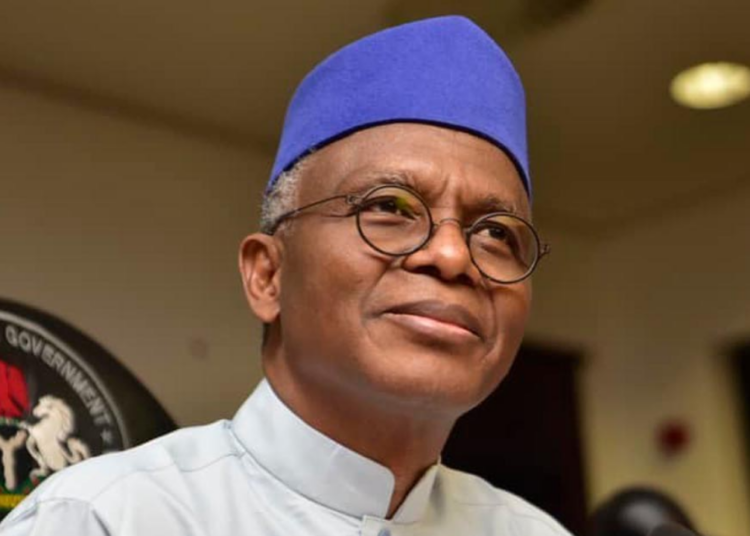
After years of political invincibility, former Kaduna State Governor Nasir El-Rufai has been cornered by his own braggadocio, a damning legislative audit, and a reopened cold case — and this time, his enemies in government, the courts, and the court of public opinion appear to finally have the ammunition they need to make the charges stick.
by Nij Martin
For years, Nasir El-Rufai seemed untouchable. He survived the Obasanjo years. He survived Goodluck Jonathan, who investigated him and, according to El-Rufai himself, lost in court. He survived the internal wars of the APC, the gossip of Abuja’s political class, and a thousand allegations that never quite found traction. He was loud, brilliant, and slippery — the kind of politician who seemed constitutionally incapable of being pinned down.
That era is over. On Monday night, El-Rufai sat in EFCC custody in Abuja, detained after hours of interrogation over an alleged N432 billion corruption probe. At the same time, criminal charges were being filed against him in the Federal High Court for admitting on national television that he and associates tapped the phone of the National Security Adviser. And hovering above it all was the reopened case of Dadiyata — the government critic who disappeared from his Kaduna home in 2019 and was never seen again. The walls, built brick by brick over years of alleged excess, had finally closed in.
The billions they could no longer ignore
The EFCC did not come for El-Rufai in a hurry. They came prepared. A senior source within the commission was deliberately measured when confirming the investigation:
“The commission has been investigating him for about a year now. As a commission, we don’t just rush to invite suspects. Persons accused are always the last; that is after we might have done our investigation to an advanced stage. We are investigating him on the allegations against him by the Kaduna State Assembly.”
That Kaduna State House of Assembly report, compiled by an ad hoc committee in 2024, is the kind of document that keeps lawyers up at night. It alleged that most of the loans obtained by El-Rufai’s administration across his eight-year tenure were not utilised for the purposes for which they were secured. The committee’s chairman, Henry Zacharia, presented findings so damning that the House Speaker, Yusuf Dahiru Leman, did not mince words: about N423 billion had been siphoned, he alleged, leaving Kaduna State with heavy financial liabilities and a ballooning debt profile.
The specifics are even more incriminating. Beyond the headline figure, the report cited N155 million in disputed cash payments and contracts, N1.37 billion allegedly diverted from a light rail project, and N64.8 million reportedly laundered by senior aides. Former appointees — including Jafaru Sani, Jimmy Lawal, Bashir Saidu, and Samuel Aruwa — are already in custody or under investigation in connection with the same allegations. The men who served El-Rufai are being squeezed, and investigators are working their way up the chain.
El-Rufai’s denials have been consistent but increasingly hollow. He insists every kobo was properly applied to infrastructure, education, healthcare, and security. But Monday’s detention — and the blunt word from the EFCC that he would not be released that night — signals that the commission no longer considers his version of events adequate.
He handed them the gun, then pulled the trigger himself
If the corruption case required patient investigation, the cybercrime charge required none at all. El-Rufai handed prosecutors everything they needed on live television.
During his Arise TV appearance on February 13, 2026, the former governor — attempting to expose an alleged plot against him — revealed that he and associates had been monitoring the National Security Adviser’s phone communications. His words were unambiguous:
“Ribadu made the call, because we listened to their calls. The government thinks that they are the only ones who listen to calls. But we also have our ways. He made the call, he gave the order that they should arrest me. That technically is illegal. I know, but the government does it all the time. They listen to our calls all the time without a court order. But someone tapped his phone and told us that he gave the order.”
The admission was breathtaking in its recklessness. When the presenter pointed out that tapping the NSA’s phone was illegal, El-Rufai essentially shrugged — acknowledging the crime while refusing to back down. Security analyst Bulama Bukarti immediately framed what had just happened:
“Tapping the National Security Advisor’s phone is a serious crime that’ll definitely lead to a jail term. El-Rufai bragged on national TV that ‘they tapped the National Security Advisor’s phone’. Normally, phone tapping gets you 2-3 years for cybercrime, but tapping the NSA’s phone? That’s 10 years in jail.”
Senior Advocate Babatunde Ogala was equally unsparing in his legal assessment: “This is not only because it was done to the National Security Adviser — tapping the line of a regular citizen, you have to face the law. It is worse being done to the NSA.”
The government moved swiftly. Criminal charges were filed under three counts of the Cybercrimes (Prohibition, Prevention, etc) Amendment Act, 2024 and the Nigerian Communications Act, 2003. The charge sheet did not require complex investigation or whistle-blowers or months of surveillance. It simply quoted El-Rufai back to himself. In the annals of Nigerian political self-destruction, few moments rival the spectacle of a man filing his own criminal confession on prime-time television.
Dadiyata’s shadow falls on Kaduna
The most chilling development in the El-Rufai crisis is not about money or phone taps. It is about a man who vanished.
Abubakar Idris — known online as Dadiyata — was a sharp-tongued government critic who disappeared from his Kaduna home on August 1, 2019, taken by gunmen. For nearly seven years, the case has languished. Now the DSS has reopened it, and El-Rufai, along with his sons Bello and Bashir, is squarely in their sights. His passport has been seized. He cannot leave the country.
Investigators have identified what they consider a telling contradiction at the heart of El-Rufai’s story. A security source explained:
“Former governor El-Rufai claimed that until Dadiyata’s disappearance he didn’t know that anybody with such a name existed. However, social media posts by his sons, Bello and Bashir, suggest otherwise. Posts by his sons on ‘X’ clearly showed that Dadiyata was a problem for their family. That is why Bello and Bashir will be invited along with their father to help in our investigations.”
Compounding matters is that El-Rufai himself, during the same Arise TV interview that produced his cybercrime confession, claimed to know of a police officer who allegedly confessed to participating in Dadiyata’s abduction. Security officials pounced on this: if he knew, why had he never reported it? Why sit on that information for years while a man’s family agonised over his fate?
A coalition of victims, represented by former National Human Rights Commission chairman Professor Chidi Odinkalu, spoke for the many who suffered under El-Rufai’s tenure:
“We speak today as representatives of countless individuals, families, and communities who endured eight years of profound hardship, terror, fear, and loss under the governorship of Nasir El-Rufai in Kaduna State (2015–2023). Our sole demand is accountability under the rule of law: thorough, independent investigations; prosecutions where evidence warrants; and closure for traumatized victims and families.”
The trap snaps shut
El-Rufai’s supporters will argue, with some justification, that the timing of these prosecutions — as Nigeria moves toward another election cycle — is no coincidence. Opposition figures have noted the irregularities: criminal charges filed before a formal invitation, agencies apparently coordinating to close every exit. The Labour Party’s interim chairman, Senator Nenadi Usman, was direct: “I am surprised that the Federal Government went ahead to file charges without inviting him first to shed more light on the source of the information he gave out. What it means is that the Federal Government is already indicting him.”
But here’s the thing about traps: they only work if you walk into them. And El-Rufai walked, eyes open, into every single one. He went on television and confessed to a cybercrime. He boasted about having intelligence on a sitting NSA while under active investigation. He claimed knowledge of a cold-case abduction without ever reporting it to authorities. He spent years allegedly overseeing a government that the legislature later determined had misappropriated hundreds of billions of naira.
Presidential spokesman Bayo Onanuga captured the government’s posture with clinical precision, accusing El-Rufai of attempting to “create political tension in the country, create an atmosphere of fear and unrest, and then damage the government through deliberate misinformation” and to “divert attention from his domestic problems in Kaduna State, where he is facing massive corruption allegations.”
Outside EFCC headquarters on Monday, protesters carried placards reading “El-Rufai not above the law” and demanded a thorough probe. Their spokesman, Muhammad Abdullahi, said what many Nigerians were thinking:
“It is a question of accountability and stewardship of public trust. The courtroom remains the proper venue for vindication. If El-Rufai is confident in his integrity, he should allow the judicial process to run its full course. Let integrity, not rhetoric, determine the outcome.”
The long game finally pays off
El-Rufai has beaten charges before. He has walked out of interrogation rooms before. He has given fire-breathing interviews and written incendiary letters and dared governments to come at him. He is not a man who crumbles easily.
But this time feels different. The EFCC has spent a year building its case before making a move. The cybercrime charge needs no investigation — only a TV remote and a timestamp. The Dadiyata case carries the moral weight of a nation that never forgot a man who was taken in the night. The asset-stripped, debt-ridden ledger of Kaduna State speaks for itself. And a passport sits in a DSS safe, making sure there is no Cairo flight, no strategic retreat, no buying of time.
When asked Monday night whether El-Rufai would be released, the EFCC source gave an answer that said everything:
“He is still in our custody and wouldn’t be released today.”
For Nasir El-Rufai’s many enemies — in government, in Kaduna, in the families of those who suffered — those eleven words were a long time coming. Whether justice or persecution ultimately defines this moment, one thing is clear: they finally have him in the room. And this time, the door is locked.
NEWS NOW: