
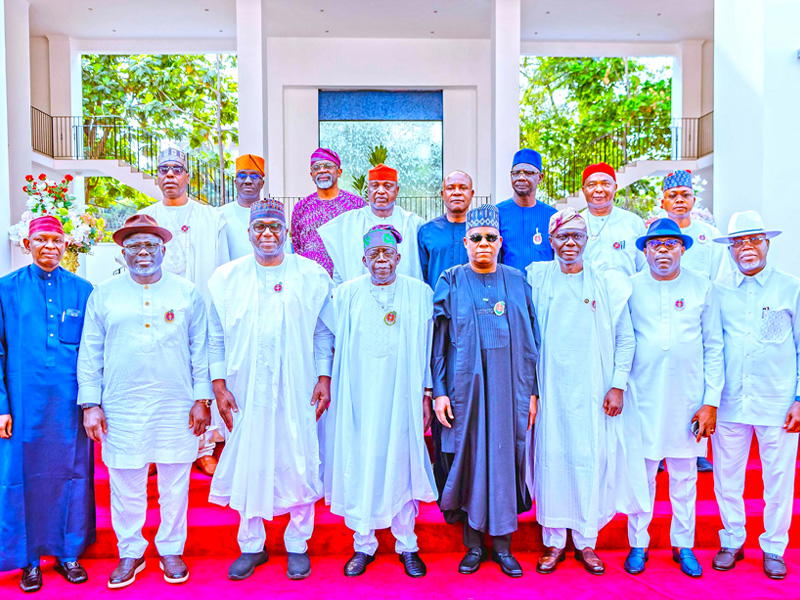
The debate over establishing state police in Nigeria has reached a critical turning point as several governors move to actualize decentralized units, despite vocal warnings from leaders like Governor Babagana Zulum regarding potential political misuse
The movement toward decentralizing law enforcement in Nigeria gained significant momentum over the weekend of March 21–22, 2026, as governors and federal lawmakers intensified a defining debate on the merits of state-led policing. While the majority of state executives, including Dapo Abiodun (Ogun), Caleb Mutfwang (Plateau), and Abba Yusuf (Kano), are already structuring regional outfits to combat rampant kidnapping and banditry, a significant bloc of dissenters remains. Governors Babagana Zulum of Borno and Ahmed Aliyu of Sokoto argued that Nigeria has not yet developed the institutional maturity to prevent these forces from being weaponized by governors for political intimidation and the repression of domestic opponents.
Despite these reservations, the federal government appears committed to the transition. Following a formal request from President Bola Tinubu, the Nigerian Senate recently pledged to conclude all necessary constitutional amendments by the end of 2026. President Tinubu has emphasized that moving policing to the Concurrent List is essential to “take over our forests from marauders,” but he has also urged the National Assembly to incorporate “robust checks and balances” to prevent a “free fall” of police power. To facilitate this, the newly appointed Inspector General of Police, Olatunji Disu, has inaugurated a specialized committee to draft the operational framework that would allow state units to coexist alongside the federal force.
The urgency of the reform is underscored by a security architecture currently stretched to its breaking point. With a police-to-citizen ratio estimated at roughly one officer for every 650 Nigerians, proponents argue that local knowledge and community trust are the only viable solutions to intelligence-led crime fighting. However, stakeholders like the Miyetti Allah Cattle Breeders Association (MACBAN) and Amnesty International have cautioned that without strict federal oversight on recruitment and training, state police could exacerbate ethnic tensions and human rights abuses. As the legislative process enters its most critical phase, the focus has shifted from whether to decentralize to how to safeguard the new system from executive capture.
State Police Debate: Support vs. Opposition (March 2026)
| Stance | Notable Supporters | Key Arguments |
|---|---|---|
| Pro-State Police | Ogun, Plateau, Kano, Zamfara, Taraba, Kwara, Lagos APC | Local terrain knowledge; faster response; decentralized burden. |
| Anti-State Police | Borno (Zulum), Sokoto, MACBAN (partial), Former President Buhari | Risk of political abuse; lack of funding; potential for ethnic bias. |
| Federal Stance | President Tinubu, IGP Olatunji Disu | Essential for forest security; requires strict constitutional safeguards. |
| Legislative Timeline | Senate / National Assembly | Goal: Constitutional Amendment completion by December 2026. |
READ THE FULL STORY IN VANGUARD
NEWS NOW: