
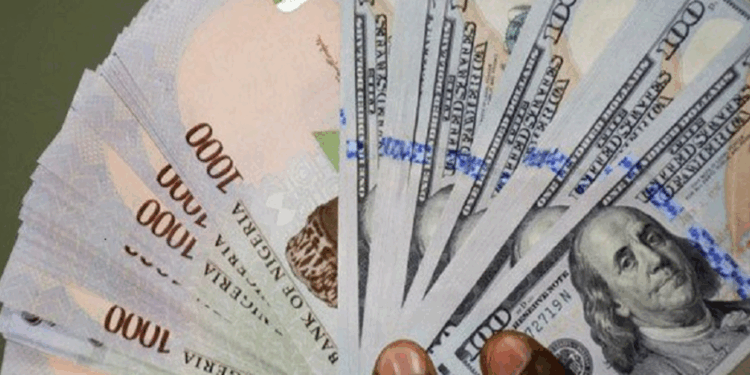
The Nigerian Naira has tumbled to ₦1,425 in the official market, wiping out weeks of gains just as the Central Bank of Nigeria (CBN) implemented a 50 basis-point interest rate cut despite hitting a 13-year high in foreign reserves.
The brief period of optimism surrounding the Nigerian Naira’s recovery has hit a significant roadblock, with the currency weakening beyond ₦1,400 for the first time in six weeks. Just fourteen days after analysts projected a move toward a “fair value” below ₦1,300, the local currency closed at approximately ₦1,425 in the official market on Tuesday, March 10, 2026. This reversal has handed a decisive victory to contrarian speculators who wagered against the currency’s rally when it touched ₦1,337 in late February. The sudden volatility suggests that in financial markets, the crowd’s confidence is often fragile, while the “contrarian is frequently correct” when betting on the persistence of structural imbalances.
This downward pressure on the Naira appears to have been triggered by the Central Bank of Nigeria’s (CBN) surprising decision to reduce the Monetary Policy Rate (MPR) by 50 basis points to 26.5 percent. The apex bank justified the pivot toward easing by citing a robust external reserve position, which recently climbed to a 13-year high of over $50 billion. Governor Olayemi Cardoso noted that the move was predicated on a sustained disinflationary trend and what the bank perceived as burgeoning stability in the foreign exchange market. However, the immediate market reaction serves as a reminder that “stability is easier declared than maintained,” as the rate cut may have inadvertently signaled a premature softening of the bank’s hawkish stance.
Beyond immediate policy shifts, some analysts suggest that the Naira’s unpredictability may stem from a more complex institutional strategy. There is growing speculation that the CBN may not desire an excessively strong Naira at this stage, as it could deter the very foreign portfolio investors the bank has spent years courting with high interest rates. While a stronger currency is politically popular, it could become a “Greek gift” that reduces the competitiveness of non-oil exports and complicates the management of capital flows. As the market digests the current $50 billion reserve buffer and the new interest rate regime, the focus remains on whether the CBN can balance growth-stimulating cuts with the need to prevent a disorderly slide of the national currency.
READ THE FULL STORY IN NAIRAMETRICS
NEWS NOW: