
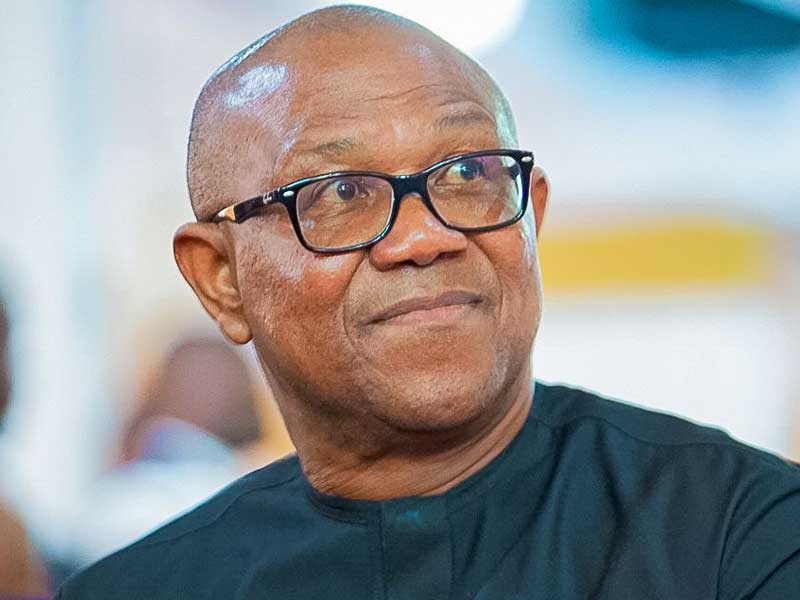
Former Anambra governor and presidential candidate Peter Obi faced intense backlash on X after his Super Bowl post celebrating Nigerian talent featured only three players—all with Igbo-linked surnames—while omitting three other Nigerian-rooted players including Yoruba names Boye Mafe and Olusegun Oluwatimi, triggering accusations of tribal bias, selective recognition, and questions about his own sports development record as governor.
by Nij Martin
In politics, good intentions don’t always translate to good optics. Former Anambra State Governor and Labour Party presidential candidate Peter Obi learned this lesson the hard way when what appeared to be an inspirational message about Nigerian excellence at the Super Bowl morphed into a full-blown controversy about tribal bias and selective recognition.
As the Seattle Seahawks prepared to face the New England Patriots in what would become a 29-13 victory, Obi took to X (formerly Twitter) with a message that seemed designed to inspire. “As I prepared to watch the Super Bowl tonight, I was reminded of Nigeria’s vast potential,” he wrote, highlighting Michael Onwenu of the New England Patriots, Uchenna Nwosu of the Seattle Seahawks, and Offensive Player of the Year Jaxon Smith-Njigba as “three exceptional Nigerians making their nation proud on the world’s biggest sporting stage.”
The post continued with a broader reflection on governance: “Their success is not accidental; it is the result of discipline, opportunity, and systems that recognize and reward talent. Watching them, one cannot help but reflect on what Nigerians can achieve when provided with the right environment to thrive.”
On its face, the message was unifying—a call for better leadership and systems to unleash Nigerian talent. But Nigerian social media users quickly noticed a glaring omission: Obi had mentioned only three Nigerian players when there were actually six on the rosters.
The missing names? Seattle Seahawks linebacker Boye Mafe (parents Wale and Bola Mafe), center Olusegun Oluwatimi (parents Oluremi and Ayodele Oluwatimi), and safety Nick Emmanwori. Critics immediately noticed that two of the omitted players bore distinctly Yoruba surnames. The third player, Emmanwori, is from the South-South region in Rivers State, while those celebrated—Onwenu, Nwosu, and Smith-Njigba—were either Igbo or had Igbo connections.
The backlash was swift and unforgiving. HRH Banke Oniru posted: “We can easily pardon a child that is afraid of darkness. The real tragedy and a life without purpose is when men are afraid of the light. The players are six not three… We really dodged a bullet!”
Pastor Who was more direct in his assessment: “This guy has to be the most openly bigoted politician in our political space. Six Nigerians represented and he made sure to only congratulate the ones who are Igbo. Yet, he wants to become President!”
One particularly pointed criticism came from a user identified as INÁ NJÓ ÒGÍRÌ Ó ṢÀ, who wrote: “Three exceptional Nigerians,” you said—conveniently the ones with Igbo surnames (Onwenu, Nwosu) plus one more. But on that same field: – Boye Mafe (Seahawks LB, parents Wale & Bola Mafe : unmistakably Yoruba) – Olusegun Oluwatimi (Seahawks C, parents Oluremi & Ayodele Oluwatimi: classic Yoruba). Both made the Super Bowl roster, both represent Nigerian excellence, yet invisible in your “pan-Nigerian” celebration. The message about leadership and institutions is fine, but when you curate which Nigerians “make the nation proud” on the global stage and quietly erase the Yoruba ones, it stops being unifying and starts looking like ethnic gatekeeping dressed in national colors. Subtle bigotry is still bigotry. Celebrate ALL the talent or admit the lens is tribal. A truly new Nigeria shouldn’t come with selective pride.”
Not everyone agreed with the harsh interpretation. Dr. Wasiu Lawal offered a more charitable explanation: “The names he listed were all starters. They were introduced at the beginning of the game and I guess he took notes then. The other players were instrumental for both sides and we should truly recognize them all. We really shouldn’t be reading meanings into everything.”
But the defense seemed drowned out by a broader critique that went beyond the omission itself. Critics questioned what Obi had accomplished during his eight years as Anambra governor regarding sports development. “So for the period of 8 yrs you were Governor of Anambra state, what was your strategic vision for sports? Facilities built, reforms initiated & where are the talents discovered through your disciplined, focused leadership. Anybody can type anything. What did you when you led? Tell us,” one critic demanded.
This controversy highlights Nigeria’s persistent challenge with ethnic politics and the microscope under which political figures operate in the social media age. For Obi, who has positioned himself as a pan-Nigerian candidate representing a “new Nigeria” beyond ethnic and religious divisions, the backlash was particularly damaging. Whether the omission was accidental, a result of only noting the starting lineup, or reflected unconscious bias, the perception was formed: selective pride along ethnic lines.
In a nation where trust in political leaders is already fragile and ethnic suspicions run deep, even an inspirational message about Nigerian excellence can become a litmus test for tribal allegiance. The irony is profound—a post meant to celebrate what Nigerians can achieve with the right systems instead became evidence of the very divisions that have long prevented Nigeria from reaching its potential.
As one commentator summarized the sentiment: “A truly new Nigeria shouldn’t come with selective pride.”
NEWS NOW: