
Visit Business Hallmark – Business Hallmark – breaking business, politics and finance news
BUSINESS HALLMARK
Donald Trump’s re-election has not only threatened to create a new order in the United States, but has led to immense uncertainty across the world. His return to the White House, it was widely speculated would lead to many seismic shifts in global policies, especially foreign aid.
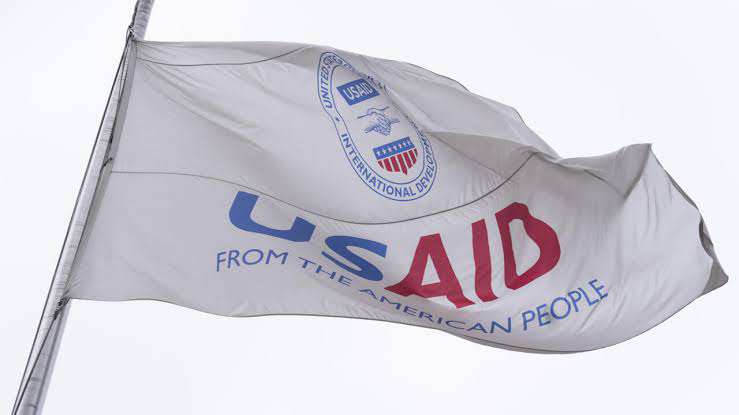
He has not disappointed analysts of a doomsday scenario. Among other moves President Trump has made, his cancellation of the United States Agency for International Development, USAID, according to analysts, has huge implications for the healthcare system in Nigeria.
Around the globe, Trump’s isolationism has forced countries to recalibrate their strategies, and their citizens are beginning to brace for what lay ahead. In Germany for example, the government has increased defence budget to $540 billions, the highest since the Second World War, because of Trump’s reluctance to continue to fund the North Atlantic Treaty Organisation, NATO .
Nigeria, according to analysts, can not be an exception – a country that relies on foreign aid to strengthen its healthcare system.
Many organisations in the healthcare ecosystem are beginning to think of recalibrating their goals and methods. Aaron Sunday, leader of the Association of Positive Youths with HIV in Nigeria (APYIN), is worried about what could change and how this might affect him. His fear is the withdrawal of USAID assistance in the area of healthcare.
Trump’s executive order brought about a 90-day freeze on foreign aid, and the USAID became a target in the attempt to slash foreign assistance.
Three days after the executive order ushering in a 90- day freeze, an email reached Mr. Sunday’s inbox: the Lift Equity project, a successful initiative set up to improve adolescent access to HIV care in Nigeria, had been halted . The inroads and progress they had made – engaging local authorities, advocating for policy reforms – came to an abrupt halt.
“The age of sexual debut in Nigeria is often below 18, so policies must recognize this reality to ensure effective HIV prevention and control,” Mr. Sunday explained.
“We had begun building momentum, holding meetings with local authorities, parents, and health commissioners across states. Then, suddenly, everything stopped.”
Mr. Sunday’s case is not a one-off or isolated. It was learnt that a lot of civil society organisations and leaders of CSO networks across the country had received emails suspending ongoing projects with the agency. It was gathered that the development has left beneficiaries, many of whom rely on them for healthcare, education, and livelihoods with uncertain futures.
Rupture across the health sector
The suspension of foreign assistance and the halt of USAID-funded projects created a sense of uncertainty in Nigeria, it triggered a heated debate. One of the highlights is the debate it has triggered around dependency. Some see the development as an opportunity for the government to reduce dependence on foreign aid and take greater ownership of healthcare funding. Others are of the view that the sudden stoppage would cripple essential services and put vulnerable populations at risk.
The effects according to reports are becoming clear across national, state, and local levels, as a lot of non-governmental organisations have seen their activities come to a halt…
NEWS NOW: