
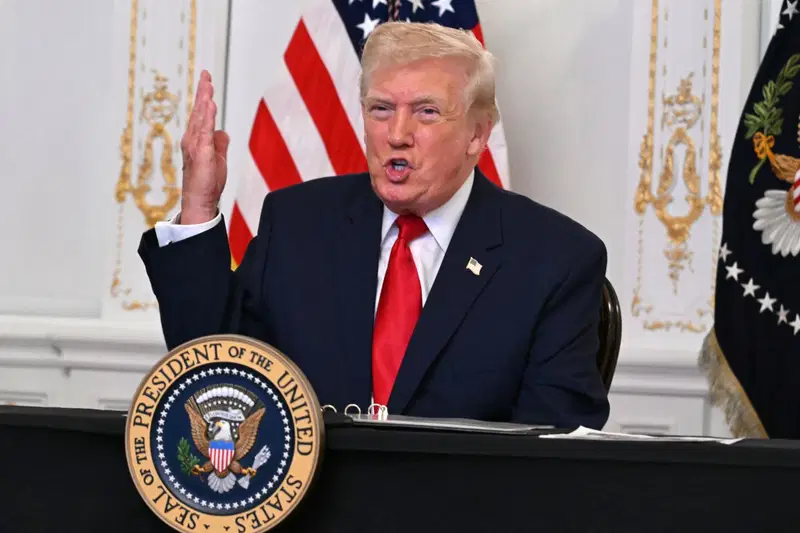
The European Union and the United Kingdom have formally rebuffed President Donald Trump’s demand for military assistance in the Strait of Hormuz, declaring they will not be drawn into the escalating conflict between the United States and Iran.
European Union foreign ministers meeting in Brussels on Tuesday, March 17, 2026, reached a firm consensus to reject President Donald Trump’s request for naval assistance to secure the Strait of Hormuz. Despite the start of U.S. and Israeli attacks on Iran bringing a fifth of the world’s oil and gas traffic to a standstill, EU leaders expressed a stark unwillingness to expand their current regional military mandate. EU foreign policy chief Kaja Kallas confirmed that there was no support for pivoting the existing “Operation Aspides” from the Red Sea to the Iranian coast, stating, “For the time being, there was no appetite in changing the mandate of the Operation Aspides for now. While the Strait of Hormuz is at the center stage, the Red Sea also remains critical.”
The rejection from the EU was echoed by the United Kingdom, further isolating the Trump administration’s military strategy in the Persian Gulf. Prime Minister Keir Starmer signaled that while Britain would act to protect its own citizens, it would not participate in the offensive or the policing of the strait. Speaking on the escalating tensions, Starmer remarked: “First, we will protect our people in the region. Second, while taking the necessary action to defend ourselves and our allies, we will not be drawn into the wider war. And third, we will keep working towards a swift resolution that brings security and stability back to the region.” This unified front suggests that NATO allies are currently unwilling to provide the military assets Washington seeks, focusing instead on defensive measures for their own bases and civilian evacuations.
The diplomatic standoff comes at a precarious time for European security, as leaders fear that a protracted Middle East conflict will deplete the finite military resources needed for the war in Ukraine. European nations are particularly concerned that the U.S. may redirect air defense systems, originally destined for Kyiv, to protect American assets in the Middle East. With 23 of the 32 NATO allies sharing the EU’s stance, a formal request for backup at the alliance’s headquarters tomorrow appears unlikely to succeed. As energy prices continue to roil global markets, the rift between Washington and its traditional allies marks a significant turning point in the geopolitical response to the war in Iran.
NEWS NOW:
- ‘NYSC khaki isn’t being replaced with Adire’ — Minister Olawande clarifies after media storm
- LIST: Diaspora Nigerians arrested, jailed second quarter 2026
- How Rotary’s Values and 4-Way Test Can Lift Up Nigeria
- Atiku’s US lobbyists claim Biden snubbed Tinubu over drug trafficking allegations, move to block Tinubu-Trump meeting