
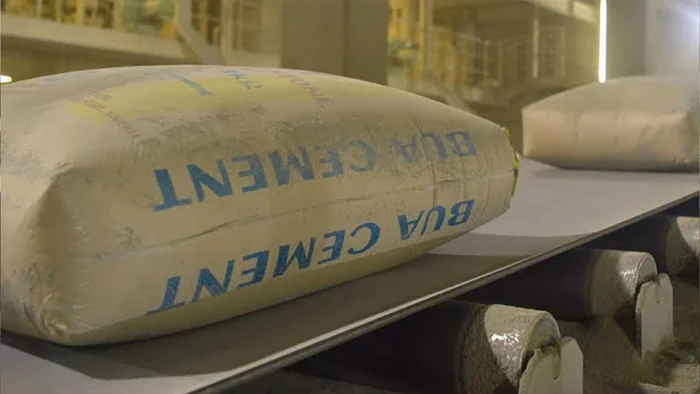
Despite producing more cement than it consumes, Nigeria pays nearly double the average African price for a 50kg bag, prompting the Federal Government to engage producers starting July 1 as high costs strain housing and infrastructure projects.
Nigeria makes more cement than it needs — yet Nigerians pay some of the highest prices on the continent for it.
Despite a local production capacity exceeding 60 million metric tonnes yearly, one of the highest in Africa, a 50kg bag of cement sells for between N12,500 and N15,000 in Abia, Lagos and Abuja — almost twice what several other African countries pay.
By comparison, a 50kg bag averages N6,000-N7,000 in South Africa, N4,000-N5,000 in Egypt, N6,500-N7,500 in Kenya, and N7,000-N8,000 in Ghana.
The Guardian reported that the industry is dominated by three companies — Dangote Cement, BUA Cement and Lafarge Africa (now HBM Nigeria Plc) — with combined installed capacity of 60-65 million tonnes yearly, against actual domestic consumption of just 25-30 million tonnes. Dangote alone controls over half of national production with capacity of about 35-35.3 million tonnes. The three firms generated over N6.53 trillion in revenue in 2025, with combined after-tax profit hitting about N1.65 trillion — a 142 per cent jump from 2024.
Manufacturers attribute high prices to steep energy costs, naira depreciation raising import costs for equipment and spare parts, and logistics, which they say can account for 30-40 per cent of the final retail price. They also note strong domestic demand and export opportunities to Ghana, Cameroon and Niger reduce pressure to cut local prices.
The Federal Government is now feeling the strain. Minister of Works, David Umahi, has urged producers to reduce prices, warning that high cement costs are complicating infrastructure projects and forcing continuous contract adjustments. He disclosed that formal engagement with cement companies will begin from July 1, 2026, adding that lower prices would benefit both government projects and citizens undertaking domestic construction. Umahi also urged producers to boost production capacity to support government projects.
With Nigeria’s housing deficit estimated at over 16 million units, stakeholders say the high cost of cement continues to weigh heavily on both public and private construction efforts.
NEWS NOW: