
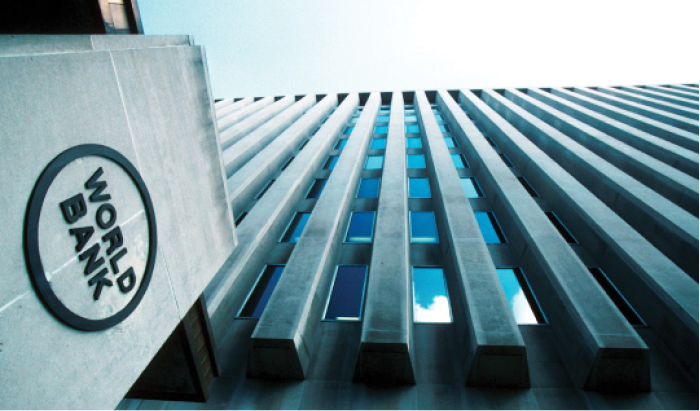
Nigeria has retained its position as the third-largest borrower from the World Bank’s International Development Association (IDA) with an exposure of $18.5 billion, as the federal government aggressively seeks an additional $1.25 billion facility despite warnings from finance experts.
Nigeria has retained its position as the third-largest borrower globally from the International Development Association (IDA), the concessional lending arm of the World Bank, despite recording a slight decline in its debt exposure during the first quarter of 2026. According to the IDA’s March 2026 financial statements, Nigeria’s outstanding debt exposure stood at $18.5 billion as of March 31, 2026, representing a marginal 1.1 per cent or $200 million reduction from the $18.7 billion recorded at the end of December 2025. However, on a year-on-year basis, the nation’s reliance on multilateral financing surged significantly by $1.2 billion, or 6.9 per cent, from the $17.3 billion recorded in March 2025. This long-term upward trajectory places Nigeria firmly behind only Bangladesh ($22.7 billion) and Pakistan ($19.2 billion) on the global borrower index, with Nigeria’s debt accounting for roughly eight per cent of the IDA’s total $230.8 billion outstanding portfolio.
The growing credit exposure highlights the federal government’s increasing reliance on highly concessional financing to bankroll major infrastructure, social investments, and macroeconomic reforms under the administration of President Bola Ahmed Tinubu. The State House is currently engaging the Bretton Woods institution for a fresh $1.25 billion facility aimed at expanding digital services, stabilizing electricity distribution, and strengthening tax administration. If approved, the proposed facility will bring total World Bank loan approvals secured under President Tinubu’s tenure to approximately $10.6 billion since June 2023. This follows previous heavy injections, including the massive $1.5 billion Reforms for Economic Stabilisation to Enable Transformation Development Policy Financing approved in June 2024, as other African nations like Ethiopia ($14.4 billion), Tanzania ($14.3 billion), and Kenya ($13.2 billion) similarly ramp up their underlying exposures.
However, the persistent accumulation of multilateral obligations has triggered severe apprehension among local economic stakeholders and fiscal analysts, especially given that Nigeria’s total public debt stock climbed to a staggering ₦159 trillion by the end of 2025. Financial experts are cautioning the government against long-term debt traps, pointing out that continuous borrowings erode future revenue through high service costs, regardless of the favorable repayment terms offered by the IDA. Echoing these structural concerns, a prominent finance expert and senior partner at SPM Professionals, Dr. Paul Alaje, warned that the current path places an unsustainable financial obligation on future generations. “So here is the point, as the volume increases, Nigeria has to pay more, mind you the debt they gave to us is not this year, but as of December 31 2025. So by the time we look at the one that we have retired and the new loans that have been approved and some that have been collected this year, it is clear that by the time the DMO is reporting that in the first quarter 2026, we would have crossed $160 billion. So it’s more of a burden on the economy. Whether we have the capacity to pay or not is a different kettle of fish,” Alaje added.
READ THE FULL STORY IN DAILY TRUST
NEWS NOW: