
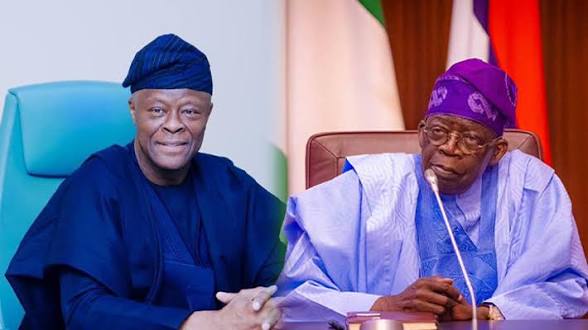
Wale Edun’s removal from office represents the impossible tension between pursuing necessary economic reforms and managing their devastating human cost—making him less a misfit and more an unwelcome messenger of uncomfortable truths.
When President Bola Tinubu quietly removed Finance Minister Wale Edun from his cabinet in April 2026, just hours after the minister’s 70th birthday, the narrative quickly fractured into competing storylines. Some blamed health issues. Others pointed to capital fund mismanagement. A few whispered about political conspiracies involving influential contractors. But beneath these surface explanations lies a more fundamental question: Was Edun removed because he was incompetent, or because he refused to compromise on fiscal principles that Nigeria desperately needed but couldn’t politically bear?
The evidence suggests the latter—that Wale Edun was less a misfit and more an inconvenient truth-teller whose crime was maintaining fiscal discipline in a system desperate for shortcuts.
Edun’s tenure as Finance Minister coincided with Nigeria’s most aggressive economic reforms in decades. Under his watch, the naira stabilized, foreign reserves climbed above $40 billion, inflation fell from 35 percent to 15 percent, and GDP growth improved from 2 percent to over 4 percent. These were not trivial achievements. They represented the painful structural adjustments that Nigeria’s economy needed—subsidy removal, currency liberalization, and tax reforms—all measures that hurt ordinary Nigerians in the short term but promised long-term stability.
Critically, Edun was one of the strongest public defenders of these reforms. Rather than sugar-coating the medicine, he consistently articulated the hard fiscal realities: Nigeria simply did not have the resources to maintain the old patterns of government spending. When contractors complained about delayed payments, when ministries lamented poor capital releases, when lawmakers criticized budget implementation, Edun’s position remained rooted in mathematical truth—there wasn’t enough money because debt service, salaries, and pensions consumed 95 percent of government revenue.
This was unpopular honesty. In a political culture that rewards optimistic narratives and convenient promises, Edun’s insistence on fiscal reality made him a liability.
Yet Edun’s critics seized on legitimate operational failures to build a case for his incompetence. Poor capital releases to health, housing, and power sectors were real. The concurrent implementation of multiple budgets violated the Fiscal Responsibility Act. The seeming indifference to contractors’ plight was damaging. These failures paint a portrait of a finance minister who, while intellectually sound on macroeconomic principles, struggled with the granular management of a complex political economy.
Perhaps this is where the “misfit” argument gains traction—not because Edun was wrong about the fundamentals, but because he lacked the political dexterity to implement difficult decisions while maintaining the fragile coalition of interests that government requires. A true craftsman might have found ways to maintain capital releases while protecting debt obligations, to communicate fiscal constraints while ensuring basic service delivery, to prioritize macroeconomic stability without sacrificing ministerial relationships.
Edun, by most accounts, did not. He operated like a goalkeeper protecting fiscal discipline, trapping payments and explaining why they couldn’t be released. This was technically defensible but politically unsustainable.
Here lies the central paradox: Nigeria needed someone like Edun to impose fiscal discipline, yet the very person most capable of such discipline was inevitably going to be hated by the system that needed reform. The cabinet frustrations, the contractor complaints, the poor budget implementation—these were not Edun’s personal failures so much as symptoms of an impossible institutional problem: how do you transform an economy while maintaining a functioning government?
Edun’s removal suggests that the Tinubu administration, having achieved significant macroeconomic stabilization, decided the pain threshold had been reached. It wanted someone—Taiwo Oyedele—who could maintain reform momentum while being more politically flexible on capital releases and spending priorities. Whether this represents pragmatic adjustment or the beginning of fiscal backsliding remains to be seen.
Wale Edun was neither a pure misfit nor a pure truth-teller, but rather an honest economist trapped in a political system that demands he be both. His removal reflects not the bankruptcy of his ideas but the exhaustion of his political utility. In Nigeria’s endless dance between reform and pressure, between principles and politics, Edun played the reformer when the system was ready for change, then became expendable when that change began causing visible pain.
That’s not failure. That’s tragedy—the tragedy of being right at exactly the wrong moment.
NEWS NOW: