
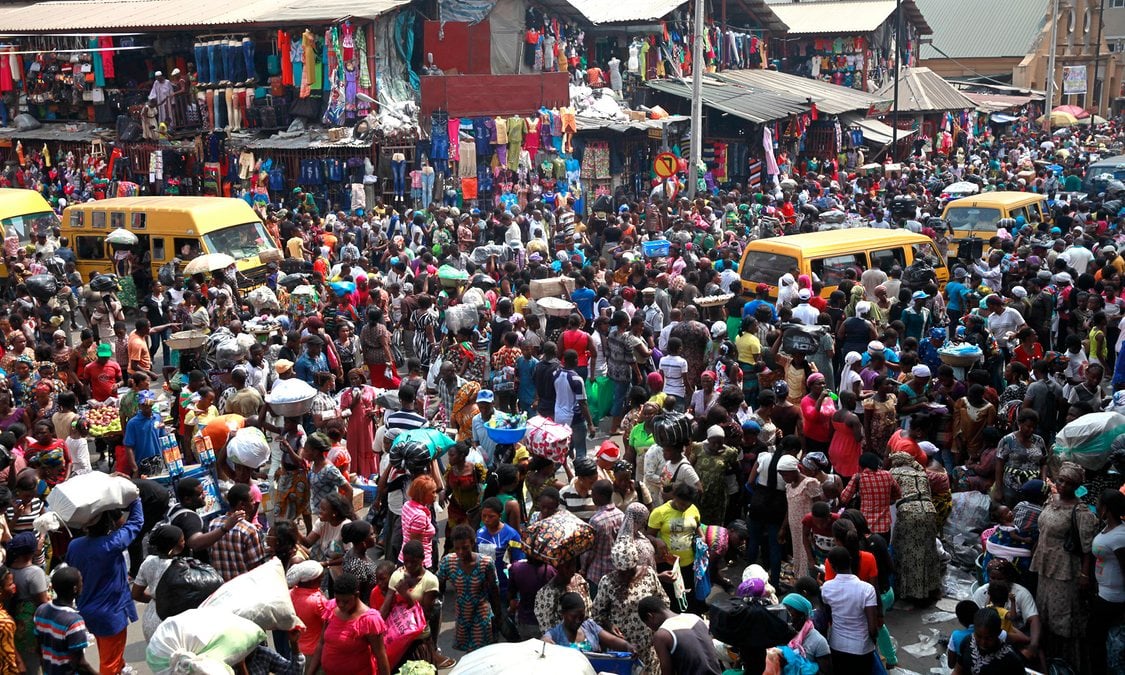
Nigeria remains Africa’s most populous nation in 2026 with over 242 million people, followed by Ethiopia, Egypt and the DRC, according to new estimates.
Africa’s population continues its rapid climb, with fresh 2026 estimates from Worldometer, as reported by Nairametrics, showing the continent’s youthful demographics and high fertility rates driving growth across its biggest nations. Here’s how the continent’s population giants stack up this year.
10. Algeria — 48 million Algeria rounds out the top 10 with 48.03 million people, per Worldometer’s 2026 estimates. Growth is steady but unhurried — just 1.25% annually, adding roughly 593,000 souls this year. The country’s massive footprint (2.38 million sq km) keeps density low at 20 people per sq km. Three-quarters of Algerians now call cities home, and the median age sits at a relatively mature 29.
9. Uganda — 52.8 million Uganda cracks the top 10 with 52.76 million residents, Worldometer’s latest figures show. This is a young nation in every sense — median age 17, fertility rate 4.0 children per woman — and it’s packed in tight, averaging 264 people per sq km across just 200,000 sq km of land. Growth here isn’t slowing anytime soon.
8. Sudan — 53.3 million Sudan’s population hit 53.28 million, climbing 3.14% in a single year — one of the sharpest jumps on the continent, Worldometer reports. That’s 1.62 million new people, plus over 252,000 net migrants, the highest inflow on this list. Urbanisation lags behind, though, with just 35% of Sudanese living in cities.
7. Kenya — 58.6 million East Africa’s economic engine keeps humming, with Kenya’s population reaching 58.64 million — up 1.92%, or roughly 1.1 million people, Worldometer data shows. A youthful median age of 20 and fertility rate of 3.1 are fuelling the workforce behind Kenya’s booming tech, finance and manufacturing sectors.
6. South Africa — 65.5 million South Africa sits at 65.45 million people, growing at a comparatively gentle 1.09% a year, according to Worldometer. Its fertility rate of 2.2 is among Africa’s lowest, and 67% of the population is urban — cementing its status as one of the continent’s biggest consumer markets.
5. Tanzania — 72.6 million Tanzania’s population climbed to 72.56 million, up 2.86% and adding over 2 million people in a year, Worldometer’s estimates show. A fertility rate of 4.4 and median age of just 18 point to a demographic engine that’s only warming up, with long-term implications for consumer spending and labour supply.
4. Democratic Republic of Congo — 116.5 million The DRC has surged to 116.45 million people, posting Africa’s fastest growth among top-10 nations at 3.21% — over 3.6 million new people in a year, per Worldometer. Fertility here is the highest on the list at 5.8 children per woman, and the median age is a striking 16, underscoring just how young this population is.
3. Egypt — 120.1 million Egypt holds steady as North Africa’s population heavyweight at 120.1 million, growing 1.47% and adding 1.74 million people, Worldometer figures indicate. Fertility has cooled to 2.7, but Egypt remains an economic anchor, with 41% of residents now living in urban centres.
2. Ethiopia — 138.9 million Ethiopia keeps its silver-medal spot with 138.9 million people, up 2.53% — more than 3.43 million added in a year, according to Worldometer. Yet only 23% live in cities, making it one of the least urbanised of Africa’s population leaders, while a median age of 19 signals a still-expanding young population.
1. Nigeria — 242.4 million Nigeria retains its throne with 242.43 million people, adding 4.9 million in a year — the continent’s largest absolute gain, Worldometer data shows. It’s now 2.92% of the entire global population, ranking sixth worldwide. Median age: 18. Fertility rate: 4.2. Urban share: 56%. Density: 266 per sq km. Nigeria’s numbers keep climbing across Lagos, Abuja, Kano and Port Harcourt alike.
Source: Worldometer 2026 population estimates, as reported by Nairametrics (nairametrics.com), July 11, 2026.
NEWS NOW: