
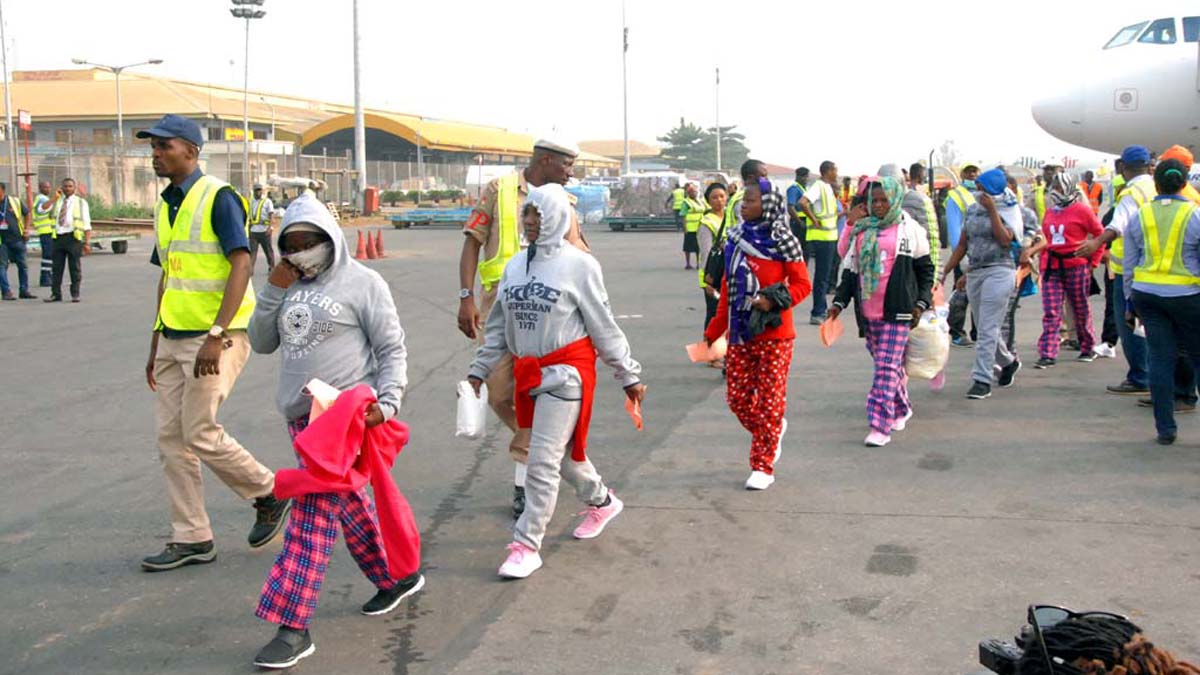
Sierra Leone has signed a bilateral agreement with the United States to accept up to 300 deported West African migrants annually, including Nigerians, marking the Trump administration’s latest expansion of controversial third-country deportation policies
Sierra Leone has officially agreed to accept Nigerian citizens and other West African migrants who are being deported by the United States under a new bilateral arrangement with the Trump administration. Speaking to Reuters, Sierra Leone’s Foreign Minister, Timothy Kabba, confirmed that the deal is part of a broader, accelerated deportation campaign orchestrated by Washington to expedite the removal of undocumented migrants from U.S. soil. The strategic agreement has positioned Sierra Leone as a primary transit hub for the repatriation of individuals from the Economic Community of West African States (ECOWAS) region, drawing immediate scrutiny from international human rights monitors regarding the legal rights and safety of the affected individuals.
The operational phase of the deal is scheduled to commence within days, with the first charter flight carrying the so-called third-country deportees expected to touch down in Freetown on May 20, 2026. This initial cohort will comprise 25 nationals hailing from Senegal, Ghana, Guinea, and Nigeria. Elaborating on the framework of the diplomatic pact, Foreign Minister Kabba stated, “Sierra Leone signed a Third Country National Agreement with the U.S. to accept 300 ECOWAS citizens from the U.S. per year with a maximum of 25 a month.” The structured arrangement mirrors an existing framework implemented by Ghana, limiting the intake strictly to citizens belonging to the West African regional bloc.
The policy of transferring deportees to third-party African states is an expanding facet of American immigration enforcement, with the U.S. government having previously utilized Eswatini, the Democratic Republic of Congo, Ghana, Cameroon, and Equatorial Guinea for similar extraterritorial processing. This practice has generated intense pushback from immigration lawyers and civil society organizations, who question the constitutional validity of dumping individuals in countries where they hold no citizenship or social ties. Past investigations have revealed that many deportees transferred under these programs are routinely forced to find their own way back to their home countries, often in direct violation of U.S. court-ordered protections designed to halt their expulsion.
READ THE FULL STORY IN VANGUARD
NEWS NOW: