
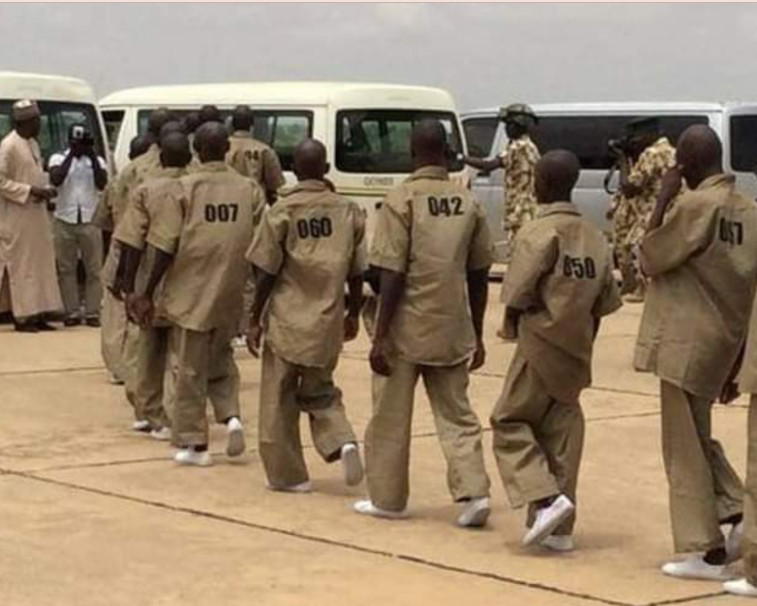
Retired military officers and human rights activists have sparked a national outcry by condemning the Federal Government’s reintegration of 744 “repentant” terrorists, warning that the short-term rehabilitation program could allow insurgents to infiltrate security agencies and gather intelligence.
The Federal Government’s decision to reintegrate 744 former terrorists into society following a six-month de-radicalization program has triggered a wave of condemnation from retired military officers, lawyers, and human rights activists. The graduates, who underwent vocational training and psychosocial therapy at the Operation Safe Corridor camp, include 597 individuals from Borno State and several foreign nationals from neighboring Niger, Chad, Cameroon, and Burkina Faso. While military authorities defend the exercise as a strategic move to dismantle extremist networks, critics argue that the initiative provides a “soft landing” for insurgents who may be escaping justice or seeking to infiltrate the very communities they once terrorized.
Rear Admiral Dickson Olisemelogor (Rtd) led the criticisms, suggesting that the current approach represents tactical “disengagement” rather than a genuine change in ideology. He warned that many insurgents surrender only when faced with military pressure or starvation, rather than out of true remorse, creating a significant risk of recidivism. According to him: “The idea of reintegrating de-radicalised deviants into society is good. However, what I see in our own case is disengagement rather than deradicalization. The boys are pulled out of their groups and given some soft landing by engaging them in various government agencies without addressing the causes of their anger. To me this is a big mistake.” The retired naval officer further cautioned that these individuals often serve as Trojan horses for terror groups, potentially turning on their units if absorbed into formal security structures. He highlighted the failure to address root causes like unemployment and religious intolerance, which allows the cycle of violence to persist. “Deradicalization entails changing the person’s ideology and must be seen over a period of time that the person has actually changed… Some are purposely sent to gather intelligence and infiltrate security agencies. This is the reason they return to their old group or even form a new terror group once they have the opportunity,” Olisemelogor added. To mitigate these risks, he urged the government to utilize the National Orientation Agency and moderate religious leaders to combat radical ideologies at the grassroots level.
READ THE FULL STORY IN VANGUARD
NEWS NOW: