
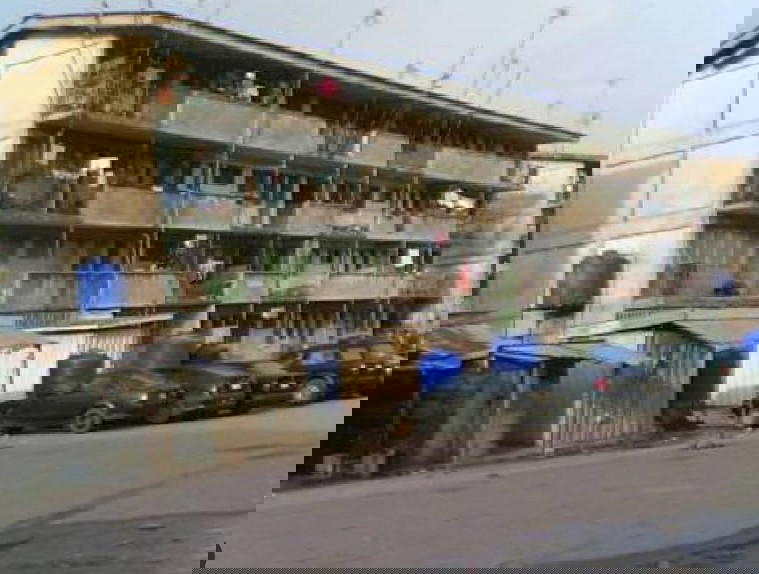
This rapidly unfolding accommodation crisis is already a sad reality in major cities such as Lagos, Abuja, Port Harcourt, Kaduna, Kano and, indeed, most state capitals across the country.
Across many towns and cities in Nigeria, a quiet but alarming housing crisis is taking hold — one that is forcing families to relocate, downgrade their living conditions, or sink into debt.
It is not triggered by conflict or disaster, but by a relentless and mostly arbitrary rise in house rents, worsened by the excesses of some landlords and estate agents. For many residents, the question is no longer where to live, but whether they can afford to live at all.
This rapidly unfolding accommodation crisis is already a sad reality in major cities such as Lagos, Abuja, Port Harcourt, Kaduna, Kano and, indeed, most state capitals across the country.
Unfortunately, this is happening at a time Nigeria’s housing crisis has assumed alarming proportions, with experts warning that the country must build about 550,000 housing units annually for the next 10 years to bridge a deficit now estimated at 14.9 million units.
The figure underscores the scale of a crisis regarded as one of the worst globally, as millions of Nigerians remain without access to decent and affordable shelter. Recent data from the World Bank and the Bank of Industry suggest that actual funding required to close this gap could exceed N59 trillion, a staggering sum that highlights the disconnect between current budgetary provisions and the reality on ground.
Confronted by food inflation that is now hitting the roof, and transportation costs that have continued to rise due to sharp increases in the prices of petroleum products, the condition of most city dwellers has taken a sharp turn that could inexorably end in a climax of disaster.
Indeed many residents are currently being haunted by the traumatising nightmares of being rendered homeless because they cannot pay accommodation rents that have suddenly been priced beyond their reach.
Lagos: How arbitrary rent hikes are rendering many homeless In the bustling city of Lagos, the dream of urban living is increasingly turning into a nightmare for millions. Nigeria’s commercial hub has become an arena where rent spikes relentlessly, landlords and estate agents thrive on arbitrary fees, and ordinary citizens struggle to keep a roof over their heads.Narrating his experience, a frustrated tenant said: “By the time the notice arrived, it was not even written on paper. It came as a casual WhatsApp message from the agent, sent on a Tuesday morning, and read thus: ‘Your rent is now N 1.8 million. If you can’t pay, vacate before month end’.”
For four years, Adaobi had lived in a two-bedroom flat in Egbeda with her husband and two children. The rent had been N750,000 when they moved in. It was later increased to N950,000. Now, without renovation, without negotiation, and without formal notice, it had nearly doubled.
“I read it three times,” she said, sitting on a plastic chair in the compound she may soon leave. “I thought maybe it was a mistake. How do you jump from N950,000 to N1.8 million just like that?”
To make matters worse, most landlords have devised various exploitative means to rip off their tenants. According to Jude Iwu, who said he was speaking from experience, a growing practice in Lagos is for lawyers and caretakers to insist on a one-year fixed-term tenancy. “It is a strategic move to bypass lengthy eviction processes required for periodic tenancies.
READ THE FULL STORY IN VANGUARD