
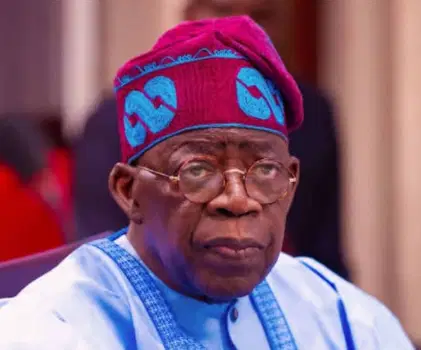
Here you have it:
- Fuel subsidy removal has caused petrol prices to skyrocket, creating widespread hardship across the country.
- Naira devaluation has significantly reduced the currency’s value, dramatically increasing the cost of imports and basic goods.
- High inflation has caused food prices and cost of living to surge, with an estimated 141 million Nigerians (roughly 62% of the population) now living in poverty.
- Youth unemployment remains critically high with no clear pathway to job creation.
- More Nigerians are falling below the poverty line under his administration, with rural families unable to afford meals for days.
- Many companies are shutting down or relocating due to deteriorating economic conditions.
- Persistent insecurity continues across multiple states with kidnapping, banditry, and terrorism undermining public confidence.
- Farmer-herder conflicts continue to cause violence, affecting food production and forcing farmers to abandon their lands.
- The Boko Haram/ISWAP insurgency in the Northeast has not been decisively defeated despite promises.
- Separatist agitations continue to simmer, particularly in the Southeast and other regions.
- Many Nigerians question the legitimacy of his 2023 election victory, creating a credibility deficit.
- The opposition is forming a united coalition under the African Democratic Congress (ADC), with Atiku Abubakar, Peter Obi, and Musa Kwankwaso uniting to unseat him.
- Peter Obi remains popular, especially among youth voters who feel the Labour Party candidate was robbed in 2023.
- Atiku Abubakar is likely to run again with the full machinery of the PDP and now ADC behind him.
- Internal APC tensions are growing, with party defections and succession battles erupting in multiple states.
- Growing “hunger protests” reflect widespread public dissatisfaction with economic hardship across the nation.
- Youth voters feel betrayed by unfulfilled promises and are increasingly disillusioned with the administration.
- Heavy social media backlash persists despite government attempts to control online criticism.
- The “Japa” syndrome sees skilled Nigerians emigrating in record numbers, draining the country of talent.
- Nepotism accusations persist, with appointments perceived as favoring the South-West region over others.
- Lack of transparency surrounds subsidy payments, forex management, and government contracts.
- Constitutional amendments and restructuring efforts have stalled despite campaign promises.
- Campaign pledges on security and economic recovery have not been met after two years in office.
- Northern discontent is growing in what was traditionally an APC stronghold now facing severe economic hardship.
- Southeast Igbo voters feel increasingly alienated and marginalized by the administration.
- Middle Belt violence continues with ongoing killings affecting what should be a support base.
- Even Tinubu’s Southwest Yoruba base is showing cracks, with his disapproval rate at 78% in Lagos.
- Political analyst Majeed Dahiru describes President Tinubu as “a very unpopular president” due to “underperforming in two years.”
- A PDP group has advised Tinubu “to stop wasting energy and resources in seeking an unrealizable re-election in 2027.”
- Former APC chieftain Nasir El-Rufai says President Tinubu “would never win the 2027 Presidential Election,” with scientific polls showing 91% disapproval in the North and South-East.
- Primate Ayodele claims “Nigerians hate him” despite his performance, with those surrounding him “against his second-term ambition.”
- Constitutional lawyer Mike Ozekhome argues “the misery and disenchantment on the ground” could fuel opposition to “ease him out of power.”
- The purchasing power of citizens has collapsed, creating “biting hardship and a complete sense of hopelessness across the country.”
- Northern elder Alhaji Dabo Sambo warns that “food is scarce in Nigeria and people are hungry” due to insecurity forcing farmers off their lands.
- Former Enugu Governor Okwesilieze Nwodo cites “multidimensional poverty, astronomical unemployment rate and growing insecurity” as reasons to remove the APC.
- The ADC argues that “worsening economic conditions and insecurity could shape voter sentiment,” with voters focused on high living costs and food inflation.
- Rural families report frequent deaths due to hunger and lack of healthcare access.
- A BusinessDay poll found security and cost of living as the most decisive issues for voters assessing the administration.
- An activist declares “Nigerians have suffered enough under Tinubu and anybody/anyone but Tinubu will do in 2027.”
- Charly Boy warns “we will die like flies” if Tinubu returns in 2027.
- Northern elder Sambo states: “If President Tinubu refuses to wipe out the security challenges, he will definitely not win the 2027 election.”
- Sambo notes that “the era of carton noodles and salt distribution during campaigns is over. People want security and food.”
- Farmers have abandoned lands in North-West and North-East regions, which contribute “over 60% of Nigeria’s food supply,” leading to famine.
- A civil servant in Kaduna says elections will be decided by “who can actually keep them safe and reduce the hardship.”
- Insecurity has caused transporters to demand higher fees, fueling inflation through higher supply chain costs.
- Failure to address insecurity could mirror Goodluck Jonathan’s 2015 defeat, attributed to unchecked insurgency.
- The opposition coalition is leveraging the combined 60.9% vote share they secured against Tinubu in the 2023 election.
- A political analyst says if Atiku runs with Obi, “Tinubu will be gone.”
- Former Governor Nwodo says once Peter Obi secures the ADC ticket, “the fight is over,” adding: “With the North and the East, I do not know where Tinubu will be looking for votes.”
- The ADC National Youth Leader says “Tinubu should be scared of defeat” and “his real contest would be against millions of Nigerians facing hardship.”
- Former minister Solomon Dalung says “President Tinubu must be removed through an inevitable democratic struggle.”
- An APC chieftain warns that “President Tinubu’s greatest political challenge may not come from a resurgent opposition, but from within the ruling party itself.”
- Former Minister Rotimi Amaechi alleges that “President Bola Ahmed Tinubu and leaders of the ruling APC are already in panic mode ahead of the 2027 general elections.”
- Amaechi says “all these things that they are doing are panic measures; they are scared.”
- The Conference of United Political Parties (CUPP) described “the adoption of President Bola Tinubu as the sole candidate of the APC for the 2027 election as a sign of internal panic.”
- El-Rufai, a former Tinubu backer, says: “If anybody had told me in 2023 that Tinubu would perform this woefully, I would have dismissed the person as mentally ill.”
- El-Rufai states bluntly: “Tinubu has no pathway to win. No, he cannot.”
- Primate Ayodele notes that “those surrounding him don’t like him and they don’t want him for a second term.”
- President Tinubu’s disapproval rate stands at 78% even in Lagos, his home state and political base.
- Nwodo says: “With the North and the East, I do not know where Tinubu will be looking for votes to win a second term.”
- Amaechi claims the APC wants voter apathy because “if you come out and vote, you’ll certainly not vote for APC.”
- Northern youths have warned that Tinubu’s 2027 chances “will depend largely on his ability to address insecurity and economic hardship.”
- Primate Ayodele predicts 2027 “is not going to be like that of 2023. Nigerians are determined; they are coming out strongly.”
- The ADC says “millions of Nigerians across party lines are eagerly waiting for 2027 to vote out the APC.”
- The opposition has alleged that “access to public venues, including Eagle Square in Abuja, had become increasingly restricted,” shrinking democratic space.
- Former Senate President David Mark has accused the APC of “weakening democratic institutions” and “undermining the right of citizens to freely choose their leaders.”
- Opposition parties state that “Nigerians have lost confidence in INEC,” accusing the body of bias in favor of the ruling APC.
- Various opposition parties have called for the removal of the INEC Chairman, warning that the 2027 elections “may not produce a credible outcome” if he presides.
- The opposition parties “agreed to field a single presidential candidate for the 2027 elections” to rescue the nation.
- The united opposition coalition claims the combined 60.9% vote share they secured against Tinubu gives them momentum.
- The opposition’s National Summit in Ibadan marked a new alliance between northern and southern opposition leaders.
- Primate Ayodele warned that “there is no amount of effort from the INEC Chairman that Nigerians will appreciate.”
- Sambo warned that “even rigging structures will not save his re-election bid” if food and security are not delivered.
- The promised “renewed hope” has been replaced by fragile and uneven social safety nets that fail to cushion economic impact.
- International organizations, including WHO and UNICEF, have documented millions of Nigerians trapped in multidimensional poverty.
- The government has “not been able to chart any clear direction for security, economy, education, health, housing, power, transport, and infrastructure.”
- The 2027 election will be the first where a southern president completes a full term without power rotation back to the north, fueling political tension.
- Northern elites believe the presidency should rotate back to their region, creating a complicated political calculus.
- If Atiku emerges as the ADC candidate, the power rotation issue could fracture the APC’s northern base.
- An estimated 76% of Nigerians disapprove of the President’s performance, largely due to unrelieved economic suffering.
- Critics argue that “Renewed Hope” has become “Renewed Hunger” and “Renewed Fear” as kidnappings continue even of schoolchildren.
- Northern leaders claim the region, which provided over 64% of Tinubu’s 2023 votes, has been sidelined in major federal projects.
- Perceptions of a government “by Yorubas, for Yorubas” have fueled resentment among Northern power brokers.
- The ADC has slammed the President for appearing “detached from the realities” of average Nigerians.
- The administration has been criticized for launching re-election structures while the country remains in economic and security emergency.
- Lavish foreign trips and extravagant government spending amid national trauma suggest the administration prioritizes political survival over welfare.
- Over 60% of Nigeria’s food supply comes from regions now plagued by insecurity, creating a national food crisis.
- The administration’s economic reforms lack practical solutions to Nigeria’s food crisis, power shortages, and unemployment.
- Collapsed purchasing power has left millions unable to afford basic necessities.
- The combined weight of economic hardship, insecurity, opposition unity, internal APC crisis, and public discontent creates what analysts describe as “the most formidable electoral threat to Tinubu’s administration to date.”
- ADC chieftain Dele Momodu says “there’s no doubt that President Tinubu is not open to any competition in 2027” and “expects complete support even though there have been terrible failures in every area.”
- Dele Momodu warns that Tinubu “expects complete support even though there have been terrible failures in every area. Budgets, nil. Security, nil.”
- Pastor Johnson Suleman has questioned President Tinubu’s re-election bid, lamenting that “the dollar’s surge from ₦460 to ₦1,500 and the persistent fuel crisis” show government failure.
- Pastor Suleman stressed: “Get one thing right. Nigerians are not asking for too much. If you can’t get power, give us security. If you can’t provide security, let us buy things cheaply. Just do one thing right.”
- APC chieftain Chief Eze Chukwuemeka Eze warns that “the wobbling economy, hunger and starvation, insecurity and violent killings, and other heinous crimes perpetrated on a daily basis should give any responsible government a sense of concern.”
- According to the Council on Foreign Relations, “75.5 percent and 41.3 percent of rural and urban dwellers respectively continue to live below the poverty line” under Tinubu’s administration.
- Amnesty International reports that “more than ten thousand people have been killed by jihadist groups and criminal gangs in north and central Nigeria in the two years since Tinubu took office.”
- Nigeria rose to sixth place on the Global Terrorism Index, below Niger, Mali, Syria, Pakistan, and Burkina Faso, indicating worsening security under Tinubu.
- The Social Democratic Party (SDP) Chairman has declared that “Tinubu can’t win 2027 election with his policies,” reflecting growing cross-party consensus on his vulnerability.
- President Tinubu himself has acknowledged attempts to “use insecurity to get rid of me,” telling Governor Mutfwang: “You are playing to the hand of agents, including my own enemies, who want to use insecurity to get rid of me”—a statement revealing his awareness of political vulnerability and defensiveness about his record.
NEWS NOW: