
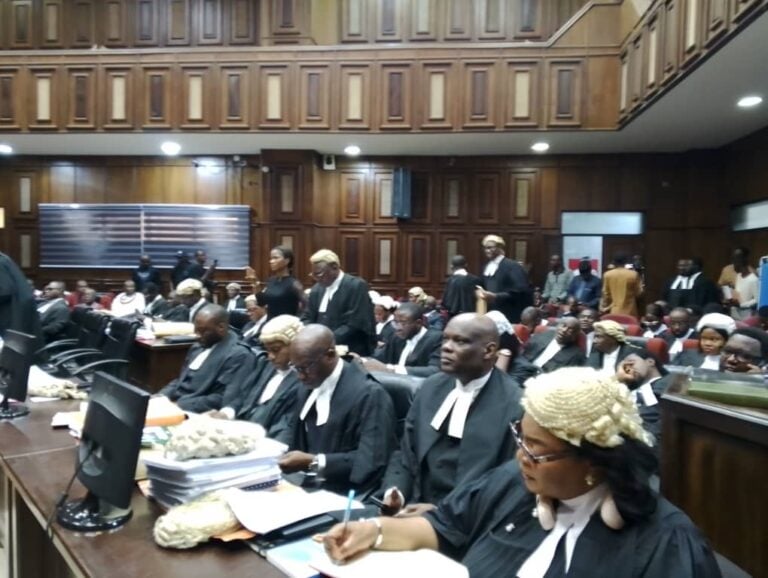
Nigerian lawyers and judges are speaking out about alleged spiritual attacks in the courtroom, exposing a deeply cultural tension between a secular legal system and the supernatural beliefs that quietly surround it.
There is a side of Nigeria’s courtrooms that never makes it into the law reports. It lives instead in hushed conversations between lawyers after hearings, in the prayer circles some barristers quietly observe before major submissions, and in the stories that circulate among the legal community like an open secret no one wants to formally acknowledge. Those stories are now finding a more public voice, and what they reveal is a legal profession navigating not just the pressures of powerful clients and political interference, but what many practitioners describe as spiritual warfare.
The conversation was thrust into the open when an unidentified Nigerian lawyer, in a video that went viral on X and Instagram, made an unusual appeal to litigants. His message was direct: stop directing spiritual attacks at opposing lawyers. “If you have a problem with someone and the case is already in court, and you still want to report the matter to your ‘juju’, leave the opponent’s lawyer out of it. Stop attacking the lawyers spiritually; attack your opponent only. Lawyers are just doing their job,” he said. The video sparked widespread ridicule, sympathy, and debate in equal measure. But behind the jokes, many lawyers recognised an experience they had quietly lived through themselves.
Joyce, a retired Federal High Court judge from Imo State, is one of them. Now 76, she recalls sitting on the bench during a murder case involving the only male child of his parents when something unexplainable happened. “When the second case was called, I was preparing to listen to the submissions, and that was the last case for the day. I became unusually still and quiet, staring ahead without speaking for a long time. For several minutes in the courtroom, I was blank and confused. I did not know where such a feeling came from, but I was unable to proceed with the case, and I had to adjourn it to a later date.” She was unambiguous about her interpretation: “I knew it wasn’t ordinary; I knew where it was coming from.”
Then there is Emeke Omogiafo, a Delta-based litigation lawyer who says he used to dismiss spiritual warfare talk entirely — until he collapsed mid-submission during a land dispute case in 2021. He described weeks of disturbing occurrences: a car that inexplicably refused to start, tyres that burst in his parking lot overnight, and a recurring sensation of pressure on his chest while sleeping. He eventually woke up in a hospital, his blood pressure dangerously low, with no medical explanation forthcoming. “I used to mock colleagues who said they fortified themselves spiritually before major cases, but not anymore. Now I know better. Law may be a profession of logic and evidence, but in Nigeria, there are forces logic cannot explain.”
These accounts are neither rare nor entirely dismissed within legal circles. Human rights lawyer Festus Ogun recounted falling ill after shaking hands with an opposing party following a favourable ruling. Lawyer Chukwuemeke Ogbuobodo argues that courtroom collapses, memory lapses, and unexplained absences are often misconstrued as incompetence when they are, in his view, something far less rational to explain. “Sometimes, a lawyer can attend court to defend his client but end up not knowing what to say or do during the proceedings,” he said.
The legal establishment, for its part, is firm. Sections 210 to 213 of Nigeria’s Criminal Code criminalise acts of witchcraft and charm use intended to obstruct lawful conduct. Human rights lawyer Deji Adeyanju is categorical: “The idea of clients using ‘juju’ or supernatural means to target a lawyer on the opposing side is both legally and ethically unacceptable.” Courts, he notes, decide on facts and statutes, not curses.
And yet the stories persist. In a country where faith saturates every corner of public and private life, the courtroom has never been purely secular in the minds of those who inhabit it. Whether the attacks are real or the product of stress, superstition, and suggestion, their effect on the people who believe in them is entirely concrete. In that sense, Nigeria’s legal profession is fighting battles that no law degree fully prepares anyone for.
NEWS NOW: