
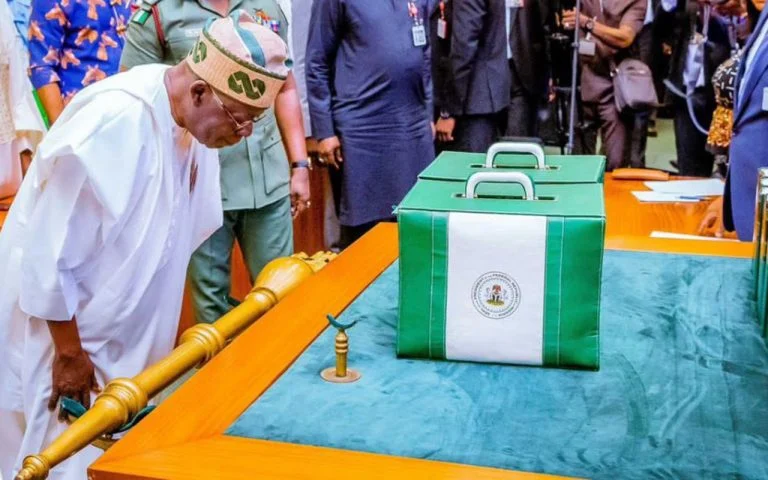
Nigeria faces a looming fiscal crisis after revelations that eight ministries received only 1.3 percent of their N1.218 trillion capital budgets—including the Health Ministry getting just N36 million of N218 billion—prompting analysts to warn that chronic underfunding of capital projects will derail the government’s $1 trillion economy target by 2030.
Lawmakers sat in shock as ministers revealed they received virtually nothing for capital projects in 2025. Out of N1.218 trillion approved for eight ministries, only N9.13 billion—barely 1.3 percent—was actually released.
The Health Minister, Muhammad Ali Pate, dropped the bombshell that may break public trust entirely: his ministry got N36 million. That’s 0.02 percent of the N218 billion approved for healthcare infrastructure.
“What we are seeing is a monumental disaster for the economy,” said David Adonri, Vice Executive Chairman at High-Cap Securities Limited. “Capital expenditure propels the productive economy. To find it difficult to fund capital projects means the budget was unrealistic in the first place.”
The damage across ministries is staggering: Women Affairs got 0.44% of its budget. Marine & Blue Economy received just 1.7%. Transportation got 1.0%. Housing got 2.0%. Agriculture got 2.5%.
Officials blame Nigeria’s “cash-planning framework”—spending only when money exists. But analysts point to deeper rot: revenue shortfalls, crippling debt servicing, and zero policy coordination.
“The economic team lacks coordination,” said Ambrose Omordion of InvestData Consulting. “We might have good intentions, but how we use resources matters. The capital budget that’s supposed to impact the economy is nearly abandoned.”
Tunde Abidoye of Quest Merchant Bank warned the consequences are already here: decaying infrastructure, high production costs, and Nigerian products unable to compete globally.
The National Assembly is now pushing for quarterly release reports and treasury reforms. But analysts like Tajudeen Olayinka put it bluntly: “Government must sit up. You cannot achieve a $1 trillion economy by 2030 if you refuse to build capacity today.”
This isn’t a funding problem. It’s a choice. And Nigeria is choosing to let its future crumble while paying for its past.
NEWS NOW: