
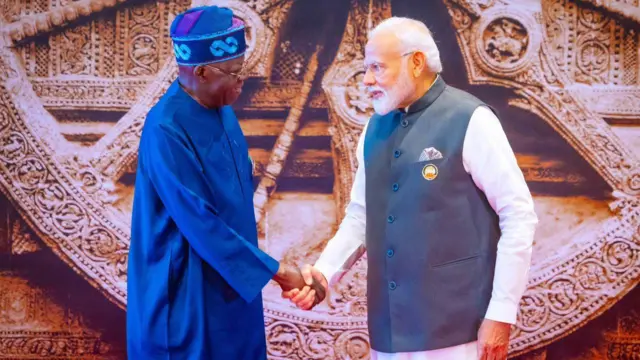
Rising allegations of racial profiling, exorbitant visa fees, and a sharp increase in deportations are exposing the strained diplomatic ties between Nigeria and India, leaving thousands of Nigerian students and residents in a precarious situation.
India has long been a destination of choice for Nigerians—for education, medical tourism, and business. But for thousands of Nigerians currently living there, the country has become an increasingly hostile territory.
Between 2019 and 2024, India deported at least 2,356 Nigerian nationals. That number is not just rising — it is accelerating. Deportations quadrupled from 339 in 2021 to 1,470 in the 2023–2024 fiscal year alone, making Nigerians the most deported nationality in India during that period, accounting for nearly two-thirds of all foreign removals.
So what is driving this surge?
The answer is layered. Indian authorities point to drug-related arrests as a key factor. In 2024, 106 of the 660 foreign nationals arrested for drug crimes in India were Nigerian — the second-highest national group after Nepal. Critics, however, argue that these statistics are being used to justify blanket profiling of an entire community.
Nigerian students and residents in cities like Mumbai and Delhi report a climate of fear. They describe police raids on homes, confiscation of goods from Nigerian-owned shops, and mass arrests tied to immigration status. A Nigerian student in Delhi, speaking anonymously, described a visa renewal system that feels deliberately punishing: “Other students from other African countries do not pay for it… Ghanaians pay a maximum of 500 rupees, which is about N8,000. This is just unfair. That’s the cross Nigerians bear to regularise their stay in India.”
The visa fee structure is a particular flashpoint. Nigerian students are reportedly required to pay 10,000 rupees — roughly N146,000 — every three months to renew their visas, a cost that many say was never disclosed before they arrived. Failure to pay on time invites police attention. “When my visa was about to expire… the police came looking for me because I had not renewed my visa,” the same student said.
The National Association of Nigerian Students has responded with protests at the Indian High Commission in Abuja, issuing a seven-day ultimatum to the Federal Government and demanding urgent diplomatic intervention.
Complicating the picture further, a Nigerian diplomat in India alleged that some Nigerians were being used as police informants, saying, “Fellow Nigerians report one another to the police when they have disputes.” This internal fracturing, combined with racial bias and economic resentment, has created a combustible environment.
Former Nigerian Ambassador Yemi Farounbi acknowledged both sides of the issue: “Because of a few deviants, the host society may generalise, but that is not a true reflection of Nigerians. Most Nigerian students are focused and law-abiding.”
Nigeria’s government, for its part, appears caught flat-footed. NIDCOM says it has received no formal complaints. The Ministry of Foreign Affairs has not publicly responded. Retired diplomat Sola Abolurin is urging the Federal Government to summon Nigeria’s ambassador to India and demand answers.
The irony is stark: tens of thousands of Nigerians travel to India annually for affordable healthcare — a relationship worth billions. Yet the same country welcoming Nigerian medical tourists is simultaneously expelling Nigerian residents at an unprecedented rate.
Diplomatic reciprocity may be the only lever Nigeria has — but so far, it remains unused.
NEWS NOW: