
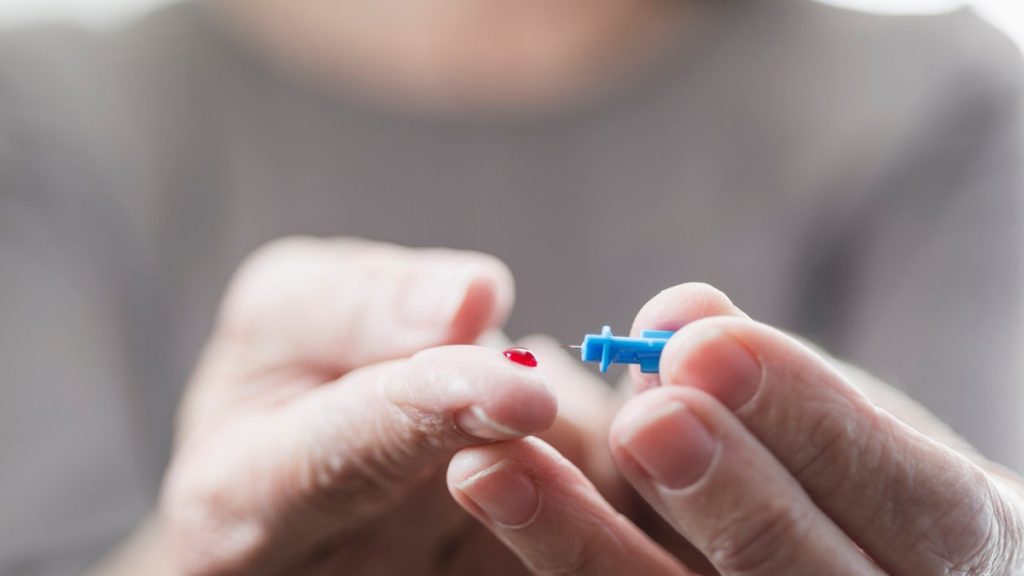
A new “breakthrough” blood test could make detecting Alzheimer’s disease significantly easier, according to scientists, by allowing people to collect a few drops of blood at home using a finger prick and send the dried sample by post.
The method, tested on 337 participants, revealed proteins linked to Alzheimer’s and other brain changes, showing a strong correlation with traditional tests, which typically require invasive procedures, trained personnel, and temperature-controlled storage.
Nicholas Ashton, who led the study at Banner Health Institute in Arizona and the University of Gothenburg’s Sahlgrenska Academy, said: “This breakthrough could fundamentally change how we conduct Alzheimer’s research by proving that the same biomarkers doctors use to detect Alzheimer’s pathology can be measured from a simple finger prick collected at home or in more remote community settings.”
Experts emphasized that the innovation could democratize research participation and screening.
Anne Corbett, professor in dementia research at the University of Exeter, said: “What excites me most is that this work makes this type of research far more accessible.” She added: “We’re moving toward a future where anyone, anywhere, can contribute to advancing our understanding of brain diseases. This isn’t just a technical advancement – it’s a paradigm shift in how we conduct neuroscience research.”
Co-author Clive Ballard, professor of age-related diseases at the University of Exeter Medical School, noted: “Our ongoing work will determine whether this could also be a valuable way of identifying people in the community who would benefit from more detailed diagnostic tests for Alzheimer’s disease.”
NEWS NOW: