
by Nij Martin
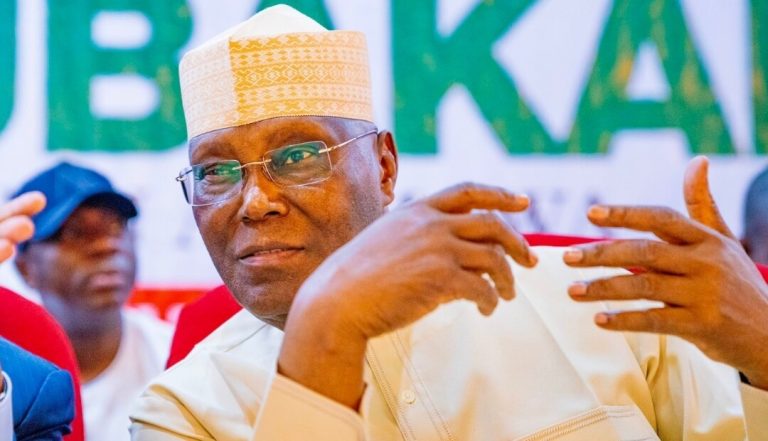
The question isn’t whether Atiku Abubakar wants to win in 2027—his seventh attempt makes that abundantly clear. The question is: what conditions, alignments, and strategic decisions must fall into place for Nigeria’s most persistent presidential candidate to finally achieve his 32-year ambition?
After six failures spanning three decades, romantic notions of destiny and persistence won’t suffice. Victory in 2027 requires cold political calculation, coalition discipline, and a convergence of factors both within and beyond Atiku’s control. Here’s what must happen.
1. The Atiku-Obi Détente: A Real Partnership, Not Just Photo Ops
What needs to happen: Peter Obi must genuinely accept the vice-presidential slot on an Atiku ticket—not reluctantly, not tactically, but enthusiastically. And Atiku must make it worth Obi’s while by guaranteeing succession support in 2031.
Why it matters: The math from 2023 is unambiguous. Atiku got 29% of the vote; Obi got 25%. Combined, that’s 54% against Tinubu’s 37%. But simply adding their names to the same ticket doesn’t automatically add their vote shares.
As one analysis noted: “It is delusional to project them to retain the combined 54 per cent of the vote they got in 2023 if they run in 2027 as a ticket.” Why? Because Obi’s support was personal and movement-driven, not party-based. Many Obidients won’t automatically follow him into an Atiku-led coalition.
The challenge: The Obidient Movement has made it clear—Peter Obi won’t “play second fiddle to anyone.” Yet without Obi, Atiku loses crucial southern Christian votes. Without Atiku’s structure and money, Obi remains a social media phenomenon without electoral machinery.
What it requires: A single-term commitment from Atiku, formalized and public. Obi needs assurance that 2027-2031 isn’t just Atiku’s presidency but the first half of an Obi succession plan. Atiku will be 81 at inauguration and 85 at the end of a term—this sells itself. But it must be credible, not tactical.
2. Economic Collapse Must Continue (or Worsen)
What needs to happen: Tinubu’s economic reforms must keep producing hardship through 2027. Fuel prices, inflation, naira devaluation, and general suffering must remain front-and-center in voters’ minds.
Why it matters: As one assessment noted, “citizens finding it hard to meet their basic needs have become blind to the issue of political correctness like zoning, hence do not care whatever zone the next president comes from in so far as he promises to ease the burden.”
Economic pain erases tribal and regional calculations. A hungry voter doesn’t care about rotation formulas—they care about survival. Tinubu’s current unpopularity stems from economic distress. If that eases before 2027, Atiku’s window closes.
The challenge: Tinubu’s reforms, though painful, might eventually yield benefits. If inflation drops, naira stabilizes, or fuel prices decline by late 2026, incumbency advantage returns with a vengeance.
What it requires: Sustained economic hardship through the campaign season. Atiku must continue positioning himself as the alternative economic manager, offering detailed counter-proposals (which he’s been doing) that resonate with suffering Nigerians.
3. Northern Consolidation: Kwankwaso Must Stand Down or Join
What needs to happen: Rabiu Kwankwaso must either accept a significant role in the coalition (perhaps as campaign DG or ministerial promise) or be neutralized as a spoiler.
Why it matters: In 2023, Kwankwaso’s NNPP candidacy split northern votes. If he runs again in 2027, he repeats that damage. Dele Momodu was right when he wrote: “No individual today in opposition can single-handedly take on the APC behemoth.”
The North cannot afford three candidates (Atiku, Kwankwaso, and potentially others) fragmenting the anti-Tinubu vote.
The challenge: Kwankwaso has presidential ambitions too. Why should he defer to Atiku, especially after Tinubu’s government alienated him through Ganduje’s APC dominance in Kano?
What it requires: Strategic horse-trading. Kwankwaso needs a compelling offer—perhaps VP slot if Obi won’t take it, or ironclad guarantees of 2031 support if Obi gets VP. The coalition must make him feel ownership, not just accommodation.
4. Southern Forgiveness: Rebuilding Trust After 2023
What needs to happen: Southern voters, particularly in the South-South and South-East, must forgive Atiku’s violation of zoning in 2023 and trust him again.
Why it matters: Atiku’s 2023 campaign fractured PDP unity by insisting on a northern candidate despite eight years of northern presidency under Buhari. Five governors walked away. Southern voters felt betrayed.
As one critic noted: “The narrow messaging of Atiku, Tambuwal and co cost the party its southern support base, making it impossible for the PDP to win.”
The challenge: Trust, once broken, is hard to rebuild. Southern leaders remember being taken for granted. Why should they believe 2027 is different?
What it requires:
- Public single-term commitment making clear this is a transitional presidency before power returns south
- Meaningful southern representation in campaign leadership and promised cabinet positions
- Peter Obi as VP sends the strongest signal of commitment
- Avoid 2023 rhetoric about “only a northerner can win”—that alienated the South and proved false anyway
5. Financial Dominance: Atiku Must Outspend the Presidency
What needs to happen: Atiku must commit massive personal wealth to the campaign and convince other coalition members to do likewise.
Why it matters: Dele Momodu was blunt about this: “Winning against a ruthless competitor is going to take more than social media appeal. It would require a stupendous war chest (some gambling is involved), extensive and nationwide structures, religious balancing, and overwhelming support from ethnic groups.”
Nigerian politics runs on money. Incumbents control the treasury. Opposition candidates need deep pockets.
The challenge: As one analysis noted, “Among them, only Atiku is famed for having a deep pocket and a knack for spending his money on politics.” If Atiku doesn’t get the ticket, will he finance someone else? If he does get it, will others contribute or leave him carrying the financial burden alone?
What it requires:
- Atiku spending lavishly on voter mobilization, not just primaries
- Coalition members with resources (el-Rufai, Amaechi, others) contributing significantly
- Diaspora fundraising from Nigerians abroad desperate for change
- Strategic spending on ground game, not just social media noise
6. Electoral Integrity: Restraining INEC and Security Agencies
What needs to happen: INEC and security forces must conduct a reasonably fair election, or at minimum, not engage in massive rigging favoring the incumbent.
Why it matters: The power of incumbency isn’t just about resources—it’s about control of electoral machinery and security apparatus. As one assessment noted, “Tackling incumbency would mean ensuring that the electoral body and the security agencies are restrained from being overly partisan.”
The challenge: Nigerian elections are rarely entirely clean. The ruling party has structural advantages through INEC appointments and security agency loyalties.
What it requires:
- International pressure: Like APC did in 2015, invite robust international monitoring and make electoral integrity a global issue
- Legal preparedness: Strong legal team ready to challenge irregularities immediately
- Civic mobilization: Massive voter turnout makes rigging harder (the Obidient Movement proved this in 2023)
- Early warning systems: Coalition agents at every polling unit documenting and reporting in real-time
7. Structural Build-Out: ADC Must Become Real, Fast
What needs to happen: The African Democratic Congress must rapidly develop actual party structures at state, LGA, and ward levels—not just big names at the top.
Why it matters: Atiku performed poorly in 2007 when he ran on Action Congress, a party without infrastructure. He did better in 2019 and 2023 running on PDP’s established structures.
One analysis was damning: “Aside from Atiku and Obi, you may struggle to list the electoral assets in this coalition. The former governors, ministers and party officials are reappearing from the margins, as many did not contest or lead their parties to win an election in the last two electoral cycles.”
The challenge: Building party structures takes time and money. ADC currently has neither in abundance. No sitting governor or lawmaker has officially joined—”not even his state governor, Ahmadu Fintiri.”
What it requires:
- Rapid party registration drives in all states
- Recruitment of credible local coordinators with grassroots credibility
- Early defections of PDP governors/lawmakers to ADC for structure and legitimacy
- If governors won’t come, secure their quiet cooperation (they stay in PDP but campaign for Atiku privately)
8. Messaging Coherence: A Vision Beyond “We’re Not Tinubu”
What needs to happen: The coalition must articulate a compelling, unified vision for Nigeria that goes beyond criticism of the incumbent.
Why it matters: As one analysis noted, “The coalition has yet to espouse a coherent vision around which to communicate with voters.” Simply attacking Tinubu isn’t enough—voters need to know what Atiku will do differently.
The problem: many coalition members (Amaechi, el-Rufai, Aregbesola) served in governments that pursued similar policies to Tinubu’s. As noted, “The opposition does not sound credible when they decry the impact of the key policies of the Tinubu government because they promised the same policies in 2023.”
The challenge: Differentiation. If Atiku also supports subsidy removal and market reforms, how is he different from Tinubu?
What it requires:
- Sequencing and pace: Position as supporting reform but with better timing and palliatives
- Implementation competence: Argue Tinubu’s team bungled execution; Atiku’s economic team would do it right (leverage his VP-era record)
- Specific alternatives: Detailed policy papers on security, economy, restructuring that show seriousness
- Avoid recycled slogans: Fresh messaging that speaks to 2027 realities, not 2019 talking points
9. The Age Question: Turn Liability into Asset
What needs to happen: Atiku must reframe his age (81 at inauguration) from a weakness into a strength.
Why it matters: Critics describe his seventh attempt as “political exhaustion masquerading as resilience.” Youth voices like Eze-Onyebuchi Chukwu ask: “Is he the only one fit to be president? There are capable young Nigerians who deserve a chance.”
The challenge: Nigeria’s median age is 18. The country is overwhelmingly young, yet leadership remains geriatric. This creates natural tension.
What it requires:
- Single-term framing: Position as “transition president” preparing Nigeria for next generation (personified by VP Obi)
- Experience argument: In crisis, you need tested hands—leverage VP record during Nigeria’s economic resurgence
- Mentorship narrative: Highlight younger politicians Atiku has supported and developed
- Health transparency: Demonstrate vigor through active campaigning and medical disclosures
10. Unity Through January 2027: No Fractures
What needs to happen: The coalition must stay unified through primaries, nomination, and campaign—no defections, no public fights, no G-5 redux.
Why it matters: PDP’s 2023 collapse came from internal fractures. Five governors walking away after Atiku’s nomination doomed the campaign before it started.
The challenge: Coalition contains big egos—Atiku, Obi, Amaechi, el-Rufai, Kwankwaso. Each has presidential ambitions. Managing these competing interests requires rare political skill.
What it requires:
- Clear hierarchies: Early agreement on ticket (Atiku-Obi or Obi-Atiku) to avoid prolonged primary battles
- Role distribution: Everyone gets something meaningful—campaign positions, ministerial promises, policy portfolios
- Conflict resolution mechanisms: Neutral arbiters (David Mark as party chair helps) to settle disputes before they become public
- Shared sacrifice narrative: Frame as collective project to save Nigeria, not individual advancement
The Probability Assessment
So what are the odds of all ten conditions aligning?
High probability:
- Economic hardship continuing (70%)
- Atiku’s financial commitment (80%)
- Messaging coherence (if they work at it, 60%)
Medium probability:
- Atiku-Obi genuine partnership (50%)
- Northern consolidation around Atiku (50%)
- ADC structural development (40%)
- Coalition unity through campaign (45%)
Low probability:
- Southern forgiveness/trust (35%)
- Electoral integrity/fair processes (30%)
- Successfully reframing age issue (40%)
Combined probability: Rough estimate suggests 15-20% chance of all conditions aligning sufficiently for Atiku victory.
This isn’t destiny—it’s math. And the math is challenging.
The Uncomfortable Truth
What must happen for Atiku to win in 2027? Almost everything must go right.
Tinubu must continue failing economically. Obi must accept second position. The South must forgive. The North must consolidate. INEC must be fair. Money must flow. Structures must materialize. Unity must hold.
That’s a lot of “musts.”
Dele Momodu’s assessment was telling: “The only opposition leader who’s meticulously and practically pursuing his dreams and seems to understand what it takes to be competitive is Alhaji Atiku Abubakar.”
Translation: Atiku is the only one really trying. But trying hard doesn’t guarantee success when the obstacles are this formidable.
The real question isn’t what must happen for Atiku to win—it’s whether Nigeria’s opposition is capable of making those things happen. Based on their track record, the honest answer is: probably not.
But Atiku didn’t trace that map in Yola for 32 years to give up when victory is theoretically possible. He’ll make his seventh attempt. And Nigeria will discover whether persistence finally meets preparation, or whether history has already written its answer.