
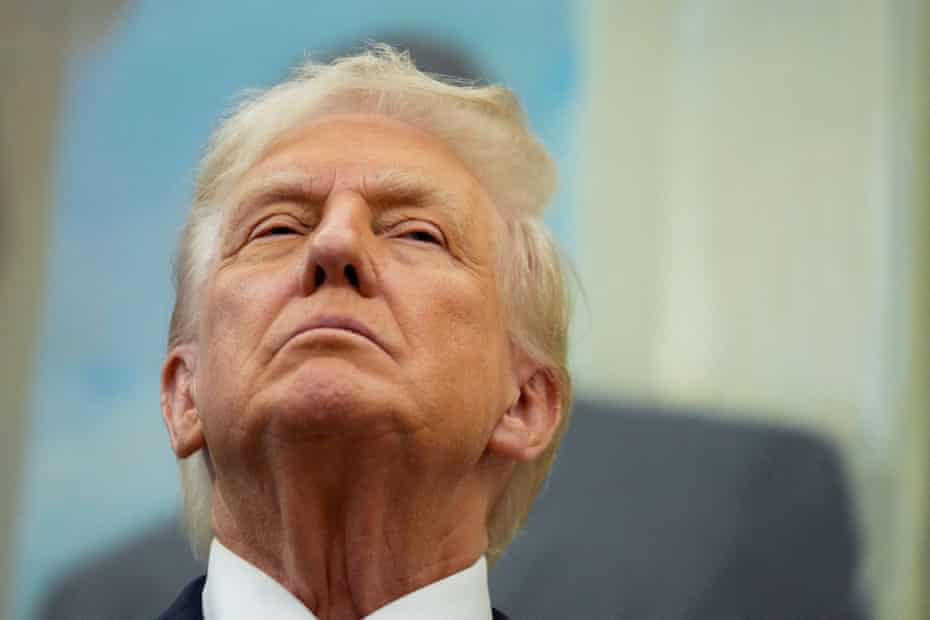
Donald Trump has once again threatened to invoke the Insurrection Act — a rarely used statute permitting the deployment of federal troops on US soil — as part of his response to court and state obstacles to his national guard policy.
Former President Donald Trump has renewed threats to invoke the Insurrection Act, a federal law that allows the president to deploy military forces domestically, amid mounting resistance from Democratic-led states and courts in blocking his efforts to control national guard deployments.
The Insurrection Act, first passed in 1807 and subsequently amended, serves as an exception to the Posse Comitatus Act by permitting the president to federalize the national guard or deploy the military in situations of insurrection, rebellion, or when states fail to uphold public order. Normally, military forces are barred from civilian law enforcement, but under the act they can make arrests, conduct searches and perform other law-enforcement duties during emergencies.
Legal experts are sharply divided on whether courts or governors could block such a move. The Ninth Circuit recently affirmed that presidential military decisions receive a “great level of deference,” making judicial intervention difficult. Yet other courts have held that deference does not grant blanket immunity, as one Oregon judge ruled against Trump’s use of a related law, observing that “‘a great level of deference’ is not equivalent to ignoring the facts on the ground.”
Trump has a history of threatening to use the law. In 2020 and earlier, he floated invoking it to quell protests and enforce immigration policies, though he never followed through. He argued on Monday that “We have an Insurrection Act for a reason … If people were being killed and courts were holding us up, or governors or mayors were holding us up, sure, I’d do that.”
Civil liberties groups warn that invoking the Insurrection Act risks militarizing domestic policy and undermining constitutional checks on executive power — concerns rooted in America’s long tradition of separating military from civil governance.