
“For most Nigerians, the pains still outweigh the gains.”
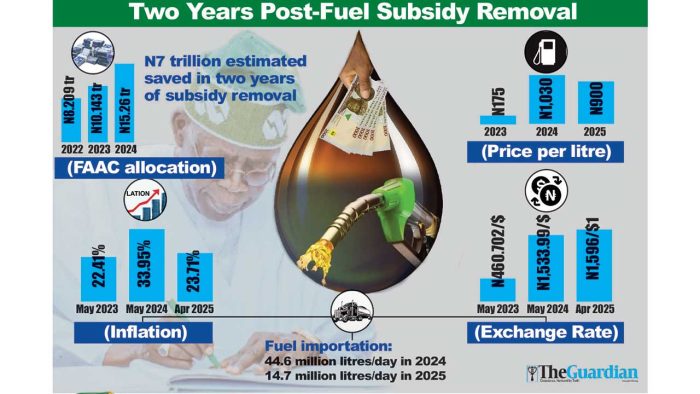
Two years after President Tinubu ended petrol subsidies, the Federal Government has saved over N7 trillion, but inflation and economic hardship continue to plague Nigerians. While FAAC allocations surged to N15.26 trillion in 2024, up from N8.21 trillion in 2022, interventions like CNG buses and cash transfers have failed to alleviate the burden on households and small businesses. Stakeholders warn that rising transport and production costs are fueling inflation, with many enterprises downsizing or shutting down.
Energy economist Ademola Adigun criticized the partial deregulation, citing preferential crude sales to select buyers that have forced 5,000 filling stations to close. PETROAN President Billy Gillis-Harry lamented the lack of a clear post-subsidy roadmap, stating, “We should have had a robust plan before removing subsidies. Right now, it’s difficult to point to clear gains.” Despite refinery repairs costing $2.9 billion, Nigeria still imports 60% of its petrol.
Experts like Prof. Wunmi Iledare acknowledged fiscal benefits but highlighted tripled fuel prices and poor palliative implementation. CPPE’s Muda Yusuf urged lower interest rates to ease business costs, while Kreston Pedabo’s Olufemi Idowu noted most Nigerians “still feel the pains outweigh the gains.” With only 56 CNG stations nationwide, stakeholders demand urgent infrastructure upgrades to realize alternative energy benefits.