
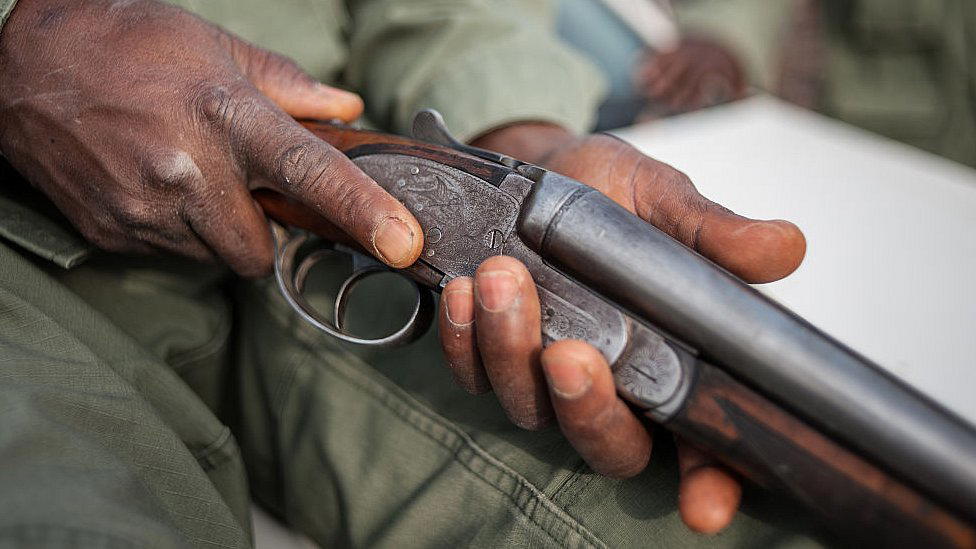
Middle Belt leaders have backed a U.S. congressional recommendation that Nigerian farmers be allowed to bear arms for self-defence amid escalating attacks by bandits and armed herders.
On October 31 last year, U.S. President Donald Trump re-designated Nigeria as a Country of Particular Concern (CPC) over persistent killings linked to terrorist activities. He subsequently directed U.S. Congressman Riley M. Moore and House Appropriations Committee Chairman Tom Cole to lead a comprehensive investigation into the security challenges in Nigeria. Moore had earlier visited Internally Displaced Persons camps in Benue State and met with victims of terrorism. The panel’s report, submitted to President Trump last Monday, recommended measures including the “removal of Fulani militias from confiscated, productive farmland and enable the voluntary return of displaced communities to their homes.”
The panel also proposed “technical support to the government of Nigeria to reduce and then eliminate violence from armed Fulani militias, including a demobilisation, disarmament and reintegration programme to address illicit weapons and support safer communities while allowing farmers to engage in legitimate self-defence.” The recommendation has drawn support from some farming communities who have suffered casualties in clashes with armed herders. However, Nigeria’s 1999 Constitution does not expressly grant citizens the right to bear arms, and firearm possession remains regulated under the Firearms Act Cap F28 LFN 2004, which criminalises unlicensed possession and restricts approvals to the discretion of the President or the Inspector-General of Police.
The Middle Belt Forum (MBF) and Mzough U Tiv Worldwide (MUT) have endorsed the U.S. Congress recommendation. National President of the MBF, Dr. Bitrus Pogu, said, “We advocate that all Nigerians should be free, like Americans, to bear arms. Communities should not remain defenseless while attackers operate freely. If the person coming to kill you, who has not been disarmed, is free to move around the country all this while, then we should be allowed to have arms. However, the problem is that even if that is allowed, people do not have the resources to acquire arms.
So we come back to the organised structure we have been talking about. Let local government police be established. Let state police be established. Decentralised policing would ensure that communities become the first line of defence in the event of attacks. Let these people take care of their immediate environment and be the first line of defence in any attack. If these insurgents know that there are people with guns on the other side, I think they will think twice before attacking. They take advantage of the vulnerability and the lack of defence, and the fact that our communities are not adequately policed or protected by the military.”
READ THE FULL STORY IN VANGUARD