
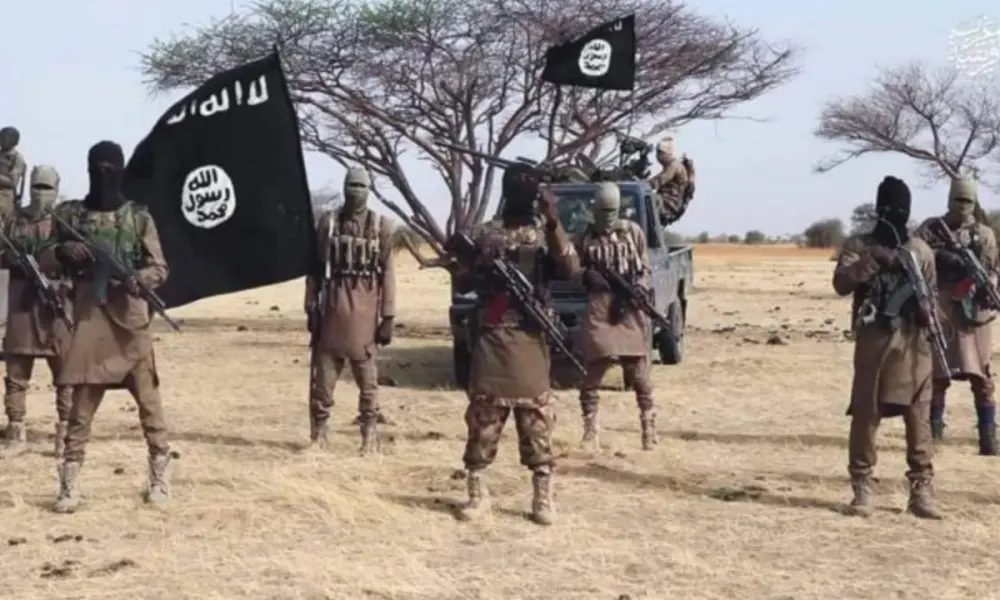
A recent study has confirmed the presence of Islamic State West Africa Province (ISWAP) in Sokoto, answering questions about why US airstrikes targeted the northwestern Nigerian state rather than the group’s traditional northeastern stronghold. The research, titled “Kachallas and Kinship: Understanding Jihadi Expansion and Diffusion in Nigeria” and authored by James Barnett and Umar Musa for the Combating Terrorism Centre, found that ISIS militants operate in Sokoto disguised as Lakurawa.
The study revealed that Lakurawa, a local Hausa term for militants from neighboring Sahel states, has been infiltrating Sokoto communities near the Nigerien border since late 2017. Original Lakurawa members may have been affiliated with al-Qaeda’s Sahel affiliate JNIM in 2017-2018 but are now linked with Islamic State’s Sahel Province. The research noted that these terrorists “work hard to maintain operational security, never disclosing to local communities whether they belong to ISSP, JNIM, or any other faction.”
According to the study, there is evidence that ISSP militants operate in Sokoto and parts of northern Kebbi states under the Lakurawa disguise. Quoting United Nations experts, the research highlighted an ISWAP logistics hub in Sokoto reportedly used to facilitate coordination between ISIS affiliates ISSP and ISWAP. “They do this because the confusion surrounding their identity benefits them,” the study explained regarding the terrorists’ operational secrecy.
The research also found that Nigeria’s most destructive bandit gangs largely originate from Muslim-majority areas in northwestern states including Zamfara, Sokoto, and Katsina. “Consequently, Muslim civilians constitute a sizable portion, if not the clear majority, of both the perpetrators and victims of banditry in the northwest,” the study stated, highlighting the complex nature of violence affecting both Christian and Muslim communities.