
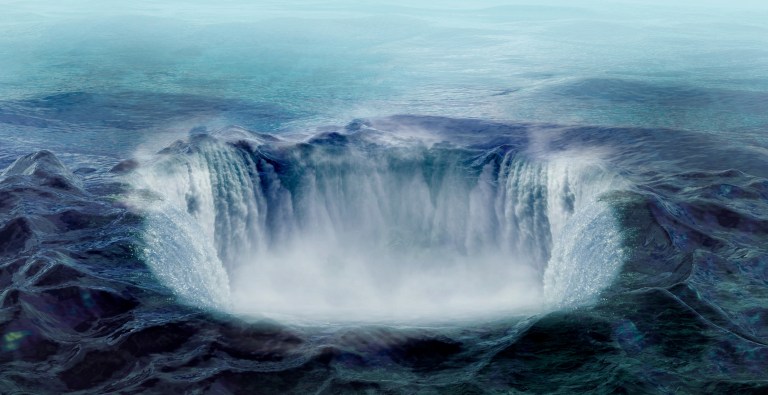
Scientists have discovered a massive and unexplained rock formation buried deep beneath Bermuda, challenging long-held assumptions about the geology of the Atlantic island. The finding adds a new scientific dimension to the region often linked to myths surrounding the Bermuda Triangle, though researchers stress the discovery has nothing to do with vanished ships or planes.
According to researchers from Carnegie Science and Yale University, the newly identified rock layer sits between the oceanic crust and Earth’s mantle and is about 12.4 miles thick. The formation was identified using seismic data from distant earthquakes and should not exist in its current location, making it a geological anomaly.
The discovery was detailed in a study published in Geophysical Research Letters. Scientists say the rock layer may help explain why Bermuda rests on an elevated oceanic swell despite being volcanically inactive for roughly 31 million years. Normally, such swells sink once volcanic activity stops.
Seismologist William Frazier told Live Science that the swell is “this other layer that is emplaced beneath the crust, within the tectonic plate that Bermuda sits on.” Researchers found the layer to be less dense than surrounding rock, raising further questions about how it formed.
The leading theory suggests molten mantle material from Bermuda’s last volcanic eruptions cooled and solidified within the crust, acting as a buoyant slab that keeps the seafloor elevated. Scientists are now examining other islands to determine whether Bermuda is unique or part of a broader, previously unknown geological pattern.
NEWS NOW:
- Tinubu arrives Lagos for Easter, plans visits to Ogun, Bayelsa
- Sokoto housewife pours hot oil on husband’s private parts over infidelity suspicions
- ‘I saw your pain’: Tinubu consoles mother from viral Jos video during Plateau visit
- ‘Talking to airport’: Outrage as Tinubu limits Plateau condolence visit to airport lounge