
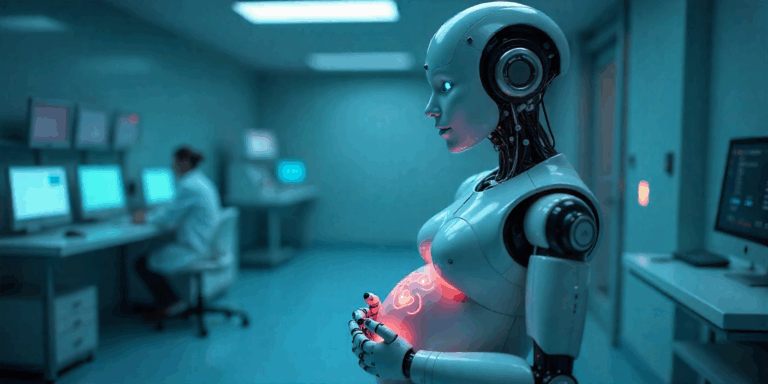
Chinese researchers are developing an AI-controlled “robotic womb” prototype that could monitor and nurture embryos outside the body, currently tested on animals, and raising ethical and regulatory questions.
Chinese scientists are advancing a prototype of an AI-controlled “robotic womb” designed to replicate elements of pregnancy outside the human body. The system uses sensors and AI to precisely regulate nutrition, carbon-dioxide levels, and waste removal to foster embryo development .
Development remains grounded in preclinical testing, with the technology so far deployed only on animal embryos. Importantly, no human embryos have yet been involved in the system’s trials .
The goal is to create a fully automated incubation environment that can sustain optimal growth conditions without constant human supervision. Researchers position this device as a groundbreaking tool that could revolutionize reproductive science, particularly in areas where gestation poses risks or barriers .