
by Nij Martin
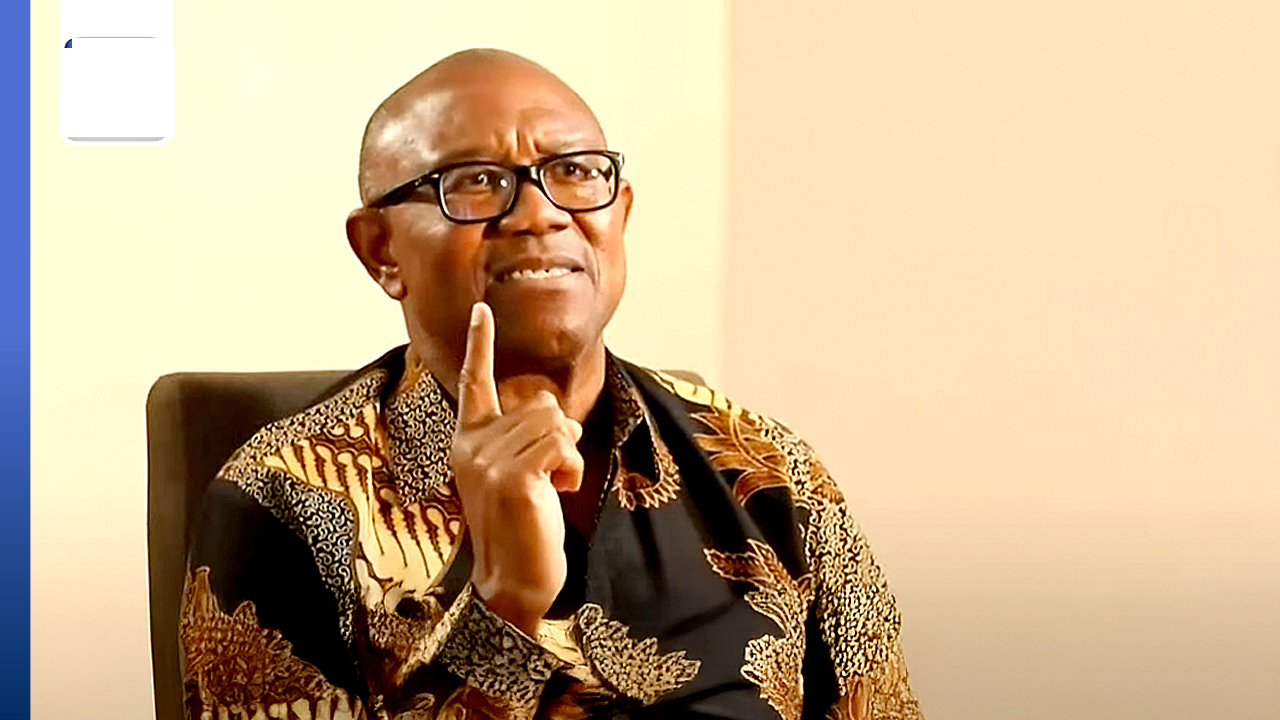
Peter Obi stands at one of the most consequential crossroads of his political career. The former Anambra State governor and 2023 Labour Party presidential candidate is orchestrating what appears to be a carefully choreographed yet politically risky transition to the African Democratic Congress ahead of the 2027 general elections. But beneath the surface of defection announcements and coalition talks lies a far more complex calculation: how does Obi position himself to actually win the presidency while managing fervent supporter expectations, navigating opposition politics, and avoiding the subordinate role of vice president that some believe may be his only realistic path to power?
The ADC Move: Strategic Repositioning or Tactical Retreat?
Multiple sources have confirmed that Obi is set to formally join the ADC on December 31, with a declaration rally planned for Enugu, described as the political capital of the South-East. A Labour Party official in Abuja told THISDAY that “Obi’s supporters and loyalists have begun arrangements for the defection,” adding that the former governor met with ADC National Chairman David Mark “to renew his allegiance to the coalition” after the party asked him to make up his mind about three weeks ago.
Yet Obi himself has pushed back against the defection narrative with characteristic nuance. Speaking during an X Space session on Sunday, he insisted: “I am not joining ADC. I can’t re-join what I am already a part of. I’ve been part of the coalition from day one. Nobody is stepping down for me in ADC. We have all agreed to work together.”
This semantic dance reveals much about Obi’s strategy. By claiming he’s always been part of the coalition rather than joining it anew, he attempts to maintain continuity with his base while avoiding the appearance of desperation or political homelessness. It’s a positioning that allows him to move to the ADC without seeming to abandon principles or admit that the Labour Party platform has become untenable.
The reasons for the ADC pivot are becoming clearer. A leading Obidient Movement figure told Vanguard that “the decision was a hard one but inevitable because the ADC platform is perhaps the only one that is yet to be infiltrated by President Tinubu and his APC. It is the only platform that has men and women who have the capacity to pose a real challenge to the APC’s dominance.”
Dr. Katch Onanuju, describing himself as a pioneer leader of the Obidient Movement, offered a more pessimistic assessment: “He has been cornered by a few persons to agree to what some of us think will eventually end his political career. It is unfortunate that he didn’t consider our advice to move into another party early enough. We wanted him to help rebuild a new platform when we noticed that the Labour Party had been hijacked by anti-democratic forces acting at the behest of the APC.”
The Labour Party’s response has been notably measured. National Publicity Secretary Obiora Ifoh said: “We cannot fully comment on that until we hear from Obi. As we normally say, anybody can defect from anywhere to anywhere. It is normal in Nigerian politics. Labour Party doesn’t see it as a big deal.” This diplomatic neutrality suggests the party recognizes it cannot hold Obi if he’s determined to leave, but also wants to avoid appearing desperate or weakened by his departure.
The Vice President Question: Emphatically Ruled Out
Perhaps the most definitive aspect of Obi’s 2027 positioning is his categorical rejection of a vice-presidential role. During the Sunday X Space session, he declared unambiguously: “I am not travelling round the world to learn governance to be Vice President. I know how to turn Nigeria around. I built my business from scratch and have more experience than any candidate, including the sitting President. Peter Obi will be on the ballot in 2027. I need your support. I need your prayers.”
This statement came amid swirling speculation—and pointed accusations from Aviation Minister Festus Keyamo—that Obi had agreed to serve as someone’s running mate. Keyamo’s Monday post on X took a thinly veiled swipe at an unnamed politician: “Finally, the chicken is coming home to roost: I understand that someone, somewhere has drafted and redrafted the statement he will release to hoodwink his ‘supporters’ on why he has accepted to be Vice-Presidential candidate after a primaries that he knows has long been concluded.”
Keyamo added: “He has written and torn drafts upon drafts, containing the normal gibberish of ‘my desire to rescue Nigeria’, bla, bla bla. It’s a tough one for him, but we are excited at the prospect of unmasking a true turncoat and a fraud at the coming campaigns.”
While Keyamo didn’t name Obi directly, the timing and context made the target clear. The minister’s comments followed reports suggesting Obi might accept a vice-presidential slot under former Vice President Atiku Abubakar in a unity arrangement within the ADC coalition.
Obi’s emphatic rejection of the VP role reflects both personal ambition and political calculation. Having come third in the 2023 presidential election with a strong showing, particularly among young urban voters, accepting a subordinate role would likely alienate his core “Obidient” base, who view him messianically as Nigeria’s only hope for redemption. As one political observer noted to a correspondent, Obi finds himself in an Orwellian predicament—pressured by fervent supporters who see him as the only viable option, he’s “compelled to act not always by strategic calculation but by the weight of expectation.”
The Atiku Factor: Respected Leader or Rival?
Obi has been careful to maintain cordial public relations with Atiku Abubakar, his former running mate in the 2019 PDP presidential campaign. “Atiku remains my respected leader,” Obi said during the X Space session, describing him as “an elder brother” whom he would always hold in high regard.
Yet despite these diplomatic courtesies, the fundamental tension remains: both men want to be president, and Nigeria’s political arithmetic suggests the opposition’s only realistic chance of defeating the APC in 2027 requires them to unite behind a single candidate.
Reports claiming Atiku had withdrawn from the 2027 race in Obi’s favour were swiftly denied by Atiku’s media adviser, Paul Ibe, who described the claims as “Fake news: Not on the menu!” This emphatic rejection underscores that Atiku, who has contested the presidency multiple times and come heartbreakingly close, has no intention of stepping aside for his younger rival.
Some opposition strategists have argued that Obi’s most viable route is to accept a vice-presidential slot under Atiku for 2027, with the understanding that he would succeed Atiku after a single term. This calculation assumes that if Obi contests independently and loses in 2027, the presidency will rotate back to the North in 2031, pushing the next realistic Southeast opportunity to 2039—when Obi would be 77 years old.
However, this scenario is undermined by shifting political realities. The once-assumed equation of Atiku sweeping the North while Obi dominates the Southeast and South-South no longer holds. The APC has consolidated significant influence in both regions, aided by most governors’ open allegiance to President Bola Tinubu. In the North, former APC strongholds are showing cracks, but so too are traditional opposition areas collapsing under APC pressure and PDP internal crises.
The Independent Route: Viable or Fantasy?
Obi has not publicly ruled out running as an independent candidate, though such a path faces formidable obstacles in Nigeria’s political system, which heavily favors established party structures. The logistical, financial, and organizational challenges of mounting a truly independent presidential campaign in Africa’s most populous nation are staggering.
Moreover, Nigeria’s recent electoral history suggests that independent candidates face near-insurmountable hurdles in winning at the presidential level. The INEC electoral framework, campaign finance requirements, and the need for nationwide grassroots mobilization all favor candidates with established party machinery behind them.
What Is Obi Really Positioning For?
Synthesizing the available evidence, Obi’s gameplan appears to involve several overlapping objectives:
First, he’s securing a credible party platform for 2027 through the ADC, recognizing that the Labour Party has become too compromised or chaotic to serve as an effective vehicle for his ambitions. The ADC offers relative stability and a coalition framework that could theoretically unite disparate opposition forces.
Second, he’s categorically ruling out a vice-presidential role to maintain credibility with his base and preserve his political value. By insisting he will only contest as a presidential candidate, Obi forces any coalition discussions to center on him as a principal, not a subordinate.
Third, he’s maintaining diplomatic relations with other opposition figures, particularly Atiku, while avoiding commitments that would foreclose his options. This allows him to participate in coalition talks without binding himself to outcomes that might disadvantage him.
Fourth, he’s managing the expectations of his fervent “Obidient” support base, who expect nothing less than a presidential run and would view any compromise as betrayal. This constituency gives him leverage but also constrains his flexibility.
Fifth, he’s positioning himself as the candidate of youth, competence, and transformational change—contrasting himself with both the ruling APC and older opposition figures like Atiku whom he characterizes as part of Nigeria’s political establishment.
The Fundamental Dilemma
Yet all these tactical moves cannot obscure the fundamental strategic dilemma Obi faces: opposition unity requires someone to accept a subordinate role, and neither Obi nor Atiku appears willing to be that person. Former Rivers State Governor Chibuike Amaechi recently ruled himself out as a possible Atiku running mate, declaring himself more suited to the presidency than any subordinate role—a position strikingly similar to Obi’s.
The result is a potentially catastrophic fragmentation that could hand the APC another easy victory in 2027, particularly as the ruling party consolidates its grip across regions previously thought to be opposition strongholds. Economic hardship, insecurity, and allegations of nepotism remain potent issues the opposition could deploy against Tinubu, but their effectiveness depends entirely on whether the opposition can first overcome its internal contradictions and coalesce around a unified strategy.
The Crowd and the Elephant
Perhaps the most insightful analysis of Obi’s predicament comes from Vanguard’s political observer, Emmanuel Aziken, who referenced George Orwell’s essay “Shooting an Elephant” in his recent opinion piece. He recounted the dilemma of a British colonial police officer in Burma who, against his own judgment, shoots an elephant simply to avoid looking weak before an expectant crowd.
That increasingly is the box Obi finds himself in. Pressured by a fervent support base that sees him as the only viable option for Nigeria, he may be compelled to act not by strategic calculation but by the weight of expectation. His supporters conveniently gloss over missteps—such as his leadership’s failure to prevent the Labour Party’s disastrous outing in the recent Anambra governorship election—and frame Nigeria’s redemption as singularly anchored on his messianic emergence.
Many of these supporters, living abroad and insulated from Nigeria’s daily harsh realities, fail to fully appreciate the complexities of navigating the present quagmire. They demand that Obi contest the presidency on principle, regardless of whether the political arithmetic actually favors victory or whether a different arrangement might better serve the ultimate goal of defeating the APC.
Closing Thoughts
As December 31 approaches and Obi’s expected formal alignment with the ADC draws near, the contours of his 2027 strategy are becoming clearer even as fundamental questions remain unanswered. He will contest as a presidential candidate, not as anyone’s running mate. He will do so from the ADC platform, not Labour Party or as an independent. He will attempt to maintain coalition relationships while refusing to subordinate his ambitions to others.
Whether this strategy can actually deliver the presidency—or whether it will result in another opposition defeat and the consolidation of Nigeria into what some fear is becoming a de facto one-party state—remains to be seen. The question may ultimately come down to whether Peter Obi is prepared to shoot the elephant of ego and expectation that his supporters have erected around him, or whether, like Orwell’s reluctant marksman, he will march into 2027 merely to avoid disappointing the crowd, regardless of the consequences.
For now, Obi’s gameplan is clear in its ambition if not in its ultimate viability: presidential candidate, ADC platform, coalition participant but not subordinate, and sustained by a passionate base convinced that Nigeria’s salvation depends on his emergence. Whether that’s political genius or strategic delusion will be determined by Nigerian voters in 2027—assuming the opposition can first overcome its existential crisis of unity and purpose.