
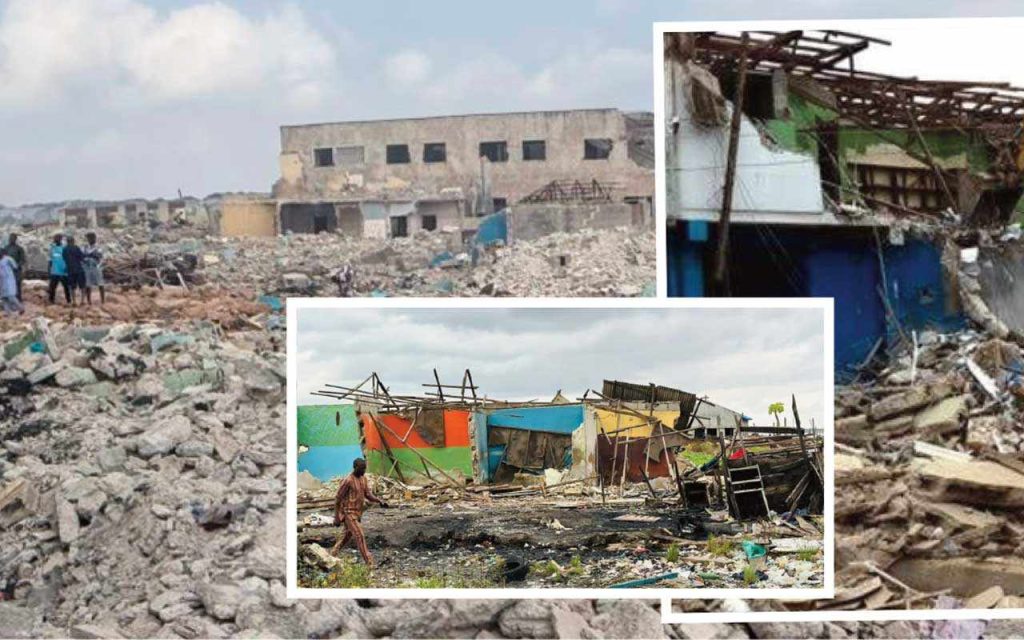
Building demolitions affecting over 2,500 houses across major Nigerian cities are fueling widespread anxiety among residents and investors. The trend, now routine in Lagos, Abuja, Anambra, Abia, Ebonyi, Oyo and Kano, has sparked fears of property devaluation, job losses and homelessness. Lagos accounts for more than 1,500 of the recorded cases, with communities along the Lagos-Calabar Coastal Road, Mile 12, Oworonshoki and other areas severely affected. Stakeholders warn that many demolitions lack transparency and due process, undermining confidence in Nigeria’s housing market and worsening the critical housing deficit.
Yesterday, Mile 12 residents in Lagos woke to bulldozers demolishing their homes without prior notice, barely two months after similar actions in Oworonshoki. Mile 12 Central CDA Chairman Ogundele Tunde Joshua stated that no letter was served before the demolition and no meeting held with residents. “We are law-abiding citizens, and we didn’t confront them when they deployed bulldozers,” Joshua said, appealing to President Tinubu and Governor Sanwo-Olu for intervention. Youth Chairman Samsudeen Dauda reported that over 2,000 Arewa residents were affected, with 10 patients dying during the demolition of a hospital. Properties worth trillions of naira have been destroyed, with Lagos extending its planning permit amnesty to December 31.
Experts attribute the crisis to regulatory lapses and non-compliance by developers who build without approvals. Nigerian Institute of Town Planners Lagos Chairman Oladele Akindele observed that many affected locations involved illegal settlements and lax monitoring by officials. Commissioner for Physical Planning Dr. Oluyinka Olumide defended the state’s actions, stating, “We operate a clear and transparent procedure for any demolition exercise, which includes issuance of all statutory notices and engagement with affected stakeholders.” He emphasized that illegal structures distort planning and hinder sustainability, while the state has introduced amnesty programs to allow property owners to regularize buildings constructed without approval.
NEWS NOW:
- The U.S. has approved the departure of embassy staff from Nigeria and advised citizens to reconsider travel over security and safety concerns
- Real reason more under-5 die in Nigeria than in poorer countries – World Bank
- U.S. sanctions loom: Lobbying firm urges Trump to penalise Nigerian officials over INEC derecognition of ADC
- DisCos raked in ₦204.74bn in January despite widespread blackouts