
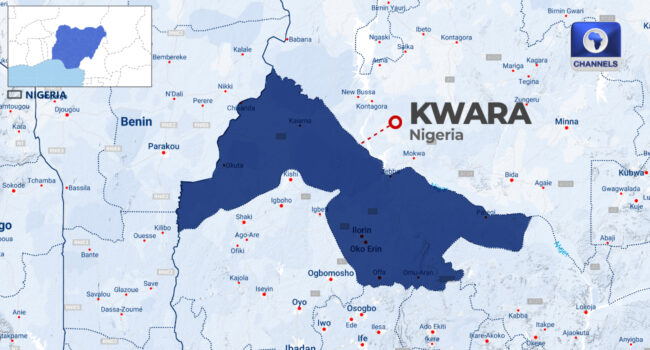
The recent massacre in Kwara State has sent shockwaves across Nigeria, marking one of the deadliest attacks in the country in recent months and raising renewed questions about the effectiveness of ongoing counterterrorism efforts. Gunmen invaded Woro and nearby communities in Kaiama Local Government Area on Tuesday evening, unleashing hours of violence that local officials, humanitarian groups, and residents describe as catastrophic.
The International Committee of the Red Cross confirmed that at least 162 people were killed, revising earlier figures that ranged from 67 to about 100. Kwara State Governor AbdulRahman AbdulRazaq, however, officially confirmed 75 deaths, explaining that the victims were “local Muslims massacred for refusing to surrender to extremists preaching a strange doctrine.” The discrepancy in casualty figures reflects the confusion and fear that followed the attack, as bodies continued to be recovered and survivors fled into surrounding bushes and forests.
According to eyewitness accounts, the gunmen arrived in Woro village around 6:00 pm, firing indiscriminately, setting shops ablaze, and attacking the king’s palace. A local lawmaker, Sa’idu Baba Ahmed, said, “Many others escaped into the bush with gunshots,” adding that the death toll could still rise as search efforts continued. The whereabouts of the traditional ruler, Alhaji Salihu Umar, remained unclear in the immediate aftermath.
The assault came shortly after the Nigerian military carried out operations in parts of Kwara against what it described as “terrorist elements.” Analysts believe the attack may have been a reprisal. Governor AbdulRazaq condemned the killings as “a cowardly expression of frustration by terrorist cells following the ongoing counterterrorism campaigns in parts of the state.” He disclosed that President Bola Ahmed Tinubu had approved the immediate deployment of an Army battalion under Operation Savannah Shield to launch counter-offensives against the attackers.
Survivors’ testimonies paint a grim picture of the human cost. The head of Woro village, Alhaji Umar Tanko, recounted losing close family members. “I was in my shop when they arrived. They shot my children and took my second wife away,” he said. Another resident, Razaq Abdulazeez, said people ran in different directions to escape. “Those who couldn’t run climbed trees to avoid the attackers,” he added.
Security experts and local sources suggest the attackers may be linked to Lakurawa, an armed group associated with the Islamic State Sahel Province, or to jihadist networks expanding from neighbouring states and across porous borders. Researcher Brant Philip noted that the raid occurred just four kilometres from the site of an earlier attack claimed by the al-Qaeda-linked Group for the Support of Islam and Muslims, pointing to a “direct overlap” of extremist activity zones.
The massacre has intensified scrutiny of the Federal Government’s security strategy. Former Senate President Bukola Saraki described the killings as “a national disaster,” arguing that the situation had gone beyond the capacity of the state government. He called for “decisive, direct federal intervention,” urging the deployment of more troops and the establishment of a strong security base in affected areas. “What these criminals did in Woro was to wage war against Nigeria. It is a war the country must win, without delay,” he said.
Opposition parties also reacted sharply. The Peoples Democratic Party in Kwara State condemned the attack as “gruesome, despicable, inhuman and callous,” accusing the state government of offering sympathy without sufficient action. The New Nigeria People’s Party urged a complete overhaul of Nigeria’s security architecture, warning that continued insecurity should not be politicised but urgently addressed.
Beyond Kwara, the violence reflects a wider pattern. In the past four weeks alone, reports indicate that about 271 people have been killed and more than 250 abducted across several states, including Niger, Kaduna, Katsina, Sokoto, and Zamfara. Insecurity in north-central Nigeria has increasingly involved a mix of banditry, extremist ideology, and cross-border movement, overwhelming rural communities despite repeated military operations.
While the military says it has achieved “notable successes,” including the neutralisation of armed groups and the destruction of camps, the Kwara massacre underscores a painful reality: civilians remain highly vulnerable. Curfews, school closures, and troop deployments may offer temporary relief, but residents and analysts alike argue that long-term solutions require better intelligence, border security, community engagement, and humanitarian support for affected populations.
As Kwara mourns, the massacre stands as a stark reminder that Nigeria’s security crisis is far from contained. For the families who buried loved ones some reportedly in mass graves the figures and political statements fade behind a single demand: that such violence must not be allowed to happen again.