
Visit The Independent
THE INDEPENDENT
Ukraine is cagey about the size of its navy. Which isn’t surprising. In conventional terms it hasn’t really got one. But Kyiv rules the waves in the Black Sea with its near invisible fleet.
Three years after Vladimir Putin launched a full-scale invasion of Ukraine, in which the bulk of Kyiv’s navy was sunk or scuppered, Russia’s Black Sea Fleet is cowed and hiding.
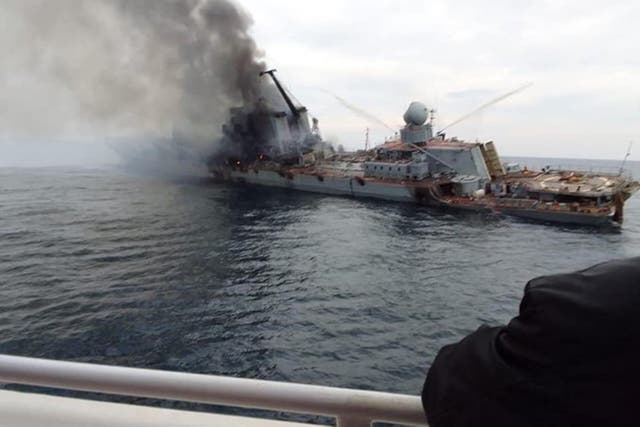
Described by the UK’s ministry of defence as “functionally inactive”, the sinking of Russia’s flagship vessel the Moskva by Ukrainian cruise missiles in 2022 proved a major blow for Putin’s navy.
Small wonder that the Russian president’s overtures towards a ceasefire with Ukraine focused on a call for a suspension of fighting in the Black and Azov seas. He’s lost around 30-40 per cent of his vessels here – and the rest have slunk away to hide in Russian ports such as Novorossiysk.
The crew of one of Ukraine’s few patrolling vessels, a reconditioned former US coastguard Island-class cutter, is tired. They were up all night manning the ship’s double barrelled cannon, shooting at Russian Shahed drones that swarmed the skies over Odesa.
But, as merchant ships sailed quietly into the ports along Ukraine’s southern coast, the crew was confident. They haven’t seen a Russian vessel for months.
“Maybe we get some sea drones [from the Russian side] but not often. Every day, or at least every other day, we get air attacks though from Crimea,” says Lieutenant Commander Mykhailo.
“We don’t know the destination of every Shahed [drone] that is flying overhead is – maybe we are the target,” he adds.
Russian skippers are probably more anxious.
Since 2022, Ukraine – with a navy numbering around 11,000 personnel – has sunk at least 20 Russian vessels; among them cruisers, the Moskva, several troop landing ships, and numerous smaller vessels.
These losses have all been down to a new form of naval warfare now pioneered by Ukraine’s navy because, aside from the Island-class patrol boat, and a handful of small boats in what’s known as a “mosquito force”, Ukraine isn’t bothering with ships.
Former Royal Navy mine hunters transferred to the Ukrainian navy are stuck in the UK because they cannot travel through the Bosphorus Straights. Turkey has banned military traffic through the strategic route since the full-scale Russian invasion of Ukraine in 2022.
The focus instead has been to use long range rockets, cruise missiles, underwater and surface drones – almost all of them home-made in Ukraine. They’ve almost harried Moscow’s Black Sea fleet out of business…