
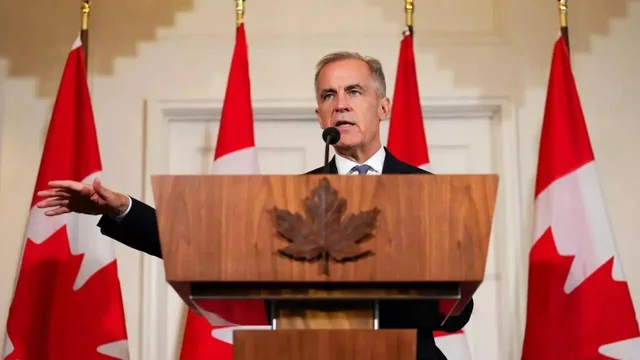
Canada is looking to capitalize on new US visa rules by implementing special initiatives aimed at attracting top international researchers and current H-1B visa holders, according to a HINDUSTAN TIMES report. Amid the Donald Trump-led US administration’s move to impose an annual fee of $100,000 on H-1B visas, Canadian Prime Minister Mark Carney has signaled a push to attract technology sector employees. Carney previously stated in September, “What is clear is that the opportunity to attract people who previously would’ve got so-called H-1B visas.”
In his first budget, Prime Minister Carney’s plan earmarked C$1.7 billion ($1.2 billion), as reported by Bloomberg, to recruit more than 1,000 skilled researchers. A budget document was quoted as saying, “The expertise of these researchers will help advance our global competitiveness and contribute to the economy of the future.” The initiatives also include an “accelerated pathway” for H-1B visa holders in a bid to attract skilled workers in the coming months, a move considered significant given fresh US restrictions. Government data indicates that Indian nationals make up over 70% of H-1B visa recipients, with many expressing fear and uncertainty about their career prospects in the US.
Despite these efforts to attract permanent talent, Canada is cutting down on its annual intake of temporary residents. The country plans to bring in 380,000 permanent residents per year from 2026 through 2028, but is cutting the number of temporary residents allowed to 385,000 in 2026 and 370,000 for the following two years, reflecting more than a 40% reduction from this year. This sharp dip is driven by a reduction in new study permits, which have been reduced to 155,000 in 2026 and 150,000 in both 2027 and 2028, according to Bloomberg. Universities Canada was quoted as saying it “recognizes the government’s efforts to build a sustainable immigration system that welcomes those seeking to study at Canada’s world-class universities, but the plan must match this government’s talent and economic agenda.” The US is maintaining tight controls over the number of immigrants it lets into the country after a surge in population growth in recent years.