
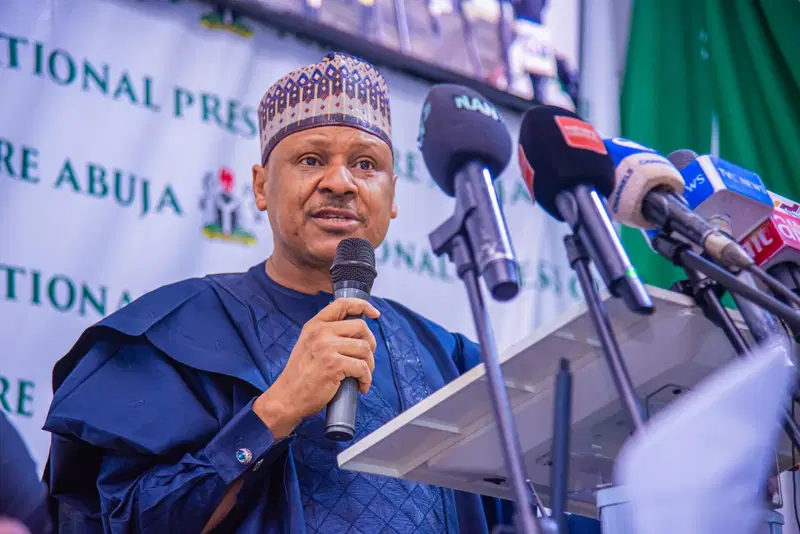
The Federal Government announced that the “diplomatic spat” with the United States regarding religious violence “has been largely resolved.” Information Minister Mohammed Idris stated that “firm, respectful engagement” helped mend ties following President Trump’s threats of military intervention. The conflict arose from U.S. allegations of “genocide” against Christians, a narrative Nigeria’s government continues to firmly reject.
Despite the resolution, friction remains as Nigeria stays on Washington’s religious freedom watchlist and faces new immigration restrictions. However, security cooperation is increasing, evidenced by more U.S. reconnaissance flights over jihadist strongholds. Experts maintain that Nigeria’s internal conflicts involve complex resource competition affecting both Muslims and Christians, rather than strictly sectarian persecution.
Minister Idris also defended a $2.1 billion U.S. aid package prioritizing Christian faith-based healthcare. Addressing concerns of favoritism, he insisted, “Every Nigerian is going to be a beneficiary of this arrangement.” This cooperation occurs as Nigeria continues to battle various armed groups, including bandits and jihadists, while maintaining that the violence is rooted in resource-driven clashes.