
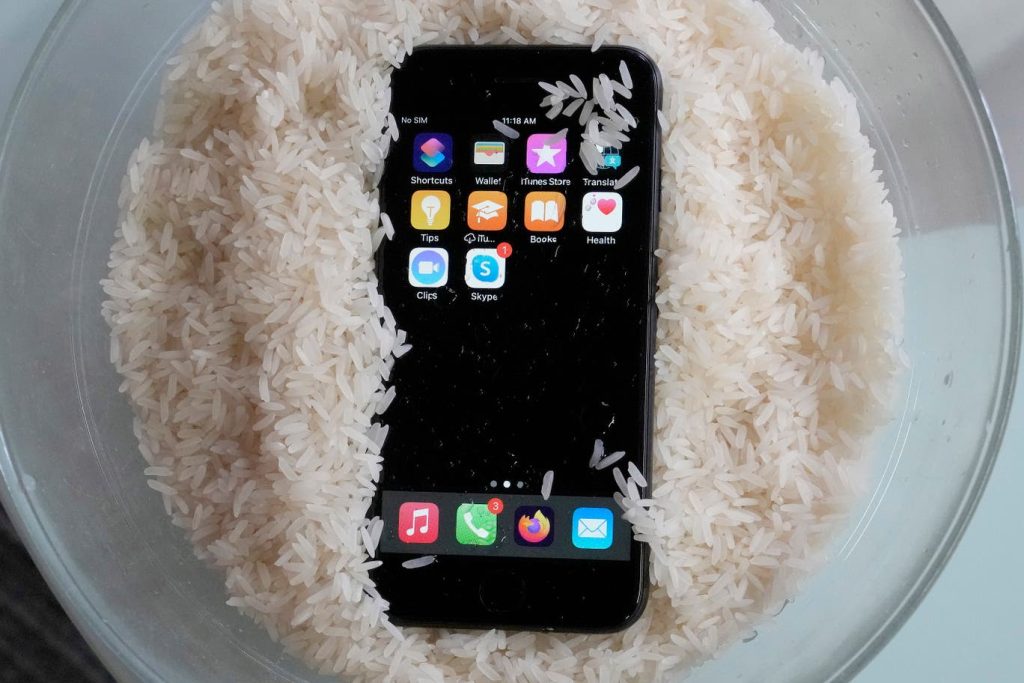
When electronic devices get wet, many turn to the age-old remedy of submerging them in rice…
However, Rachel Plotnick, Associate Professor at Indiana University, challenges this and other misconceptions in her book, License to Spill: Where Dry Devices Meet Liquid Lives.
Myth 1: My device turned back on! It’s fine
While it’s a relief to see your technology rise from the dead, what you can’t see are subtle processes occurring inside, like corrosion.
Myth 2: My ‘waterproof’ device can tolerate any kind of wetness
The term “waterproof” is a controversial one – so controversial, in fact, that the Federal Trade Commission has strict rules about using the term in advertising.
Myth 3: My device has a great IP rating, so it’s been tested under real-world conditions
Companies often advertise IP ratings as a way to entice consumers to purchase their products, but it’s important to know that these ratings are based on contact with fresh water.
Myth 4: I’ve got some rice in the kitchen. I can fix this myself!
However, the rice hack doesn’t work very well, and rice particles can enter the device to cause even further damage.
Myth 5: Well, this device is broken, but I’ve got a warranty to replace it
Most traditional consumer technology limited warranties don’t cover liquid damage.
Plotnick emphasizes the need for realistic expectations and ethical marketing from manufacturers, noting that while devices have improved in water resistance, they are not impervious to all types of liquid exposure.