
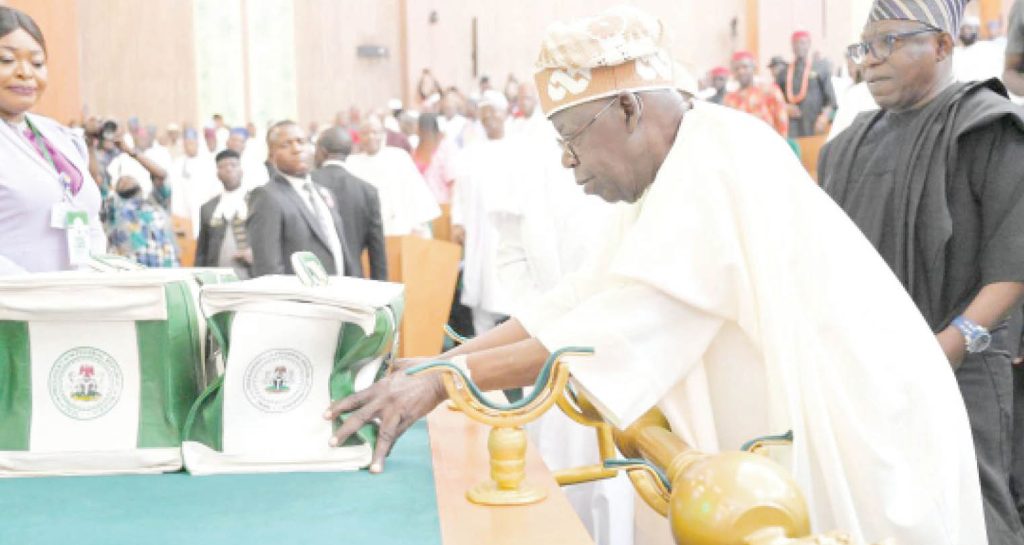
President Bola Ahmed Tinubu presented a N58.18 trillion budget for 2026 to the National Assembly, with debt servicing consuming N15.52 trillion—over 26% of total spending. The allocation exceeds funding for many key sectors and remains a major expenditure item. The budget, named the “Budget of Consolidation, Renewed Resilience and Shared Prosperity,” projects a deficit of N23.85 trillion, equivalent to 4.28% of GDP.
The security sector received the largest sectoral allocation of N5.41 trillion, followed by infrastructure and education. Tinubu defended the fiscal plan, stating it reflects a commitment to “consolidate macroeconomic reforms while managing debt with discipline.” He cited economic improvements, including 3.98% GDP growth and rising external reserves, as signs reforms are working.
However, analysts warn the massive debt service cost limits fiscal space for other priorities. Furthermore, the President has asked lawmakers to extend the 2025 budget’s implementation to March 2026, a move one economist, Dr. Marcel Okeke, criticized as a “fiscal anomaly” that reduces government credibility and transparency.