
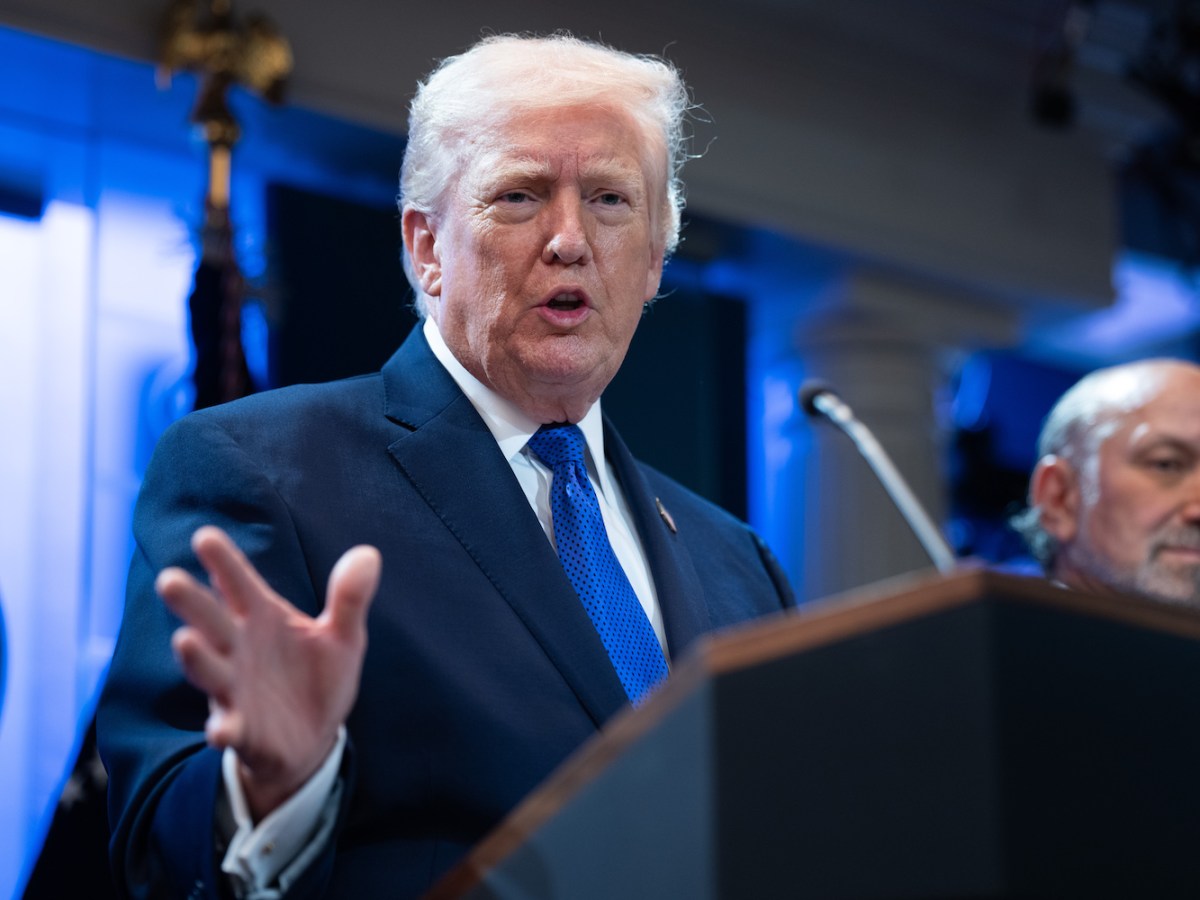
President Donald Trump has raised a newly imposed global tariff from 10% to 15% following a Supreme Court ruling that struck down his earlier sweeping trade measures as unconstitutional.
Donald Trump on Saturday announced an increase in his newly imposed global tariff from 10 per cent to 15 per cent, effective immediately, a day after the Supreme Court of the United States struck down most of his previous trade measures as unconstitutional. “I, as President of the United States of America, will be raising the 10% Worldwide Tariff to the fully allowed, and legally tested, 15% level,” Trump wrote on his Truth Social platform, describing the court’s ruling as “ridiculous” and “extraordinarily anti-American.” The announcement followed an executive order he signed on Friday introducing a replacement 10 per cent tariff after the court’s decision.
In a 6–3 ruling, the Supreme Court held that Trump had exceeded his constitutional authority by imposing broad import taxes under the International Emergency Economic Powers Act of 1977. Chief Justice John Roberts wrote that the president must show “clear congressional authorization” to impose tariffs, adding that the 1977 law “does not authorize the president to impose tariffs.” Conservative justices Clarence Thomas, Samuel Alito and Brett Kavanaugh dissented, with Kavanaugh warning that the decision could create “chaos” over potential refunds of duties already collected. Analysts estimate the tariffs generated more than $130 billion in 2025.
Trump is now invoking Section 122 of the Trade Act of 1974, which allows a temporary import surcharge of up to 15 per cent for 150 days to address large balance-of-payments deficits, subject to congressional approval for any extension. The new tariff, set to take effect on February 24, includes exemptions for pharmaceutical products and goods covered by the US-Mexico-Canada Agreement. The 15 per cent rate will apply to countries that previously negotiated trade agreements with Washington, including the European Union, Japan, South Korea and Taiwan, while some partners such as China, Mexico and Canada may see adjustments to earlier tariff levels.
READ THE FULL STORY IN MOROCCO WORLD NEWS
NEWS NOW: