
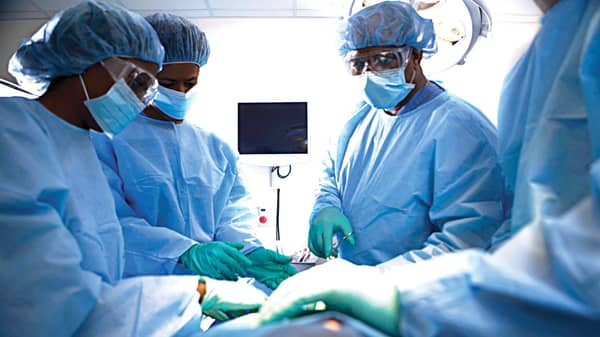
Even as renowned author Chimamanda Ngozi Adichie accuses a Lagos hospital of medical negligence in her 21-month-old son’s death, a growing number of diaspora Nigerians continue returning home for major surgeries and fertility treatments, revealing the stark contradictions in Nigeria’s healthcare system where pockets of excellence coexist with dangerous gaps in patient safety.
by Nij Martin
The death of Nkanu Nnamdi, the 21-month-old son of celebrated author Chimamanda Ngozi Adichie, on January 7, 2026, has cast a devastating spotlight on Nigerian healthcare. Adichie’s allegations of medical negligence at Euracare Hospital in Lagos—including improper monitoring after sedation with propofol, an excessive dose by an anesthesiologist, and reports of two previous cases involving the same doctor overdosing children—have reignited national conversations about the safety and competence of Nigerian medical facilities.
Yet against this tragic backdrop, Vanguard’s findings reveal a surprising countertrend: increasing numbers of diaspora Nigerians are deliberately returning home for major surgical operations, medical diagnoses, and fertility treatments. This paradox—simultaneous medical migration in opposite directions—exposes the complex, contradictory reality of Nigerian healthcare.
The Painful Irony
Adichie’s son had been scheduled to fly to Johns Hopkins Hospital in Baltimore with a traveling medical team on January 7, underscoring what many Nigerians believe: that serious medical care requires leaving the country. The author’s statement revealed that her son “would be alive today if not for an incident at Euracare Hospital on January 6th,” where he was taken for an MRI scan and central line insertion before his planned medical evacuation.
The tragedy prompted Lagos State Governor Babajide Sanwo-Olu to order an immediate investigation, with officials promising that “any individual or institution found culpable of negligence, professional misconduct, or regulatory violations will face the full wrath of the law”. The hospital has denied improper care, claiming it followed international standards, though Adichie asked pointedly: “Why did Euracare allow him to keep working?” regarding the anesthesiologist allegedly involved in previous overdose incidents.
This high-profile case seems to confirm every Nigerian’s worst fears about local healthcare. Yet remarkably, many diaspora Nigerians are making the opposite calculation—choosing Nigerian hospitals over Western facilities for critical medical procedures.
The Reverse Medical Migration
Vanguard’s Economy & Lifestyle findings show that diaspora Nigerians are returning home for major surgical operations, medical diagnoses, and fertility treatments including In Vitro Fertilization (IVF) and Intrauterine Insemination (IUI). Their reasoning centers on two factors: prohibitive costs abroad and surprisingly inadequate preliminary care in foreign healthcare systems.
Mr. Freedom Adams’s experience captures this frustration. When severe stomach pain landed him in an emergency unit abroad, he spent five hours receiving only pain relief without diagnostic investigation. “On getting to the hospital, I was kept for five hours and given pain relief without diagnosis of what really was the cause of my stomach ache,” Adams recounted. “I had to visit the hospital when I visited Nigeria. That was where I was told to do some series of tests, which showed I have a pile and ulcer, which makes my stool blood laden, and I was treated.”
His conclusion: “So, I make it a habit to visit the hospital in Nigeria whenever I am home for a general body check-up because in some diasporan countries, you hardly get such privileges. If you are to get such, you will pay triple of what you are to pay in Nigeria.”
Where Nigerian Healthcare Excels
Mr. Adewale Makinde, a gynecologist, confirmed significant developments in fertility treatment: “There has been an influx of Nigerian women with fertility issues flying into the country from abroad to receive IVF. The cost of consultation, talk of the procedure abroad is overwhelming.”
Mrs. Felicia Momodu described her shock when her daughter and son-in-law left Canada for IVF treatment in Nigeria. “When they told me they were coming home, I was shocked. I was even suggesting they use herbs instead, but they refused. Another thing they were mentioning was the difficulty in finding a good fertility clinic with low cost over there.”
The outcome? “They went through the process, and it came out successful. She was delivered of two boys, and I was grateful they made such decisions and was surprised too that Nigerians can leave abroad to come home to our local hospitals for medical care. To me, it is a blessing in disguise.”
Mr. Aderenle Ogunwusi, a surgeon, noted the economics driving surgical tourism: “Many Nigerian adults in diaspora are coming home to receive surgical operations and general wellness. The cost of these surgical operations is expensive abroad. An operation they will pay $3,000 or £3,000 in diaspora will be less than N3 million in Nigeria with a high success rate depending on the hospital. That is why many return home for treatment to save money and cut costs.”
The Critical Difference: Regulation and Accountability
The stark contrast between these success stories and Adichie’s tragedy points to Nigerian healthcare’s fundamental problem: inconsistent standards and inadequate regulation. Some facilities deliver world-class care with impressive success rates. Others operate with dangerous gaps in patient safety protocols, monitoring systems, and professional accountability.
Makinde contextualized the broader picture: “The cost of living abroad is high, what is present in most of these countries abroad is the sanity, rules that are working, good roads, social amenities like light and water and job opportunities with good pay. These good things come at a high price compared to what we pay in Nigeria.”
What’s missing from his list is equally revealing: rigorous enforcement of medical standards, systematic peer review, transparent incident reporting, and consistent consequences for negligence. These institutional safeguards exist in Western healthcare systems despite their other flaws. In Nigeria, they remain aspirational.
The Class Dimension
There’s also an uncomfortable class dimension to this paradox. Diaspora Nigerians returning for elective procedures like IVF or planned surgeries have the luxury of researching facilities, seeking recommendations, and choosing carefully. They’re paying customers exercising informed choice.
Those seeking emergency care—like Adichie’s family when their son’s cold became a serious infection—have fewer options and less time to evaluate. Emergency medicine, critical care, and pediatric anesthesiology require different competencies than elective fertility treatments or scheduled surgeries. The failures in these high-stakes, time-sensitive specialties carry deadlier consequences.
What This Means for Nigerian Healthcare
The Nigerian Society of Anaesthetists is now investigating the circumstances of Nkanu’s death, with its president noting that any probe would focus on “verifying the registration status of the individuals and facilities involved, compliance with approved scopes of practice, adherence to medical protocols, and whether negligence contributed to the incident”.
This reactive approach—investigating after tragedy strikes—highlights the problem. Nigerian healthcare needs proactive quality assurance systems that prevent such incidents rather than merely investigating them afterward.
For diaspora Nigerians considering medical tourism back home, the lesson is uncomfortable: Nigerian healthcare offers genuine value in specific contexts—elective procedures, planned surgeries, fertility treatments—where you can research, choose carefully, and verify credentials. But for emergency care, pediatric procedures, and high-risk interventions requiring flawless monitoring and immediate response capability, the risks remain unacceptably high at too many facilities.
Final Thoughts: A System of Contradictions
Nigerian healthcare in 2026 is neither uniformly terrible nor consistently excellent. It’s a landscape of contradictions where the same country can produce both impressive IVF success stories and heartbreaking cases of alleged negligence that claim children’s lives.
Until Nigeria implements systematic quality controls, transparent incident reporting, rigorous professional accountability, and consistent enforcement of safety standards, these contradictions will persist. Some patients will continue to receive excellent, affordable care. Others will pay with their lives for systemic failures that should never have happened.
As Mrs. Momodu said of her daughter’s successful IVF journey: “To me, it is a blessing in disguise.” For Chimamanda Adichie, the same healthcare system delivered not a blessing but an unbearable tragedy. That both realities can coexist in one country’s medical system is perhaps the most damning indictment of all.
NEWS NOW: