
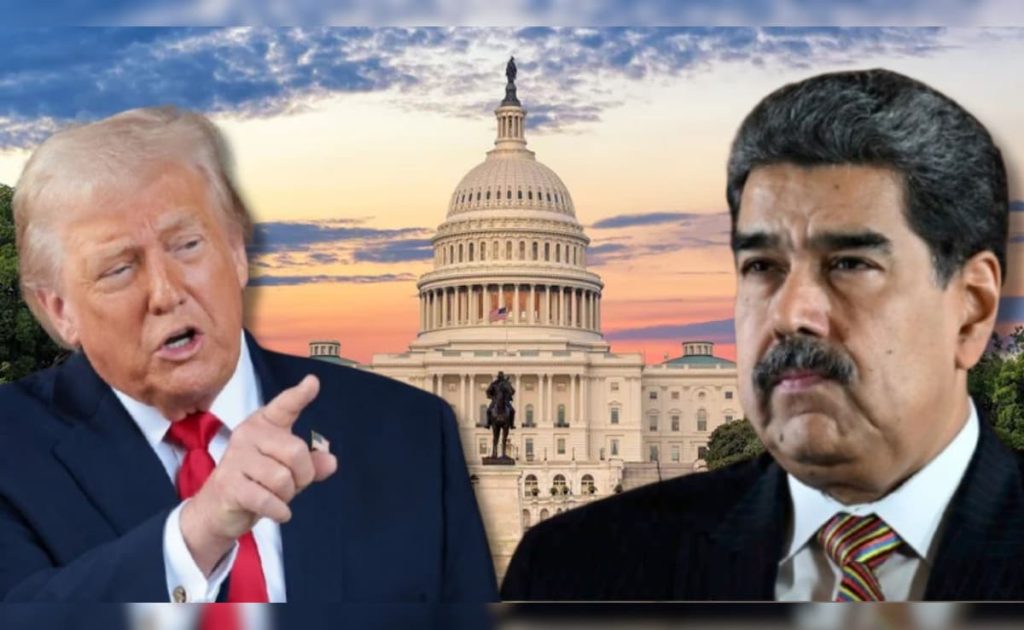
Donald Trump’s dramatic move against Nicolás Maduro has reignited hopes of unlocking Venezuela’s vast oil reserves, but sanctions, underinvestment, labour shortages and weak global demand mean the payoff is likely to be slow and uncertain.
When US forces captured Venezuela’s strongman, Nicolás Maduro, in a night raid on January 3, President Donald Trump wasted little time explaining what he really wanted: oil. Venezuela, he argued, has been mismanaged for decades, leaving its vast petroleum wealth untapped. His solution was blunt and characteristically ambitious—bring in America’s oil giants, pour billions into broken infrastructure and turn Venezuela’s oil back into a profitable business, one that would benefit both countries. For Trump, the move also carried a sense of historical revenge. Since Hugo Chávez nationalised Western oil assets nearly two decades ago, Venezuela and its national oil company, PDVSA, have faced claims worth an estimated $60bn. Trump has made it clear he wants those losses clawed back.
Beyond retribution, however, lies a strategic calculation. Venezuela’s oil production has collapsed by roughly two-thirds since its peak in the late 2000s, falling to around 1m barrels per day. The country still sits on an estimated 300bn barrels of reserves—the largest in the world—suggesting huge upside if production can be restored. Its heavy, sour crude is also exactly what many American refineries need, especially as relations with Canada, another supplier of such oil, have grown strained. On paper, the logic seems compelling: revive Venezuelan output, feed US refineries and tilt energy geopolitics back in Washington’s favour.
Yet the obstacles are formidable. In the short term, Venezuela’s oil output is more likely to shrink than grow. In December, the United States tightened sanctions and declared a blockade on Venezuelan oil shipped by blacklisted tankers, even seizing one vessel. Exports have since slumped, with growing volumes of unsold crude sitting idle offshore. Venezuela also lacks naphtha, a key dilutant needed to transport its ultra-heavy crude, supplies of which had previously come from Russia. Unless sanctions and the blockade are lifted—a decision tied to uncertain political and military developments—production could fall below 700,000 barrels per day.
Even under more optimistic assumptions, the recovery would be modest. Analysts at Kpler estimate that if there is a smooth political transition and sanctions are eased, basic maintenance could lift output to about 1.2m barrels per day by the end of 2026. That would still leave Venezuela trailing behind countries like Libya and far below its historical potential. To return production to levels seen 15 years ago would require an estimated $110bn in upstream investment—roughly double what America’s oil majors spent globally in 2024.
Trump appears to believe US companies will rush in. Chevron, which already operates in Venezuela under a sanctions waiver, may expand. But other firms remember the nationalisations, legal battles and political volatility all too well. Trump’s own political timeline adds another layer of uncertainty: with just over three years left in office, oil companies may worry that policy could shift again before long-term investments pay off. Banks, insurers and commodity traders—essential players in global oil markets—are likely to be even more cautious.
Then there is the state of Venezuela’s oil industry itself. Years of economic collapse have driven tens of thousands of skilled workers abroad, hollowing out PDVSA’s technical capacity. The company is now largely run by the military, and meaningful partnerships with Western firms would require sweeping reforms. Even if money were available, Venezuela may lack the human capital to execute complex projects quickly.
Global market conditions further complicate the picture. The International Energy Agency expects oil supply to exceed demand well into the decade, thanks to rising production in countries such as Brazil, Guyana and the United States itself, alongside sluggish demand growth. Many analysts predict oil prices could fall towards $50 a barrel or lower, beneath the breakeven level for many Venezuelan fields. New projects would be even harder to justify.
In the most optimistic scenario, Venezuela might reach 1.7m–1.8m barrels per day by 2028. That could reshape trade flows, with US refiners buying more Venezuelan crude while China and Cuba look elsewhere. But anything more dramatic—such as restoring output to 2.5m–3m barrels per day—would be a long-term endeavour. Trump’s seizure of Maduro was swift and theatrical. The oil windfall he envisions will be neither.
NEWS NOW: