
by Nij Martin
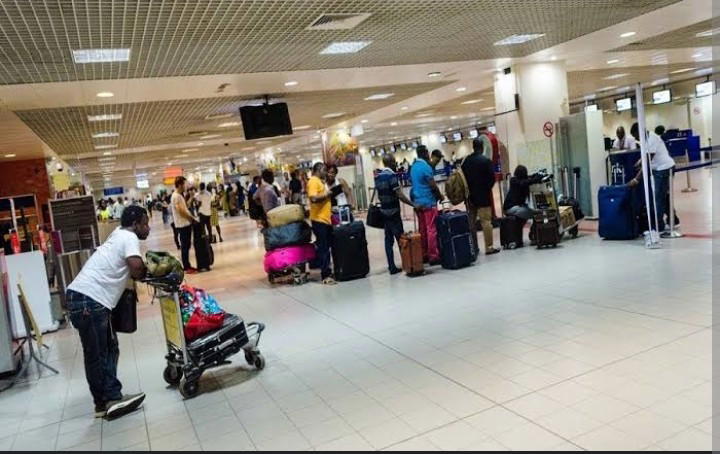
The festive season of 2025 was supposed to be different. After years of pandemic restrictions and economic hardship, Nigerian families in the United States looked forward to Detty December—that magical time when the diaspora returns home for parties, family reunions, weddings, and celebrations that define the Nigerian holiday experience. Instead, thousands are staying put, not by choice, but by fear.
On December 16, 2025, President Donald Trump signed a presidential proclamation that fundamentally altered the relationship between Nigeria and the United States. Effective January 1, 2026, Nigerians holding B-1, B-2, B-1/B-2, F, M, and J visas—covering business travelers, tourists, students, and exchange visitors—face severe restrictions entering the United States. The official justification cites security concerns, inadequate vetting systems, and high rates of visa overstays. The practical result? Millions of ordinary Nigerians will pay the price for systemic failures they neither created nor control.
Detty December Derailed: Fear Replaces Festivity
The immediate casualty of Trump’s proclamation is the cherished tradition of homecoming. Findings by Saturday PUNCH reveal that Nigerians with valid US visas have cancelled trips, worried about detention at ports of entry, visa revocation, or denial of re-entry. The fear extends beyond recent visa holders to long-time travelers, students, and even green card holders who previously moved freely between both countries.
Dr. Juliet Agocha, a Nigerian contesting for a council seat in District 4 of Prince George’s County Council, exemplifies the difficult choices many face. She told Saturday PUNCH: “It would pose a significant political risk for me to travel to Nigeria while actively running for the 2026 election. More than 18,000 Nigerian immigrants could be impacted by the Trump visa ban, and nobody wants to take unnecessary chances at this point.”
Her calculation is purely pragmatic—travel home now and risk everything she’s built in America. This is not the choice anyone should have to make during the holidays.
Students Trapped Between Dreams and Deportation
Perhaps no group faces more acute anxiety than Nigerian students in American universities. A doctoral candidate and microbiologist at Indiana University described widespread panic among Nigerian students who have abandoned plans to travel home for the holidays.
“There is panic everywhere, especially among students. People are worried that if they leave the US now, the Trump administration might block them from coming back,” the student, who spoke on condition of anonymity, explained. He noted that many students had completed extensive academic documentation as early as December 1, and traveling to Nigeria could undo months of preparation.
“It’s painful, but many feel it’s the safer option,” he added, describing how students had already called relatives in Nigeria to inform them that planned homecomings were cancelled.
Another Nigerian student in Kansas echoed these sentiments with bitter resignation: “Coming to Nigeria now is like telling him (Trump) that you’ve completed your programme. Even though I hold a valid visa, re-entry might be challenging. I feel he has something against Nigeria.”
Dolapo Oyedoku, a doctoral student at Ohio University, warned that prospective students planning to resume studies in January 2026 might face significant challenges. “At the point of entry, students may face intense questioning and additional scrutiny,” he said, noting that while the restrictions may not directly invalidate existing visas, they could result in increased denials and stricter scrutiny across all visa categories.
Green Card Holders Not Safe Either
The travel restrictions have shattered the assumption that permanent residents enjoy security and predictability. An Osogbo-based entrepreneur recounted the harrowing experience of his aunt, who holds a US green card and travels regularly between Nigeria and the United States.
Speaking on condition of anonymity, he said: “My aunt left Lagos on Monday and got to Houston on Tuesday. She was detained immediately on arrival, even though she has a green card and travels often. As I’m speaking with you today (Thursday), she is still with Customs at the airport. They haven’t allowed her to go. If this can happen to a green card holder, then no Nigerian is safe under this visa regime.”
This testimony reveals a disturbing reality—the proclamation’s effects extend beyond new visa applicants to people who believed their status guaranteed entry. The entrepreneur himself cancelled a planned February 2026 trip to Maryland despite having two years of validity remaining on his US visa.
“I can’t imagine spending all that money on tickets, only to be embarrassed and deported at the border. I will travel when the dust around this visa restriction settles,” he said.
A Nigerian-born US citizen suggested that some difficulties faced by green card holders could be linked to unresolved legal issues now being scrutinized under stricter enforcement. “With the new visa rules, anybody with a green card—especially Africans with any criminal record—will face challenges. They will be made to answer for those crimes, even if they happened 20 years ago,” he explained.
He also alleged political motivations: “Trump’s visa policies are targeted at blacks. He believes we always support the Democrats. For him, this is political.”
Universities Withdraw Admission Offers
The uncertainty has prompted some American universities to suspend or defer admission offers to Nigerian students. Dr. Oludayo Sokunbi, a Canada-based Nigerian running consultancy firm Japa Consults, shared via X that someone from his platform who received a fully-funded master’s scholarship in the US received an email deferring admission to 2027.
The email read in part: “The White House issued an updated proclamation on Tuesday, December 16, 2025, that included updated restrictions on several countries from entering the United States. This order becomes effective at 12:01am. Eastern Daylight Time on Jan. 1, 2026… While you are no longer eligible to start the in-person MGM in Fall 2026, we are excited to offer you two options for how to move forward. The first option is to have your MGM application considered for Fall 2027 instead, with the hope that the travel ban will be lifted by then.”
Several other users shared similar experiences of withdrawn admission offers, revealing that universities are preemptively protecting themselves from the administrative complications of enrolling students who may not be able to enter the country.
The Financial and Emotional Toll
A Nigerian student preparing for 2026 resumption, who identified himself only as Olayomi, described the painful timing of the ban. “I have paid deposits and joined several meetings in preparation for the 2026 academic year. What should those of us who have paid deposits and are awaiting visa interviews do? We also paid application fees that schools will not refund.”
His question highlights the financial devastation facing thousands of Nigerian students who invested substantial resources—often family savings—into American education opportunities that now appear uncertain or impossible.
Another visa holder based in Lagos told Saturday PUNCH he had shelved plans to visit the United States in January, citing Trump’s unpredictability. “Even if you have a valid visa today, it can be revoked tomorrow. What if I buy a ticket and suddenly receive a message that my visa has been cancelled? Who will refund my money?”
He added that he had advised his son, who wanted to come home to Nigeria for Christmas, to cancel his trip. “Nobody knows what could happen. He could come home now and be denied entry back into the US, or have his visa revoked. We have to look at this logically.”
This is the reality of collective punishment—families separated not by individual wrongdoing but by nationality.
Expert Perspectives: Beyond Security Theater
Sulaimon Okewole, Chief Executive Officer of Cardinal E-School and Edu Services, described the visa restrictions as an “unfortunate development” with far-reaching consequences. “This restriction may fracture families, stifle opportunity and pour diplomatic contempt on a relationship built over centuries on mutual respect and shared enterprise,” he said.
He warned that the policy threatened to punish talent and ambition that contributed to progress in both countries. “The United States, a nation of immigrants, is building a needless wall—not of brick, but of bureaucratic spite—and this diminishes us all. I hope this decision is reversed as quickly as possible.”
Former Nigerian Ambassador to the Philippines, Yemi Farounbi, suggested the policy appeared designed to pressure the Nigerian government rather than address genuine security concerns. “Ideally, President Trump wanted to execute his plan based on what he called genocide. It was supposed to target those in government, collaborators or security officials considered ineffective.”
He noted that expanding the policy to cover all Nigerians, including students and innocent travelers, suggested a loss of focus. “When this is extended to everyone, including young people who only want to advance their education, then it is no longer targeted. At that point, it becomes counterproductive.”
Retired ambassador Mabdul Mohammed offered a more pragmatic assessment, noting that visa issuance is based on trust that visitors will abide by host country laws. “As long as Nigeria’s status remains as a Country of Particular Concern, the US authorities will continue to enforce these restrictions. The only way out is for Nigeria to intensify the fight against acts of terrorism, banditry and other forms of criminal violence.”
Foreign affairs analyst Charles Onunaiju advised Nigerians to brace for difficulties. “Nigerians should be ready at all times for pushback, especially under Trump’s administration. While we continue to engage with the US, we should engage the world. Nigeria needs to diversify its diplomacy.”
Why This Policy Fails on Its Own Terms
The Trump administration justifies these restrictions by citing security concerns and visa overstays. But punishing all Nigerians for the actions of some violates basic principles of fairness and effectiveness.
Nigeria is Africa’s most populous country and largest economy, supplying doctors to US hospitals, talent to Silicon Valley, students to Ivy League universities, and entrepreneurs to global markets. By restricting access for all Nigerians, the United States doesn’t just damage bilateral relations—it damages itself.
Universities lose tuition revenue and intellectual capital. Research collaborations stall. Businesses face mobility constraints. The very soft power America relies upon to maintain global influence erodes when promising students are told their nationality disqualifies them regardless of merit.
Moreover, the policy makes no distinction between individuals and systemic failures. A Nigerian undergraduate admitted to Harvard now carries the stigma of inadequate national vetting systems she had no role in creating. A mid-career professional invited to a Washington conference is treated as a potential risk before being seen as a contributor.
The Human Cost of Bureaucratic Convenience
Travel bans are never just administrative tools—they are statements about worth, trust, and belonging. When visas become verdicts based on nationality rather than individual conduct, ordinary people pay the price.
Families that once planned periodic visits now face prolonged separation. Students who dreamed of American education see doors slam shut. Professionals building careers across borders find themselves stuck. Green card holders who believed they had earned security discover that permanence is conditional.
This Detty December, thousands of Nigerians will celebrate remotely, not because they chose to, but because fear of detention, deportation, or visa revocation made travel too risky. Children will miss grandparents. Parents will attend weddings via video call. Students will spend holidays in empty dormitories rather than with family.
A Call for Better Solutions
The proclamation acknowledges that restrictions can be reviewed and lifted based on improved cooperation. That pathway must become Nigeria’s priority through aggressive diplomacy, institutional reform, and sustained engagement with US authorities and lawmakers.
But America must also remember that effective security policy distinguishes between states and citizens, between systemic risk and individual merit. Blanket restrictions miss that crucial nuance.
Nigeria deserves better than to be defined by the weakest links in systems its citizens didn’t design. Nigerians deserve better than collective punishment for failures beyond their control. And America deserves better than policies that sacrifice fairness, partnership, and soft power on the altar of political theater.
If both countries truly seek security and respect, they must remember that trust is built through engagement, not exclusion. Until then, ordinary Nigerians will continue paying an unfair price—one cancelled trip, one deferred dream, one separated family at a time.
NEWS NOW: