
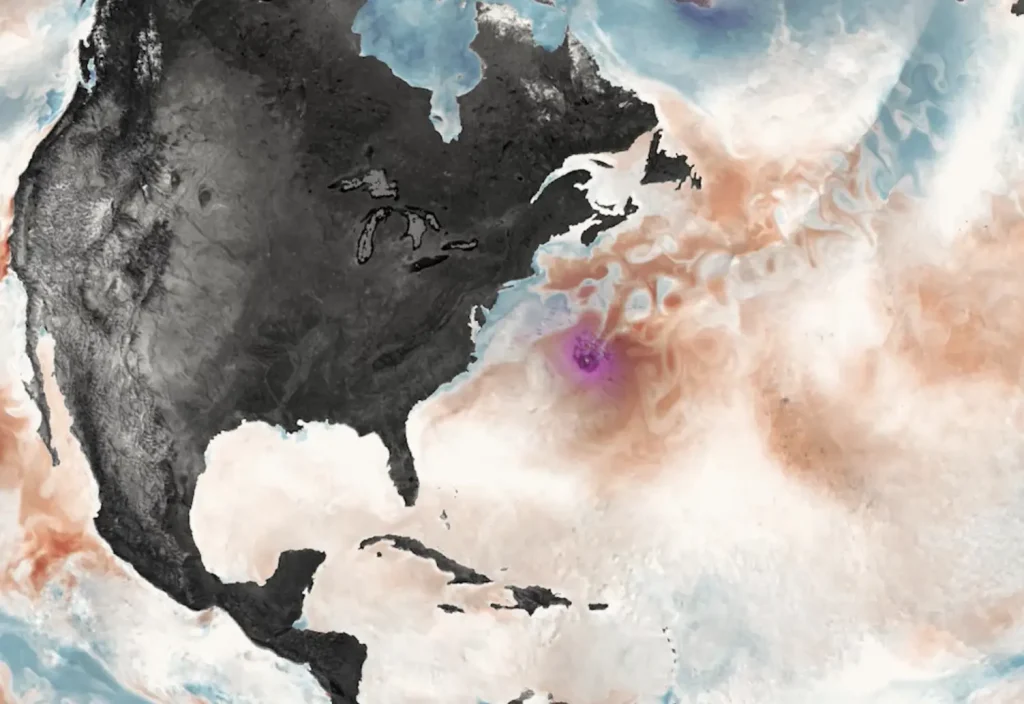
Scientists have found that tropical cyclones can increase the ocean’s absorption of carbon dioxide after initially releasing large amounts into the atmosphere. Researchers from the Max Planck Institute for Meteorology and the University of Hamburg used a high-resolution Earth system model to examine how intense hurricanes interact with the ocean carbon cycle and marine biology.
“Traditional Earth system models have a coarse grid spacing of 100 to 200 kilometers,” said David Nielsen, lead author of the study, noting they cannot realistically capture powerful category-4 and 5 storms. Using the ICON model with a five-kilometer resolution, the team simulated two North Atlantic hurricanes exceeding 200 km/h and analyzed their effects on air-sea carbon exchange.
The study showed hurricanes caused carbon dioxide release 20 to 40 times higher than normal conditions, followed by weeks of increased ocean uptake as surface waters cooled. Storm-driven mixing also brought nutrients to the surface, triggering phytoplankton growth up to tenfold. “The hurricanes also increased the amount of organic carbon sinking down in the ocean,” said Tatiana Ilyina.
NEWS NOW: