
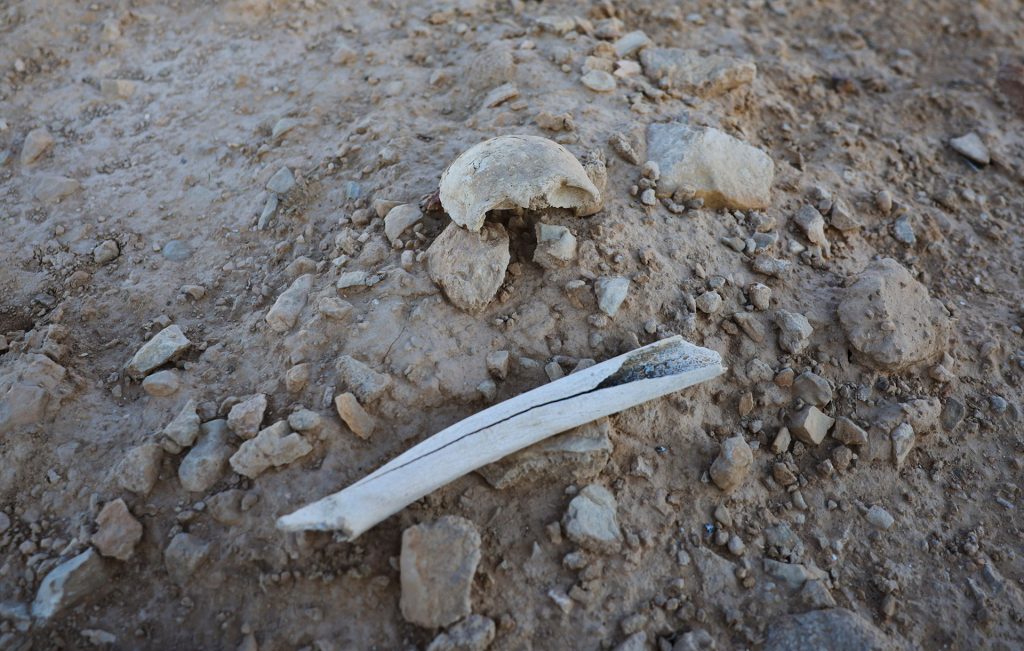
Reuters has uncovered how the Assad government secretly excavated an exposed mass grave near Damascus and moved its human remains across the desert into a new, remote site over two years in a covert operation dubbed “Operation Move Earth.”
A Reuters investigation reveals that between 2019 and 2021 the Syrian government orchestrated the clandestine relocation of thousands of bodies from an exposed mass grave near Damascus, known as Qutayfah, to a remote desert site in Dhumair. The original site had long been exposed by activists, so in a bid to conceal evidence, this covert transfer was ordered from the presidential palace and supervised by a colonel nicknamed Assad’s “master of cleansing.”
Satellite imagery, drone photography, witness interviews and forensic analysis show how the soil at Dhumair includes subsoil from Qutayfah, and that the secret grave now contains at least 34 trenches spanning two kilometers in total length. Witnesses describe that “six to eight trucks filled with dirt, human remains and maggots traveled to the Dhumair desert site” on multiple nights each week, with strict orders that “no one leaves the trucks during loading or offloading of the bodies, on pain of death.”
Mechanics and operators involved say they were swayed by threats and fear. “To talk, means death. Just by talking, what happened to the people who are buried here might happen to you,” said one mechanic. One driver reflected on his role: “If I’d been able to act freely, I wouldn’t have taken this job. I am a servant to the orders, a slave to the orders. I was overwhelmed with feelings of fear, the terrible smell and a sense of guilt.”
After the transfer, Qutayfah’s trenches were flattened to hide traces of the original grave, and many bodies remain unidentified. The new Syrian government and a national commission have pledged to protect the Dhumair site and initiate DNA identification efforts, but say gaps in records, lack of forensic resources, and destroyed files pose serious obstacles.
NEWS NOW: