
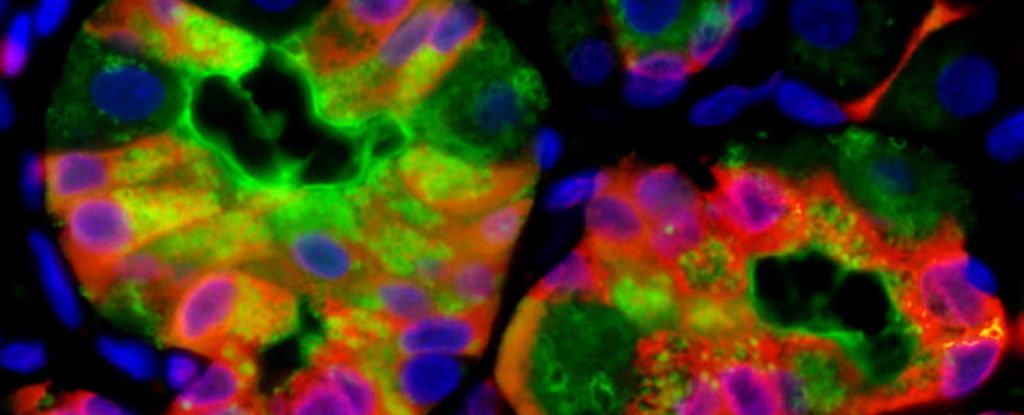
Researchers have identified “cathartocytosis,” a process where injured cells rapidly expel waste to aid healing, though it may also heighten cancer risks.
Scientists have discovered that injured cells can quickly eject their internal contents in a process that may accelerate healing but also carry risks, according to a study published in Cell Reports.
The process, identified by researchers at Washington University in St. Louis and Baylor College of Medicine, has been named “cathartocytosis.” It occurs during paligenosis, when mature cells revert to a stem cell-like state after injury.
“After an injury, the cell’s job is to repair that injury. But the cell’s mature cellular machinery for doing its normal job gets in the way,” said first author Jeffrey W. Brown, a gastroenterologist at Washington University. “So, this cellular cleanse is a quick way of getting rid of that machinery so it can rapidly become a small, primitive cell capable of proliferating and repairing the injury.”
Researchers demonstrated the process in mouse stomach cells, noting that waste was expelled through cavities in the cell membrane. While cathartocytosis enables rapid tissue repair, it may also increase inflammation and raise cancer risks.
“In these gastric cells, paligenosis – reversion to a stem cell state for healing – is a risky process,” said senior author Jason C. Mills.
NEWS NOW: