
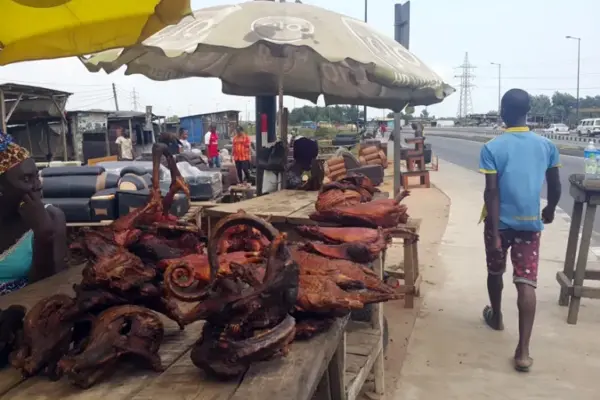
Demand for bushmeat in Nigerian cities has surged, raising alarm among doctors over the risk of zoonotic disease outbreaks.
Under a makeshift shelter by the roadside, vendor Justina Sunday grills strips of alligator, bat, antelope, porcupine, and python over charcoal in a rusting bathtub. She insists, “Bushmeat has no fat; it’s natural,” adding, “Our ancestors ate it and lived long lives. Even during Ebola, my customers still came.”
Once primarily consumed in rural areas, bushmeat is now increasingly popular in urban Nigeria, sought for its flavour, nutritional reputation, or as a nostalgic connection to home. A Wildlife Conservation Society survey found that over two-fifths of urban Nigerians had eaten bushmeat in the past year—nearly double the rate in 2018—despite an official ban on its sale.
Health professionals warn the trend poses a serious threat to public health, noting that three-quarters of emerging infectious diseases in the past decade originated from animals. The 2014 Ebola outbreak in West Africa and the COVID-19 pandemic are cited as cautionary precedents. “This isn’t just a local health issue—it’s a potential public-health emergency,” says Ushakuma Anemga, vice-president of the Nigerian Medical Association.
Zoonotic-disease researcher Nusirat Elelu highlights unsafe practices such as open-air butchering, lack of protective gear, and absent veterinary checks, warning: “We are sitting on a ticking time bomb if this trade continues unregulated.”
NEWS NOW: