
BBC
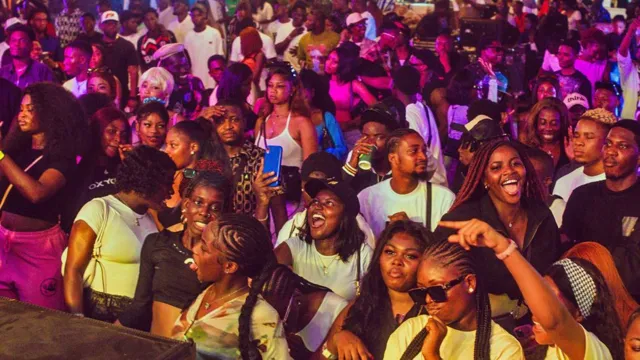
Scenes playing out in Nigeria during holiday periods could be in a movie: emotional reunions at airport terminals, champagne flowing like water in high-end clubs and A-list Afrobeats performers dominating stages to packed audiences nationwide.
This is when Nigerians abroad return for a visit to the home country. They are nicknamed I Just Got Back (IJGB) and bring with them more than full suitcases.
Their Western accents dip in and out of Pidgin, their wallets are boosted by the exchange rate, and their presence fuels the economy.
But it also highlights an uncomfortable truth.
Those who live in Nigeria, earning in the local naira currency, feel shut out of their own cities, especially in the economic hub of Lagos and the capital, Abuja, as prices go up during festive periods.
Residents say this is particularly the case for “Detty December”, a term used to refer the celebrations around Christmas and New Year.
Detty December makes Lagos almost unliveable for locals – traffic is horrible, prices inflate and businesses stop prioritising their regular customers, a radio presenter based in Lagos tells the BBC.
The popular media personality asked not to be named for voicing what some might consider controversial opinions.
But he is not the only one to hold these views and has some are pondering, with Easter and the diaspora summer holiday season approaching, whether the IJGBs are helping bridge Nigeria’s class divide or are making it even wider.
“Nigeria is very classist. Ironically, we’re a poor country, so it’s a bit silly,” the radio presenter adds.
“The wealth gap is massive. It’s almost like we’re worlds apart.”
It is true that despite oil-rich Nigeria being one of Africa’s biggest economies and the continent’s most populous country, its more than 230 million citizens face huge challenges and limited opportunities.
At the beginning of the year, the charity Oxfam warned the wealth gap in Nigeria was reaching a “crisis level”.
Statistics from 2023 are startling.
According to the World Inequality Database more than 10% of the population owned more than 60% of Nigeria’s wealth. For those with jobs, 10% of the population took home 42% of the income.
The World Bank says the figure of those living below the poverty line is 87 million – “the world’s second-largest poor population after India”.
Martins Ifeanacho, professor of sociology at the University of Port Harcourt, says this gap and resulting class divide has grown since Nigeria’s independence from the UK in 1960.
“We’ve gone through so much economic hardship,” the academic, who returned to Nigeria after studying in Ireland in the 1990s, tells the BBC.
He points the finger at the greed of those who are in position of political power – be it at a federal or state level.
“We have a political elite that bases its calculations on how to acquire power, amass wealth for the purpose of capturing more power.
“The ordinary people are left out of the equation, and that’s why there is a lot of hardship.”
But it is not just about money in the bank account.
NEWS NOW: